Ensuring People Living with HIV Inform the Future of HIV Treatment in Low- and Middle-Income Countries: A Scoping Review and Recommendations for a Community-Led Research Agenda
Danielle F. Resar, Rachel Sapire, Benvy Caldwell, Sarah Jenkins, Kenly Sikwese, Jacque Wambui, Brian Nzano, Carolyn Amole

TL;DR
This paper reviews how people living with HIV in low- and middle-income countries prefer treatment options and service delivery models, and recommends a community-led research agenda to guide future HIV treatment strategies.
Contribution
The study identifies gaps in HIV treatment preference research and proposes a community-led research agenda to ensure community priorities are central to future evidence generation.
Findings
Only 15 product preference studies included populations from low- and middle-income countries.
Advocates emphasized the need for research on long-acting HIV products for specific groups like pregnant individuals and key populations.
Preferences for clinic visit frequency, side effects, and treatment choice were highlighted as important areas for further study.
Abstract
The HIV treatment landscape in low- and middle-income countries (LMICs) is rapidly evolving, exemplified by the expansion of differentiated service delivery (DSD) during the coronavirus disease (COVID-19) pandemic. Long-acting products represent a new frontier that will require a significant redesign of health systems. It is critical to understand service delivery and product preferences of people living with HIV (PLHIV) and ensure evidence generation is guided by community priorities. We conducted a scoping review to identify gaps among preference studies and inform future research. Peer-reviewed articles published from January 2014-May 2022 reporting acceptability or preference data from PLHIV or caregivers for one or more service delivery or product attribute were eligible. Service delivery studies were restricted to LMIC populations while product studies had no geographical…
Genes, proteins, chemicals, diseases, species, mutations and cell lines named across the full text — each resolved to its canonical identifier and authoritative record.
Click any figure to enlarge with its caption.
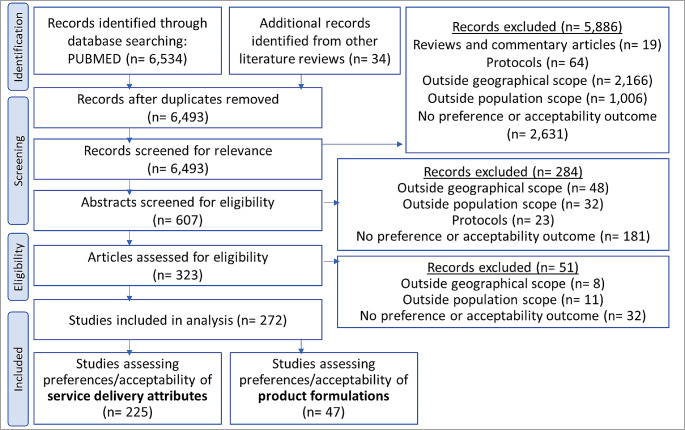 Figure 1
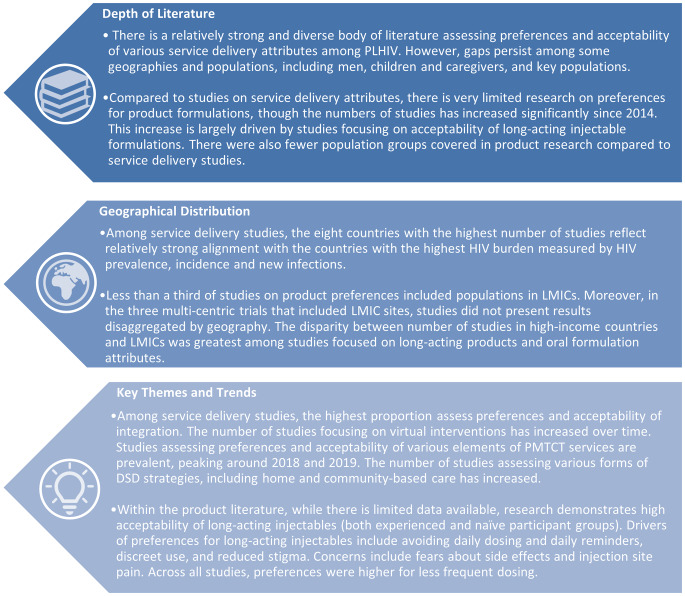 Figure 2
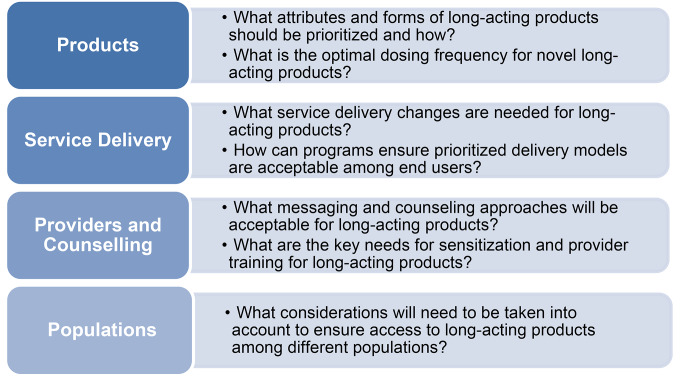 Figure 3
Peer Reviews
No public reviews on file for this paper yet. If you reviewed it on a platform where reviews are public (OpenReview, ICLR, NeurIPS, ICML), you can paste yours below so the community can read it here.
Videos
No videos yet. Explain this paper in a talk, walkthrough, or lecture? Add one.
Taxonomy
TopicsHIV/AIDS Research and Interventions · Adolescent Sexual and Reproductive Health · HIV, Drug Use, Sexual Risk