Reproductive development in Trithuria submersa (Hydatellaceae: Nymphaeales): the involvement of AGAMOUS-like genes
Silvia Moschin, Sebastiano Nigris, Elisabetta Offer, Nicola Babolin, Adriana Chiappetta, Leonardo Bruno, Barbara Baldan

TL;DR
This study explores the role of AGAMOUS-like genes in flower development in Trithuria submersa, an early angiosperm, shedding light on reproductive evolution.
Contribution
The study identifies and characterizes three AGAMOUS-like genes in Trithuria submersa, revealing their distinct expression patterns in flower organs and ovules.
Findings
TsAG1 and TsAG2 are expressed in bracts and other flower organs.
TsAG3 shows ovule-specific expression, suggesting a D-type function.
The study provides insights into AGAMOUS gene evolution in early angiosperms.
Abstract
In the early diverging angiosperm Trithuria submersa TsAG1 and TsAG2 are expressed in different flower organs, including bracts, while TsAG3 is more ovule-specific, probably functioning as a D-type gene. Species of Trithuria, the only genus of the family Hydatellaceae, represent ideal candidates to explore the biology and flower evolution of early diverging angiosperms. The life cycle of T. submersa is generally known, and the “reproductive units” are morphologically well described, but the availability of genetic and developmental data of T. submersa is still scarce. To fill this gap, a transcriptome analysis of the reproductive structures was performed and presented in this work. This analysis provided sequences of MADS-box transcription factors, a gene family known to be involved in flower and fruit development. In situ hybridization experiments on floral buds were performed to…
Genes, proteins, chemicals, diseases, species, mutations and cell lines named across the full text — each resolved to its canonical identifier and authoritative record.
Click any figure to enlarge with its caption.
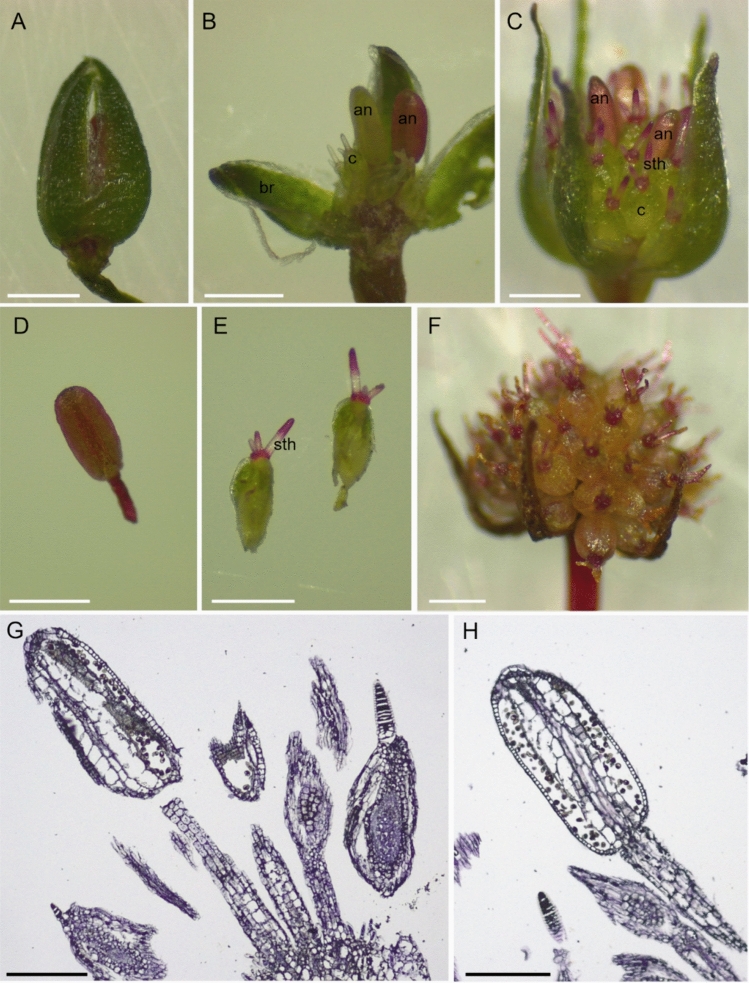 Figure 1
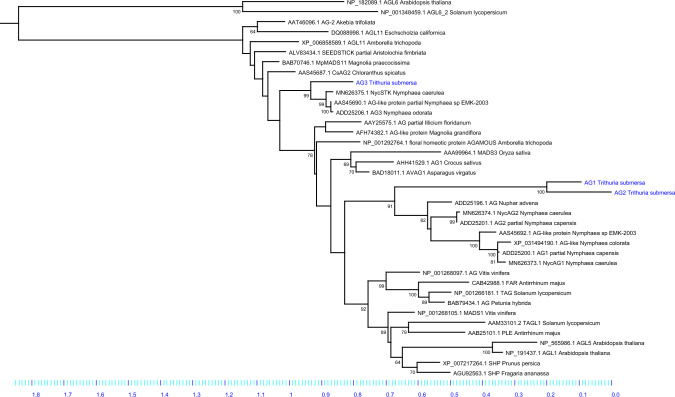 Figure 2
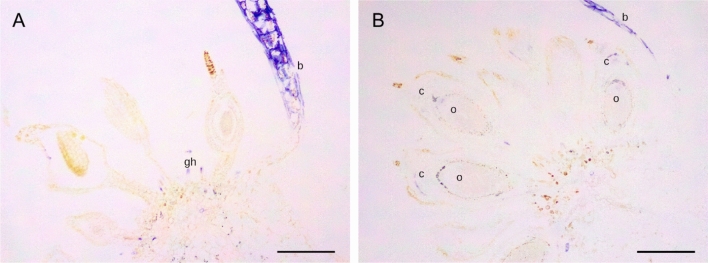 Figure 3
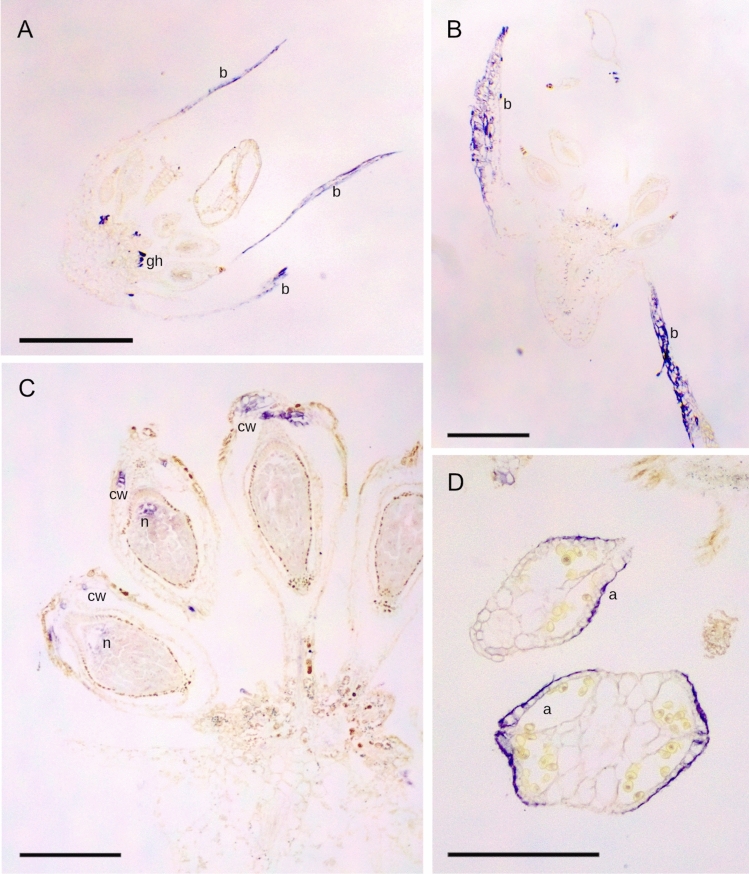 Figure 4
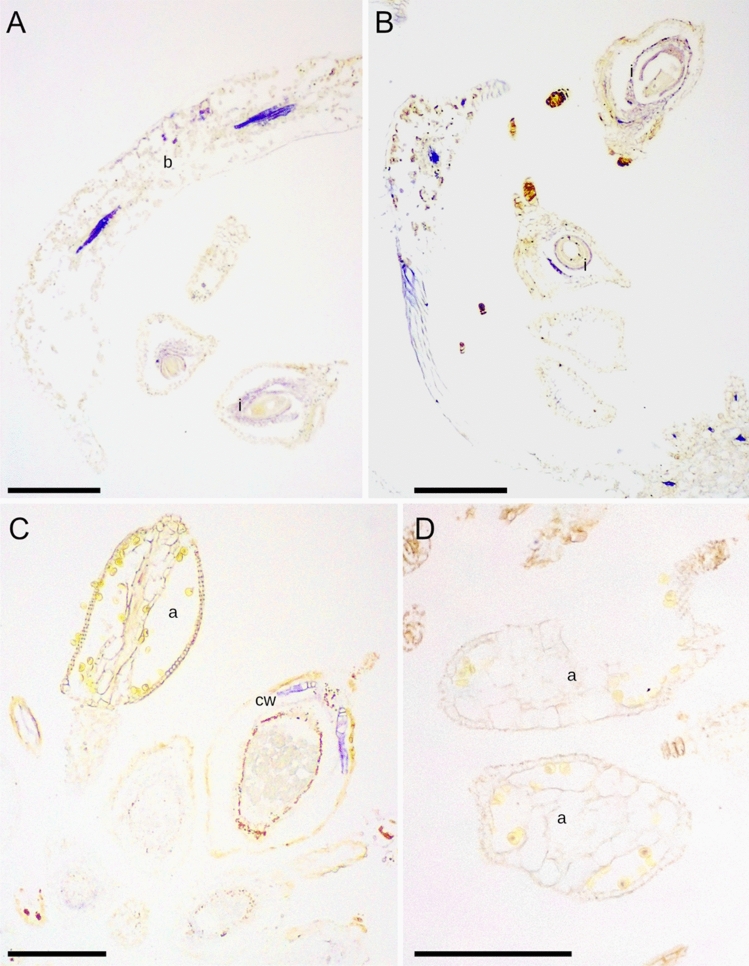 Figure 5
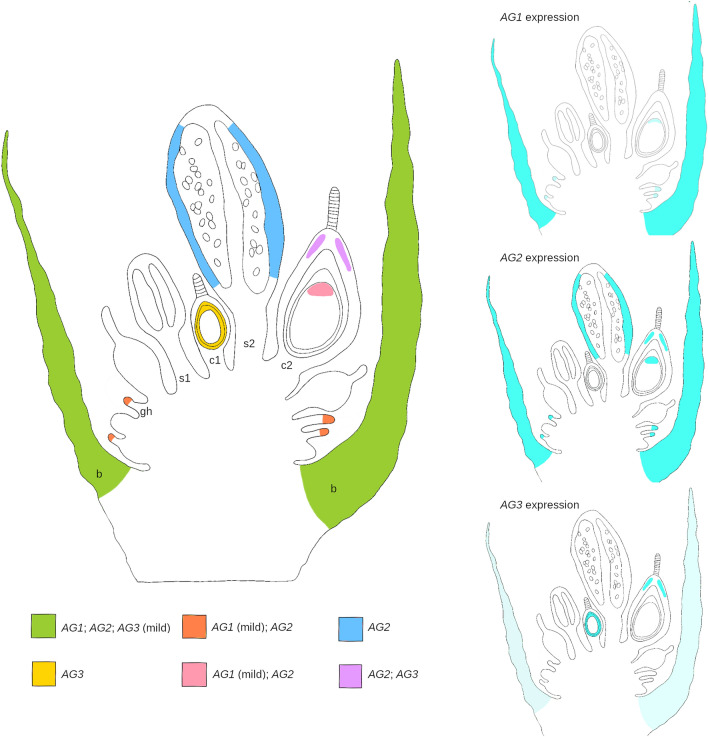 Figure 6
Peer Reviews
No public reviews on file for this paper yet. If you reviewed it on a platform where reviews are public (OpenReview, ICLR, NeurIPS, ICML), you can paste yours below so the community can read it here.
Videos
No videos yet. Explain this paper in a talk, walkthrough, or lecture? Add one.
Taxonomy
TopicsPlant Reproductive Biology · Plant Molecular Biology Research · Marine and coastal plant biology