
TL;DR
Inhaling high-concentration hydrogen helps reduce brain issues in sepsis-affected mice by improving cell energy structures.
Contribution
This study shows hydrogen inhalation improves mitochondrial dynamics in sepsis-associated encephalopathy.
Findings
Hydrogen inhalation reduces brain inflammation in septic mice.
Mitochondrial function is improved with hydrogen treatment.
This treatment could be a new approach for sepsis-related brain damage.
Abstract
The cover image is based on the article High‐concentration hydrogen inhalation mitigates sepsis‐associated encephalopathy in mice by improving mitochondrial dynamics by Yan Cui et al., https://doi.org/10.1111/cns.70021.
Genes, proteins, chemicals, diseases, species, mutations and cell lines named across the full text — each resolved to its canonical identifier and authoritative record.
Click any figure to enlarge with its caption.
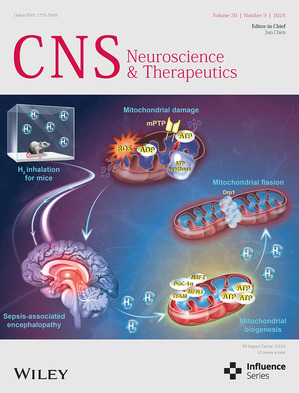 Figure 1
Peer Reviews
No public reviews on file for this paper yet. If you reviewed it on a platform where reviews are public (OpenReview, ICLR, NeurIPS, ICML), you can paste yours below so the community can read it here.
Videos
No videos yet. Explain this paper in a talk, walkthrough, or lecture? Add one.
Taxonomy
TopicsHydrogen's biological and therapeutic effects · Mitochondrial Function and Pathology · Hemoglobin structure and function