Hot males: thermal biology of males and females during coercive mating in water striders Gerris lacustris
Vinicius Marques Lopez, Rhainer Guillermo-Ferreira, Lucia Seip, Stanislav Gorb

TL;DR
Male water striders are warmer than females during coercive mating, and water contact does not help females cool down.
Contribution
The study reveals that male water striders experience higher body temperatures than females during coercive mating.
Findings
Males are warmer than females during coercive mating.
Female contact with water does not significantly lower their body temperature.
Warmer temperatures in males may affect their mating success or fitness.
Abstract
Sexual conflict theory predicts that males that adopt coercive mating strategies impose costs to females during copulation. Nevertheless, conflicting mating strategies may also affect males, although such effects on males are often neglected in the literature. Here, we seek to understand whether male water striders (Gerris lacustris) experience higher body temperatures than females during coercive mating behavior. We we explored whether the water temperature affected male and female body temperature differently, considering that water contact by females might serve as a thermal regulator. We built generalized linear mixed models considering the male and female temperature as the dependent variables. Air temperature (as a proxy for solar radiation), water temperature, and sex were used as predictor variables. Our results suggest that males are warmer than females, and despite females…
Genes, proteins, chemicals, diseases, species, mutations and cell lines named across the full text — each resolved to its canonical identifier and authoritative record.
Click any figure to enlarge with its caption.
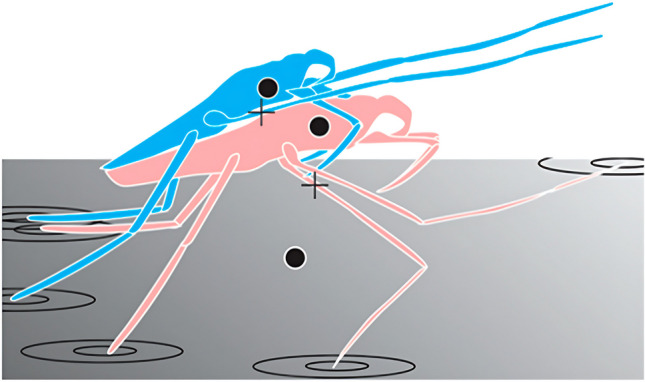 Figure 1
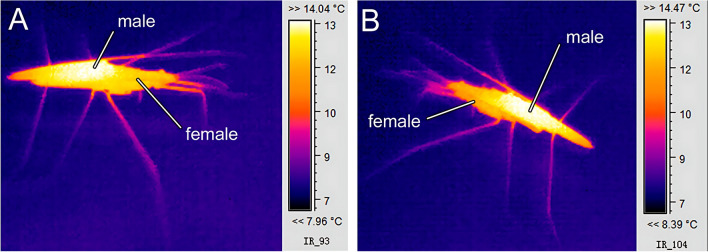 Figure 2
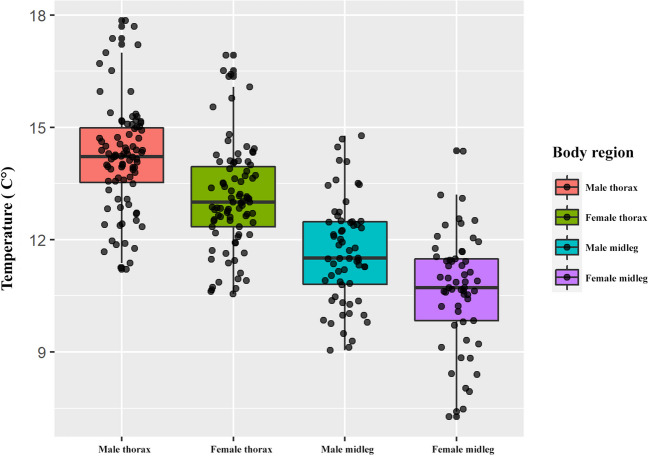 Figure 3
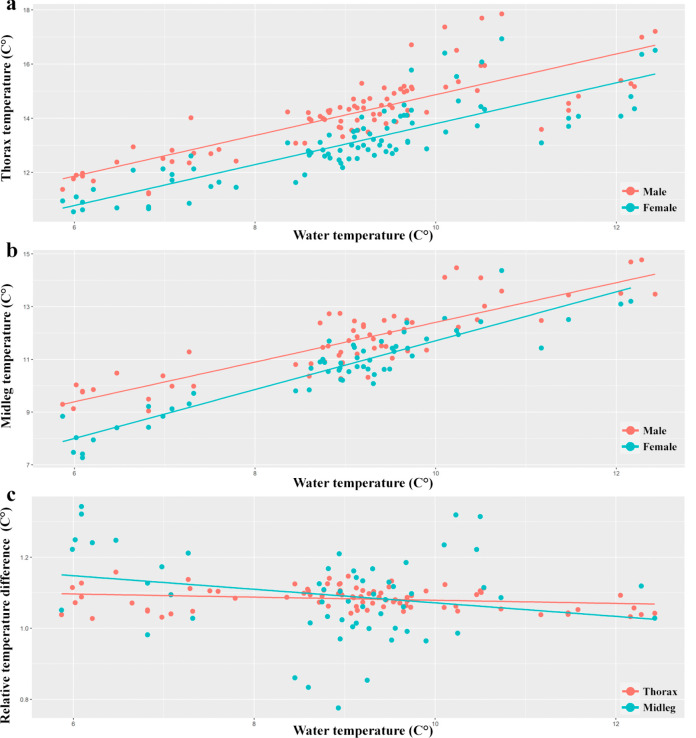 Figure 4
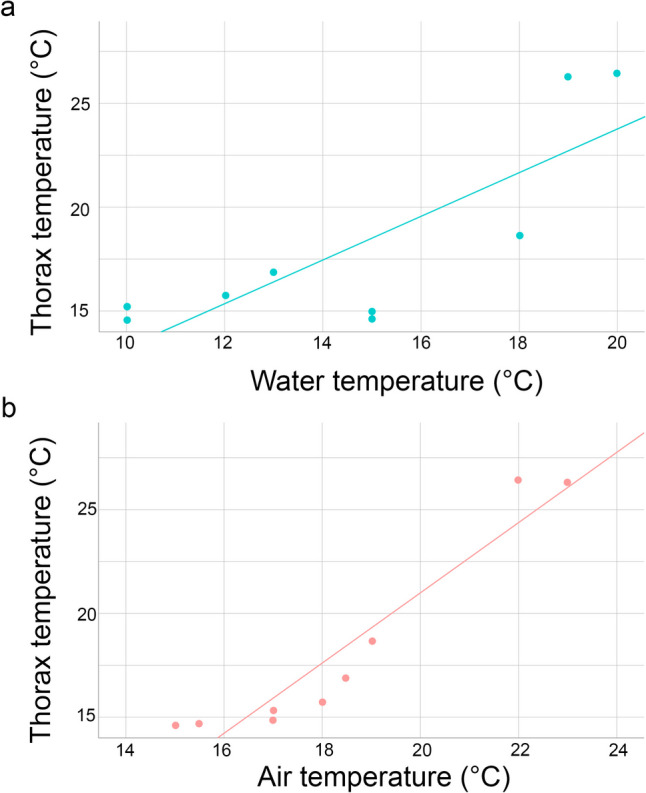 Figure 5
Peer Reviews
No public reviews on file for this paper yet. If you reviewed it on a platform where reviews are public (OpenReview, ICLR, NeurIPS, ICML), you can paste yours below so the community can read it here.
Videos
No videos yet. Explain this paper in a talk, walkthrough, or lecture? Add one.
Taxonomy
TopicsAnimal Behavior and Reproduction · Insect and Arachnid Ecology and Behavior · Physiological and biochemical adaptations