Predictive value of TCCD and regional cerebral oxygen saturation for detecting early postoperative brain injury
Yu Liu, Lin Zhao, Xinlei Wang, Zhouquan Wu

TL;DR
This study shows that TCCD and rSO2 can help predict early brain injury after heart surgery by tracking cerebral blood flow and oxygen levels.
Contribution
The study identifies specific cutoff values for rSO2 and cerebral blood flow to predict early postoperative brain injury.
Findings
Decreased rSO2 and cerebral blood flow levels were independent risk factors for early postoperative brain injury.
Aortic occlusion time and history of atrial fibrillation also contributed to the risk of brain injury.
ROC analysis determined optimal cutoffs of 21.4% for rSO2 and 37.4% for cerebral blood flow for injury prediction.
Abstract
This study aims to analyze the risk factors for early postoperative brain injury in patients undergoing cardiovascular surgery and explore the predictive value of transcranial color Doppler (TCCD) and regional cerebral oxygen saturation (rSO2) for detecting early postoperative brain injury in cardiovascular surgery patients. A total of 55 patients undergoing cardiovascular surgery with cardiopulmonary bypass in Changzhou No.2 The People’s Hospital of Nanjing Medical University were included in this study. Neuron-specific enolase (NSE) concentration was measured 24 h after operation. Patients were divided into brain injury (NSE ≥ 16.3 ng/mL) and normal (0 < NSE < 16.3 ng/mL) groups according to the measured NSE concentration. The clinical outcomes between the two groups were compared, including decreased rSO2 and cerebral blood flow (as measured by TCCD) levels. The risk factors of…
Genes, proteins, chemicals, diseases, species, mutations and cell lines named across the full text — each resolved to its canonical identifier and authoritative record.
Click any figure to enlarge with its caption.
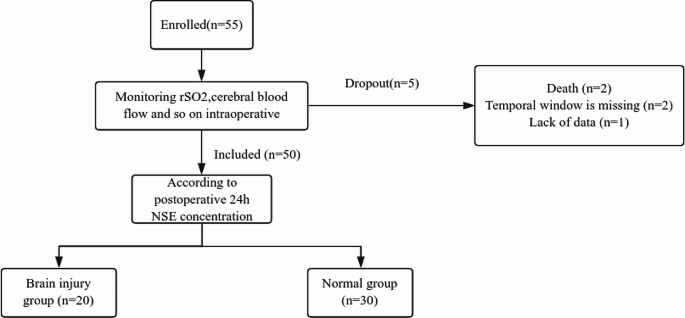 Figure 1
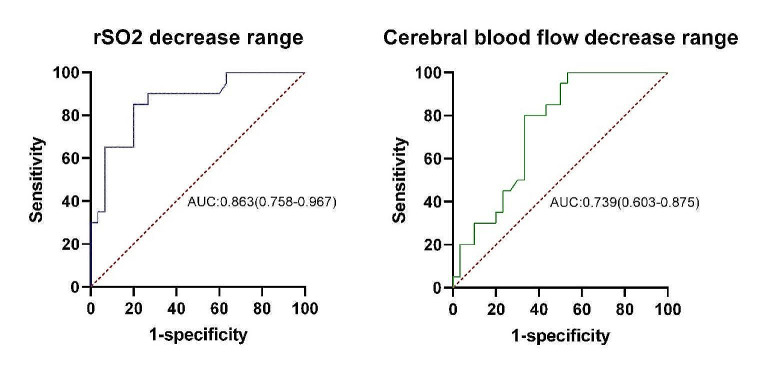 Figure 2
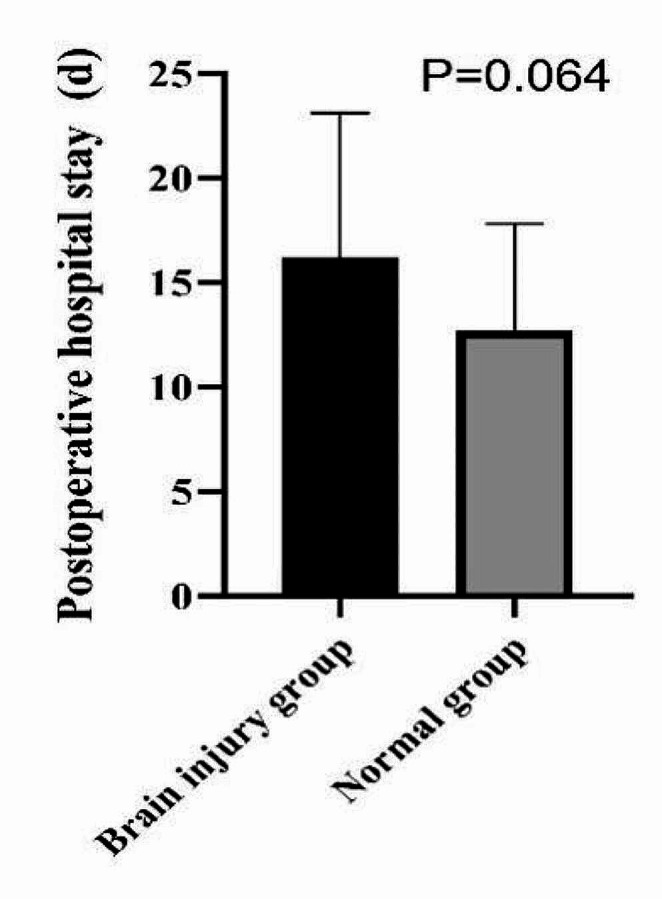 Figure 3
 Figure 4
Peer Reviews
No public reviews on file for this paper yet. If you reviewed it on a platform where reviews are public (OpenReview, ICLR, NeurIPS, ICML), you can paste yours below so the community can read it here.
Videos
No videos yet. Explain this paper in a talk, walkthrough, or lecture? Add one.
Taxonomy
TopicsTraumatic Brain Injury and Neurovascular Disturbances · Cardiac, Anesthesia and Surgical Outcomes · S100 Proteins and Annexins