C-Reactive Protein, the Gliovascular Unit, and Alzheimer’s Disease
Mihaela Straistă, Mark Slevin

TL;DR
This review explores how C-reactive protein and the gliovascular unit contribute to inflammation and progression in Alzheimer's disease.
Contribution
The paper highlights a novel synergistic link between the gliovascular unit and monomeric C-reactive protein in Alzheimer's disease.
Findings
Monomeric C-reactive protein increases vascular permeability and inflammation in Alzheimer's disease.
Gliovascular unit dysfunction leads to blood-brain barrier breakdown and reduced amyloid clearance.
CRP and GVU interactions worsen neuroinflammation and neurodegeneration in AD.
Abstract
Alzheimer's disease (AD) pathogenesis is conditioned by the presence of amyloid beta (Aβ) and neuroinflammation. The gliovascular unit (GVU) illustrates the relationship between the vascular components of the brain and glial cells, particularly astrocytes, which are seen as critical elements mainly affected in this disease. In AD patients, the impairment of the GVU is seen as blood-brain barrier breakdown, decreased clearance of Aβ, and chronic inflammatory status. C-reactive protein (CRP) and its monomeric form (mCRP) are associated with endothelial dysfunction and amyloid plaque instability, contributing to neuroinflammation and neurodegeneration. The interconnections between the GVU and the dissociated form of CRP were demonstrated by mCRP implication in vascular permeability that supports inflammation and extravasation of pro-inflammatory cytokines into the brain parenchyma.…
Genes, proteins, chemicals, diseases, species, mutations and cell lines named across the full text — each resolved to its canonical identifier and authoritative record.
Click any figure to enlarge with its caption.
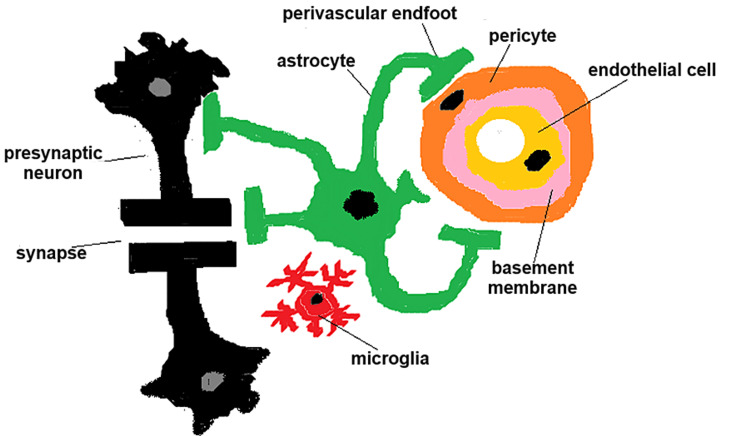 Figure 1
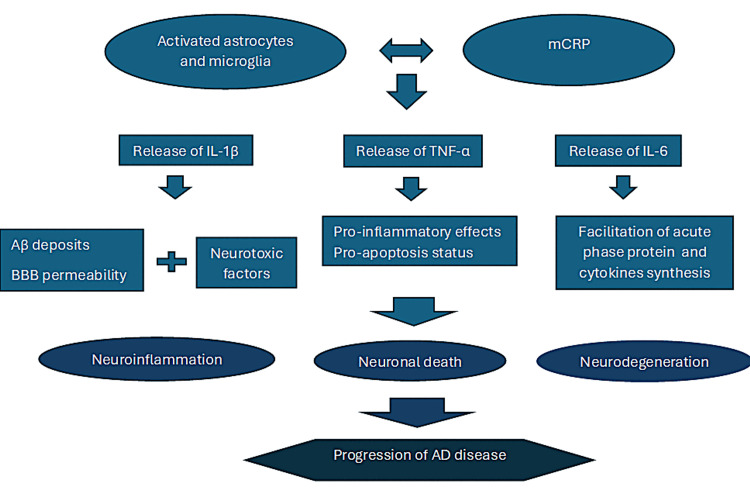 Figure 2
 Figure 3
 Figure 4
Peer Reviews
No public reviews on file for this paper yet. If you reviewed it on a platform where reviews are public (OpenReview, ICLR, NeurIPS, ICML), you can paste yours below so the community can read it here.
Videos
No videos yet. Explain this paper in a talk, walkthrough, or lecture? Add one.
Taxonomy
TopicsAlzheimer's disease research and treatments · Neuroinflammation and Neurodegeneration Mechanisms · S100 Proteins and Annexins