Impact of dietary changes on retinal neuronal plasticity in rodent models of physical and psychological trauma
Mital Y. Patel, Ruoting Yang, Nabarun Chakraborty, Stacy-Ann Miller, James C. DeMar, Andrew Batuure, Donna Wilder, Joseph Long, Rasha Hammamieh, Aarti Gautam

TL;DR
This study explores how diet affects retinal and brain health in rodent models of trauma, showing that imbalanced fatty acid intake worsens outcomes.
Contribution
The study reveals how dietary ω-3 PUFA deficiency increases vulnerability to blast-TBI and traumatic stress through endocannabinoid and immune pathways.
Findings
DHA-deprived diets worsened blast-TBI-induced axonal degeneration in optic tracts.
DHA in diets preserved neuronal plasticity via SNARE and endocannabinoid pathways.
Reducing ω-6 LA improved neuronal plasticity and suppressed immune signaling in trauma models.
Abstract
Blast injury has been implicated as the major cause of traumatic brain injury (TBI) and ocular system injury, in military operations in Iraq and Afghanistan. Soldiers exposed to traumatic stress also have undiagnosed, chronic vision problems. Here we hypothesize that excessive intake of ω-6 fatty acid linoleic acid (LA) and insufficiency of dietary long chain ω-3 polyunsaturated fatty acids (PUFAs, e.g., docosahexaenoic acid; DHA) would dysregulate endocannabinoid-mediated neuronal plasticity and immune response. The study objective was to determine the effect of blast-TBI and traumatic stress on retinal gene expression and assess the role of dietary deficiency of long chain ω-3 PUFAs on the vulnerability to these injury models. Linoleic acid was used as an independent variable to reflect the dietary increase in LA from 1 percent of energy (en%) to 8 en% present in the current western…
Genes, proteins, chemicals, diseases, species, mutations and cell lines named across the full text — each resolved to its canonical identifier and authoritative record.
Click any figure to enlarge with its caption.
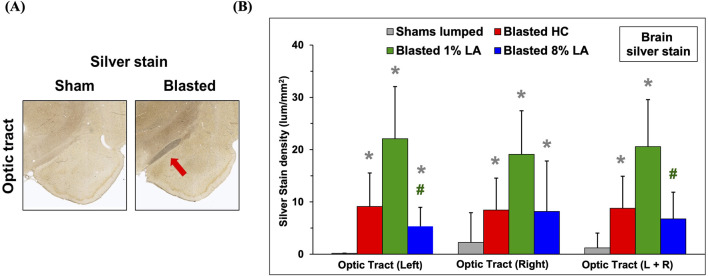 Figure 1
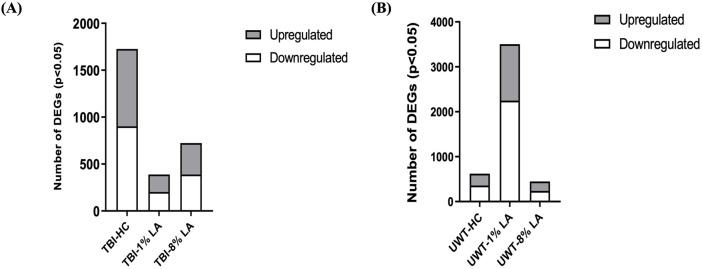 Figure 2
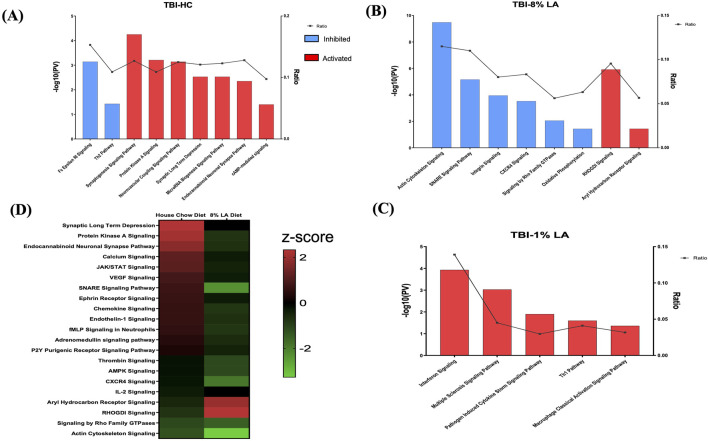 Figure 3
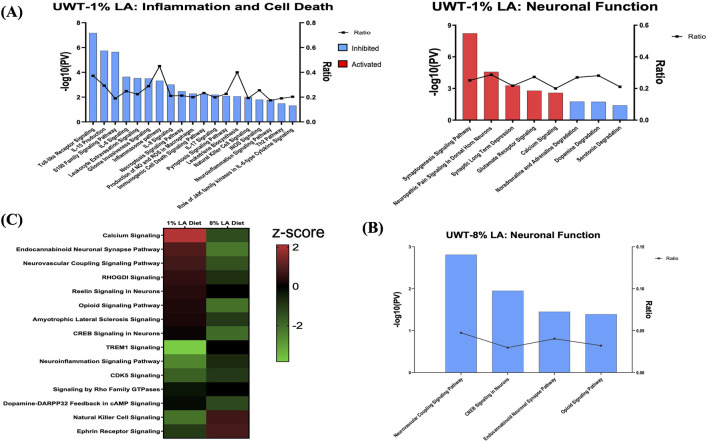 Figure 4
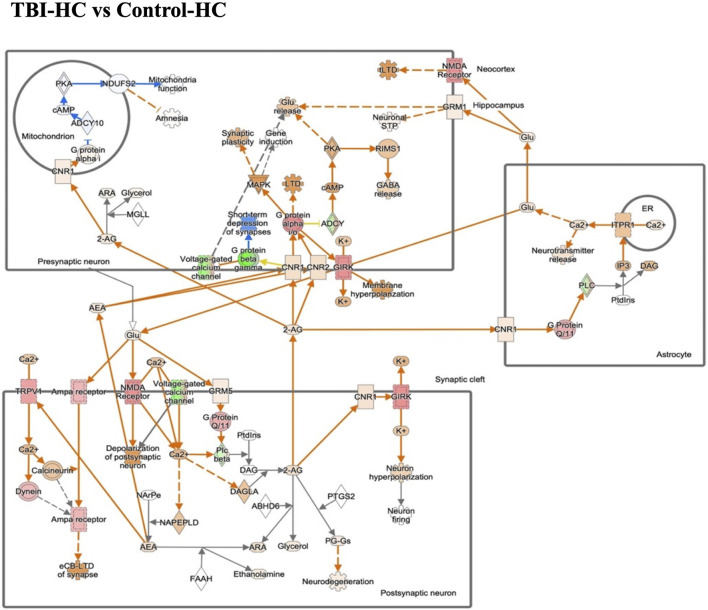 Figure 5
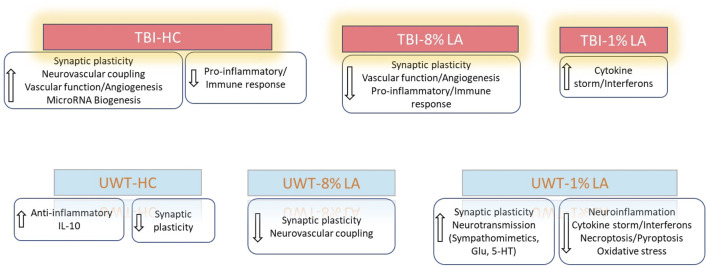 Figure 6
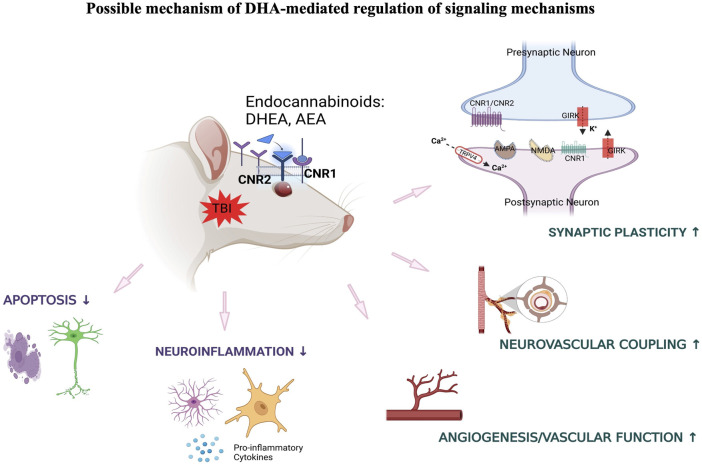 Figure 7
Peer Reviews
No public reviews on file for this paper yet. If you reviewed it on a platform where reviews are public (OpenReview, ICLR, NeurIPS, ICML), you can paste yours below so the community can read it here.
Videos
No videos yet. Explain this paper in a talk, walkthrough, or lecture? Add one.
Taxonomy
TopicsTraumatic Brain Injury and Neurovascular Disturbances · Biochemical effects in animals · Neuroscience of respiration and sleep