A novel viral RNA detection method based on the combined use of trans-acting ribozymes and HCR-FRET analyses
Leonardo Ferreira da Silva, Aisel Valle Garay, Pedro Felipe Queiroz, Sophia Garcia de Resende, Mayna Gomide, Izadora Cristina Moreira de Oliveira, Amanda Souza Bernasol, Anibal Arce, Liem Canet Santos, Fernando Torres, Ildinete Silva-Pereira, Sonia Maria de Freitas

TL;DR
This paper introduces a new, low-cost method for detecting viral RNA, like SARS-CoV-2, using ribozymes and FRET-based reactions, which could be used for quick and affordable point-of-care testing.
Contribution
A novel RNA detection method combining trans-acting ribozymes and HCR-FRET for rapid, specific, and cost-effective viral RNA analysis.
Findings
Two of the three designed ribozymes effectively cleaved SARS-CoV-2 RNA within 10 minutes.
Cy3/Cy5-labeled DNA hairpins triggered detectable HCR-FRET reactions with high specificity.
A DIY photo-fluorometer prototype was developed for potential point-of-care detection using digital image analysis.
Abstract
The diagnoses of retroviruses are essential for controlling the rapid spread of pandemics. However, the real-time Reverse Transcriptase quantitative Polymerase Chain Reaction (RT-qPCR), which has been the gold standard for identifying viruses such as SARS-CoV-2 in the early stages of infection, is associated with high costs and logistical challenges. To innovate in viral RNA detection a novel molecular approach for detecting SARS-CoV-2 viral RNA, as a proof of concept, was developed. This method combines specific viral gene analysis, trans-acting ribozymes, and Fluorescence Resonance Energy Transfer (FRET)-based hybridization of fluorescent DNA hairpins. In this molecular mechanism, SARS-CoV-2 RNA is specifically recognized and cleaved by ribozymes, releasing an initiator fragment that triggers a hybridization chain reaction (HCR) with DNA hairpins containing fluorophores, leading to a…
Genes, proteins, chemicals, diseases, species, mutations and cell lines named across the full text — each resolved to its canonical identifier and authoritative record.
Click any figure to enlarge with its caption.
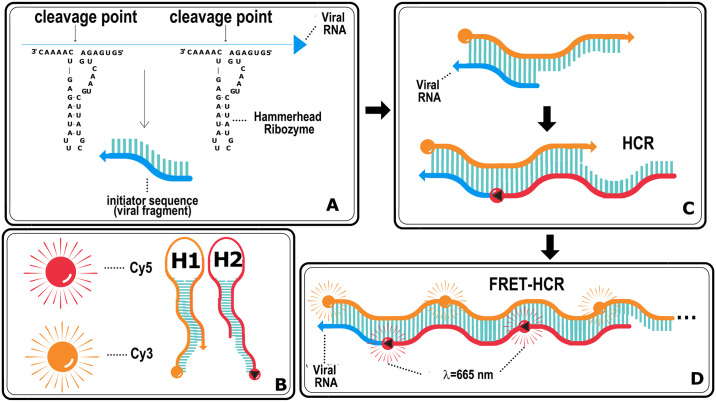 Figure 1
 Figure 2
 Figure 3
 Figure 4
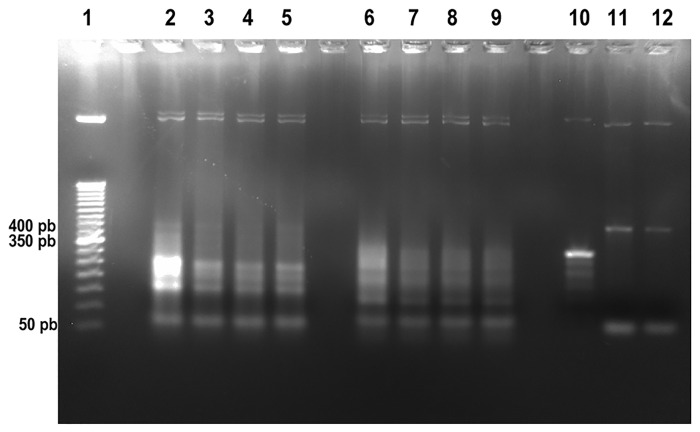 Figure 5
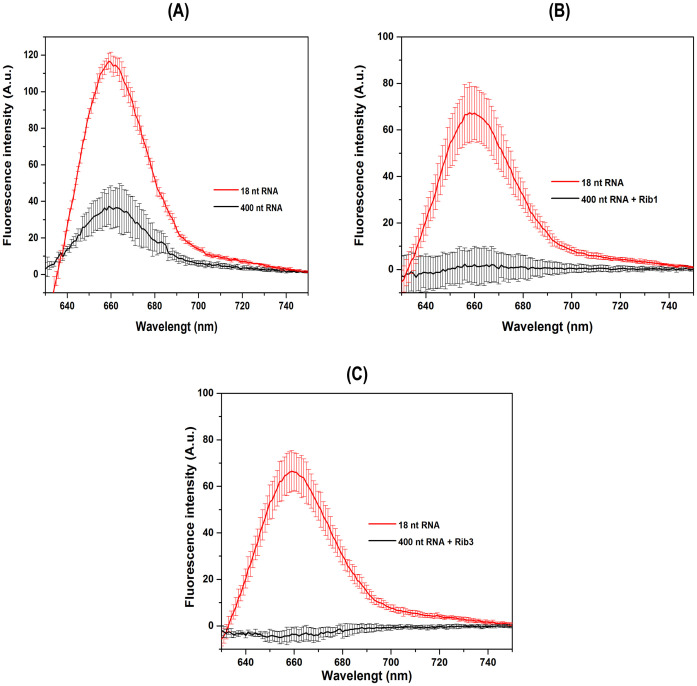 Figure 6
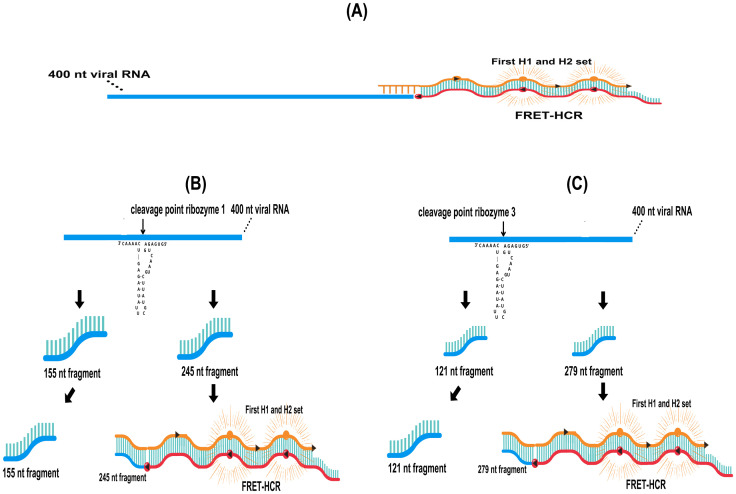 Figure 7
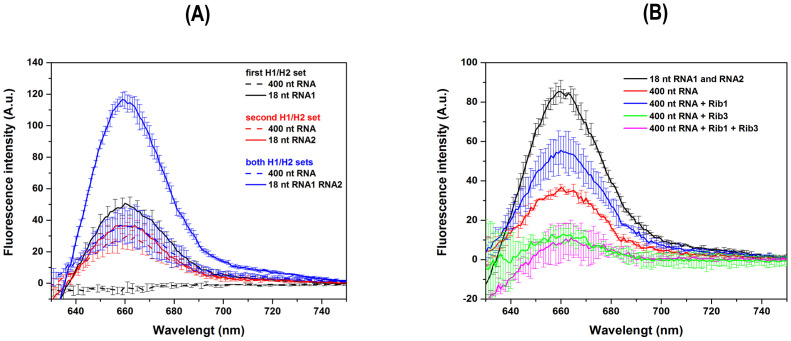 Figure 8
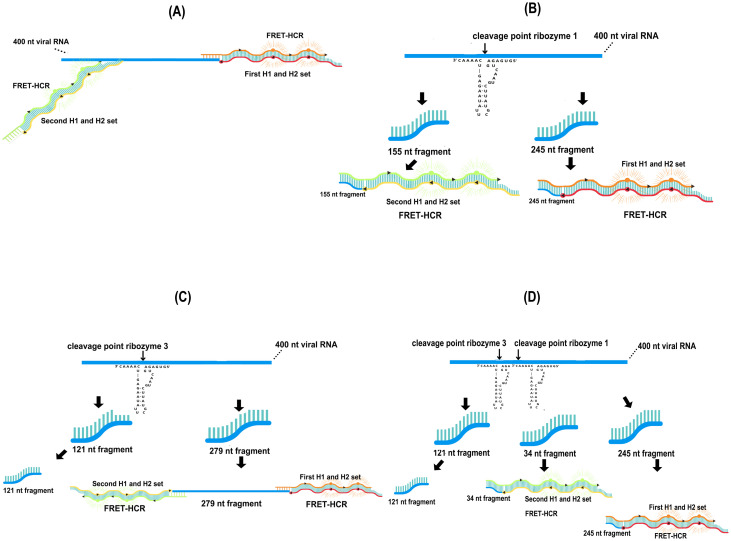 Figure 9
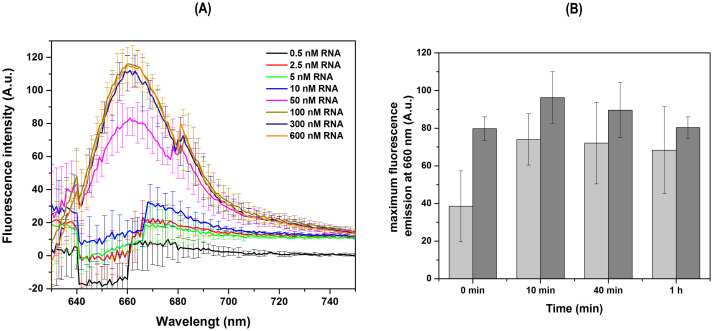 Figure 10
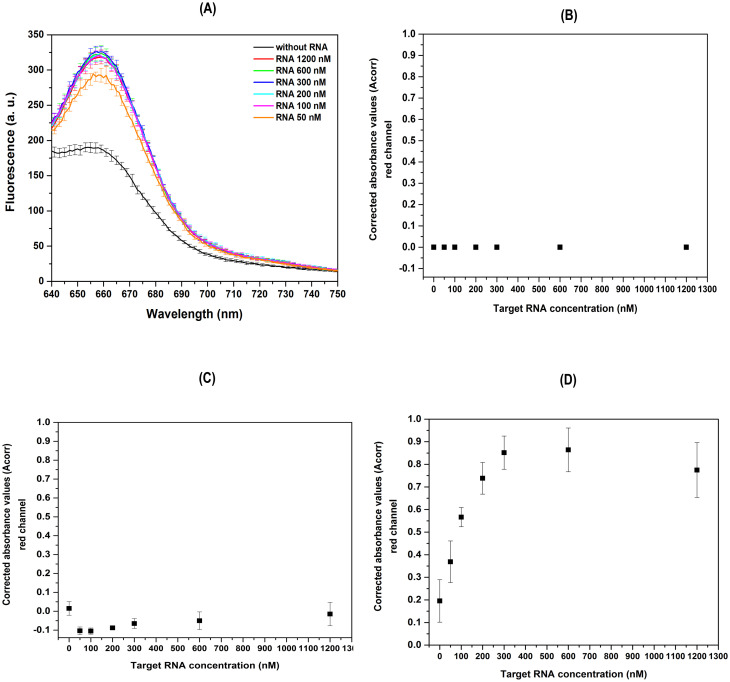 Figure 11
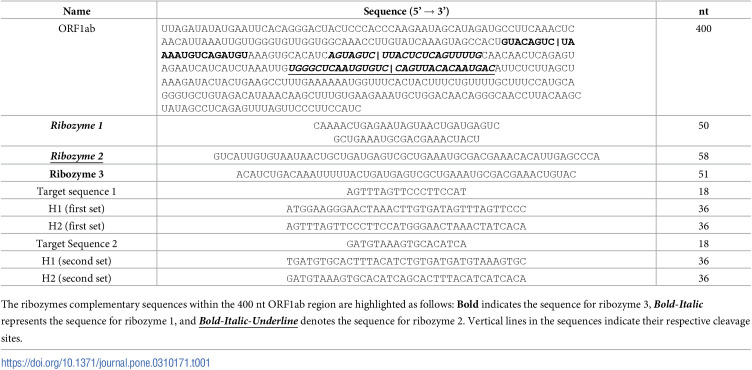 Figure 12
 Figure 13
Peer Reviews
No public reviews on file for this paper yet. If you reviewed it on a platform where reviews are public (OpenReview, ICLR, NeurIPS, ICML), you can paste yours below so the community can read it here.
Videos
No videos yet. Explain this paper in a talk, walkthrough, or lecture? Add one.
Taxonomy
TopicsAdvanced biosensing and bioanalysis techniques · Bacteriophages and microbial interactions · Biosensors and Analytical Detection