Stabilization of TGF‐β Receptor 1 by a Receptor‐Associated Adaptor Dictates Feedback Activation of the TGF‐β Signaling Pathway to Maintain Liver Cancer Stemness and Drug Resistance
Kewei Liu, Fanxuan Tian, Xu Chen, Biyin Liu, Shuoran Tian, Yongying Hou, Lei Wang, Mengyi Han, Shiying Peng, Yuting Tan, Yuwei Pan, Zhaole Chu, Jinyang Li, Linrong Che, Dongfeng Chen, Liangzhi Wen, Zhongyi Qin, Xianfeng Li, Junyu Xiang, Xiu‐wu Bian, Qin Liu, Xiaoli Ye, Tao Wang

TL;DR
This study identifies TGFBRAP1 as a key protein that stabilizes TGFBR1, enhancing TGF-β signaling and promoting liver cancer stemness and drug resistance.
Contribution
The paper discovers a novel positive feedback mechanism involving TGFBRAP1 in TGF-β signaling that drives liver cancer progression and resistance.
Findings
TGFBRAP1 stabilizes TGFBR1 by blocking its ubiquitination and degradation.
TGFBRAP1 is upregulated by TGF-β signaling, forming a feedback loop in drug-resistant liver cancer cells.
Blocking TGFBRAP1 reduces Regorafenib resistance and cancer stemness in hepatocellular carcinoma.
Abstract
Dysregulation of the transforming growth factor‐β (TGF‐β) signaling pathway regulates cancer stem cells (CSCs) and drug sensitivity, whereas it remains largely unknown how feedback regulatory mechanisms are hijacked to fuel drug‐resistant CSCs. Through a genome‐wide CRISPR activation screen utilizing stem‐like drug‐resistant properties as a readout, the TGF‐β receptor‐associated binding protein 1 (TGFBRAP1) is identified as a TGF‐β‐inducible positive feedback regulator that governs sensitivity to tyrosine kinase inhibitors (TKIs) and promotes liver cancer stemness. By interacting with and stabilizing the TGF‐β receptor type 1 (TGFBR1), TGFBRAP1 plays an important role in potentiating TGF‐β signaling. Mechanistically, TGFBRAP1 competes with E3 ubiquitin ligases Smurf1/2 for binding to TGFΒR1, leading to impaired receptor poly‐ubiquitination and proteasomal degradation. Moreover,…
Genes, proteins, chemicals, diseases, species, mutations and cell lines named across the full text — each resolved to its canonical identifier and authoritative record.
Click any figure to enlarge with its caption.
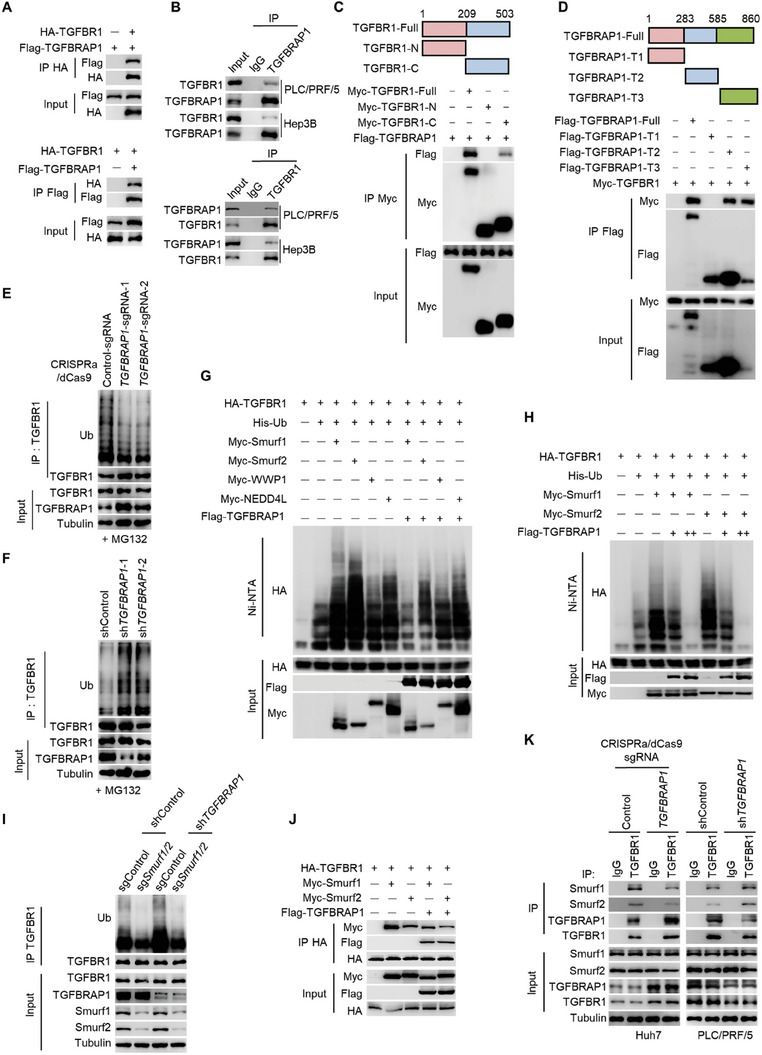 Figure 1
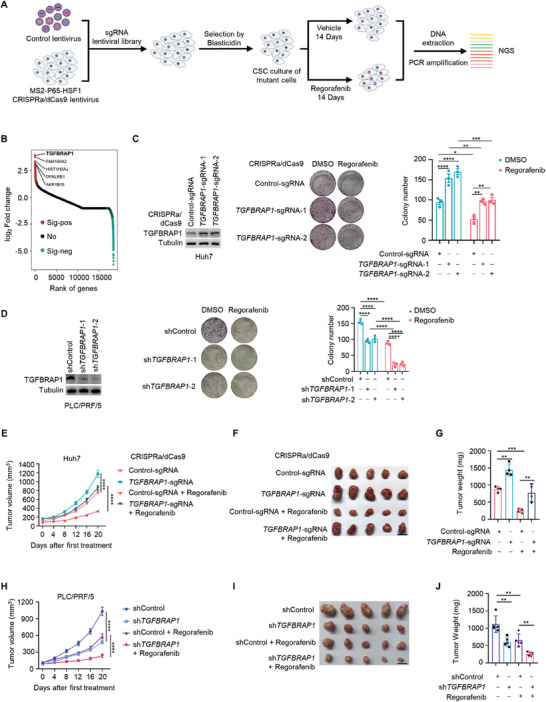 Figure 2
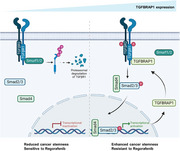 Figure 3
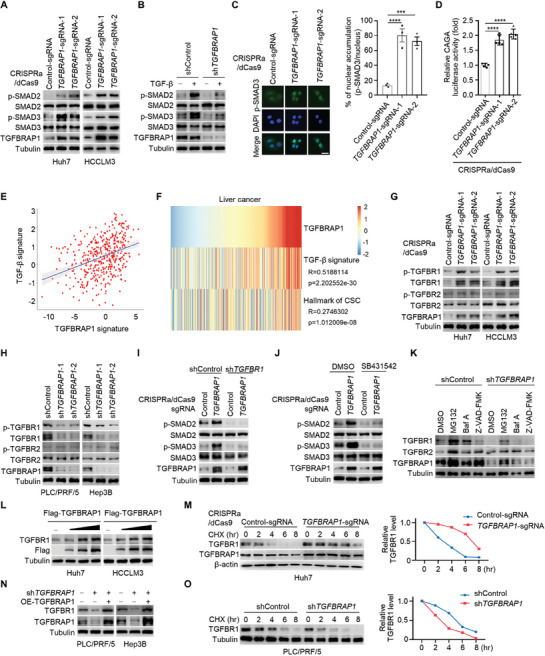 Figure 4
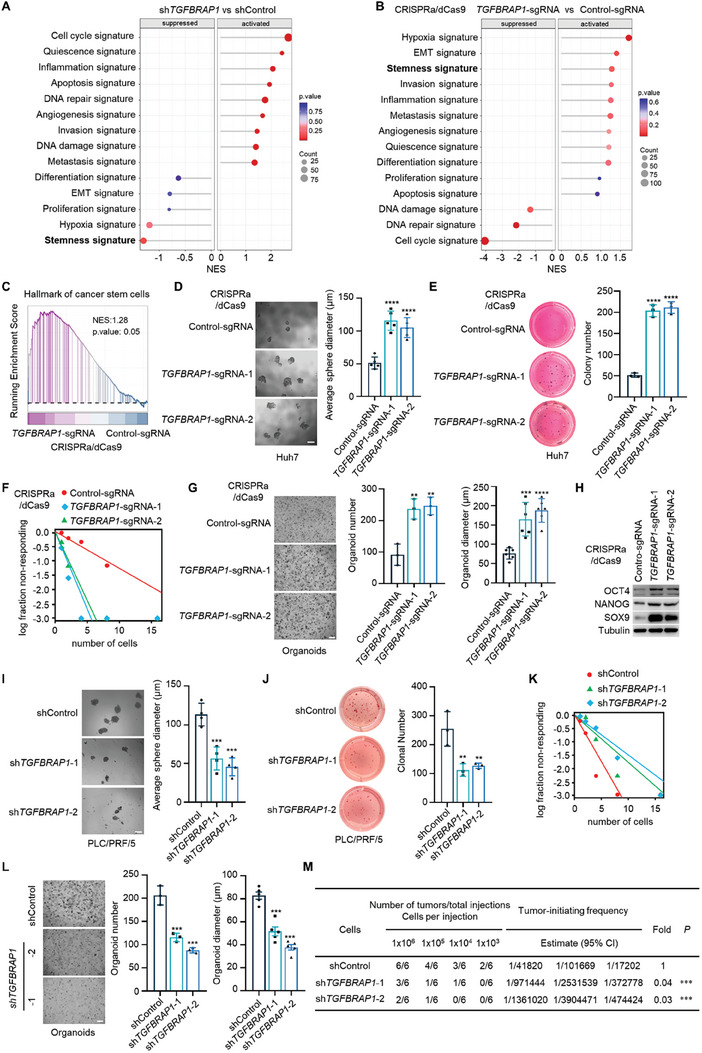 Figure 5
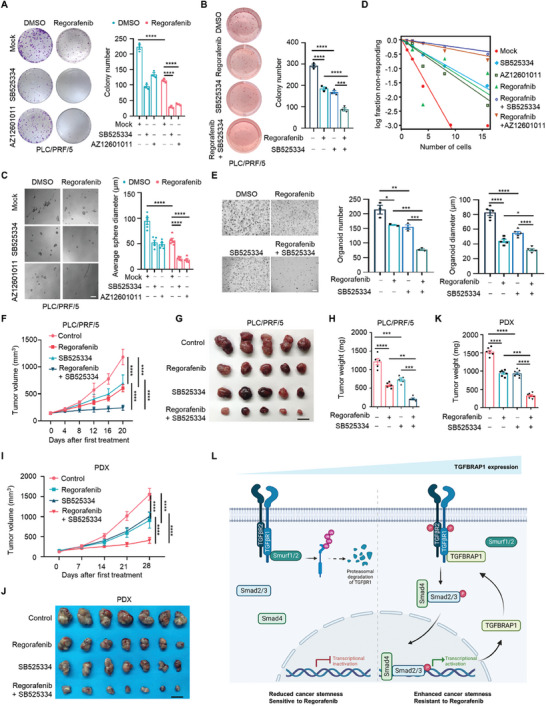 Figure 6
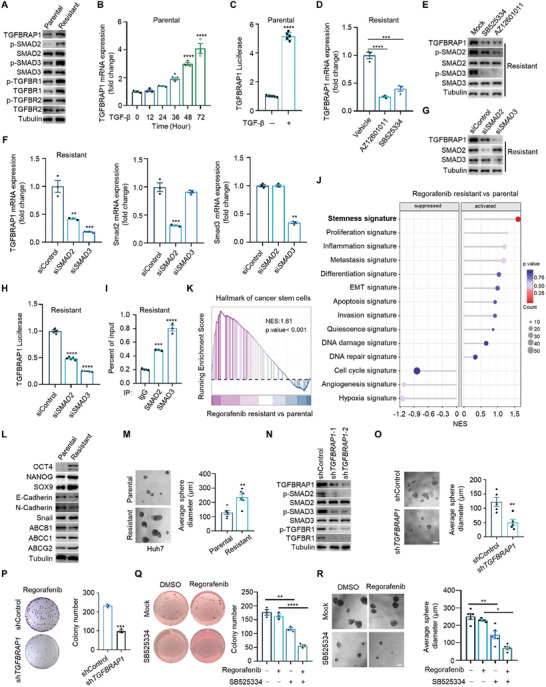 Figure 7
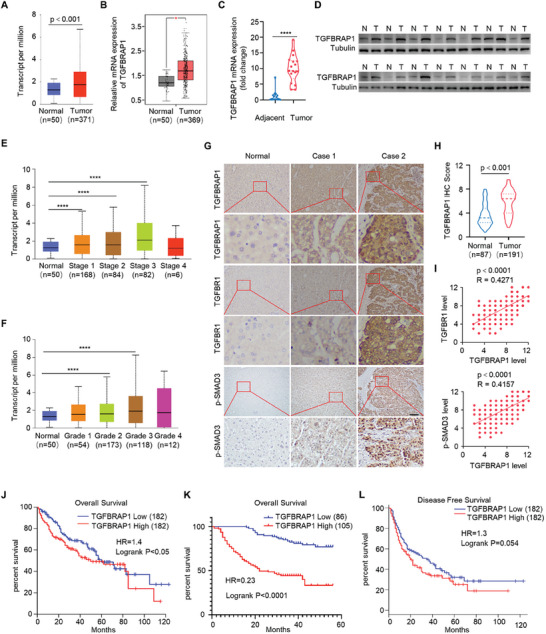 Figure 8
Peer Reviews
No public reviews on file for this paper yet. If you reviewed it on a platform where reviews are public (OpenReview, ICLR, NeurIPS, ICML), you can paste yours below so the community can read it here.
Videos
No videos yet. Explain this paper in a talk, walkthrough, or lecture? Add one.
Taxonomy
TopicsEngineering Technology and Methodologies · 3D Shape Modeling and Analysis · Anatomy and Medical Technology