[186Re]Re- and [99mTc]Tc-Tricarbonyl Metal Complexes with 1,4,7-Triazacyclononane-Based Chelators Bearing Amide, Alcohol, or Ketone Pendent Groups
Rebecca Hoerres, Ritin Kamboj, Nora Pryor, Steven P. Kelley, Heather M. Hennkens

TL;DR
Researchers developed new chelators for radiopharmaceuticals and found that amide and alcohol versions worked well, while ketone did not.
Contribution
Introduced new TACN-based chelators with amide, alcohol, and ketone arms and evaluated their radiolabeling efficiency and stability.
Findings
Amide and alcohol chelators successfully labeled with [M(CO)3]+ cores, but ketone did not.
Radiometal complexes showed high hydrophilicity and stability in various biological conditions.
Future improvements in labeling yields under milder conditions are needed for practical applications.
Abstract
1,4,7-Triazacyclononane (TACN)-based chelators, such as NOTA and NODAGA, have shown great promise as bifunctional chelators for [M(CO)3]+ cores (M = 99mTc and 186Re) in radiopharmaceutical development. Previous investigations of TACN-based chelators bearing pendent acid and ester arms demonstrated the important role the pendent arms have in successful coordination of the [M(CO)3]+ core with the TACN backbone nitrogens. In this work, we introduce three TACN-based bifunctional chelators bearing amide, alcohol, and ketone pendent arms and evaluate their (radio)labeling efficiency with the [M(CO)3]+ core as well as the in vitro stability and hydrophilicity of the resulting radiometal complexes. Following their synthesis and characterization, the amide (2) and alcohol (3) chelators were successfully labeled with the [M(CO)3]+ cores (M = natRe, 99mTc, and 186Re), while the ketone (4) was not…
Genes, proteins, chemicals, diseases, species, mutations and cell lines named across the full text — each resolved to its canonical identifier and authoritative record.
Click any figure to enlarge with its caption.
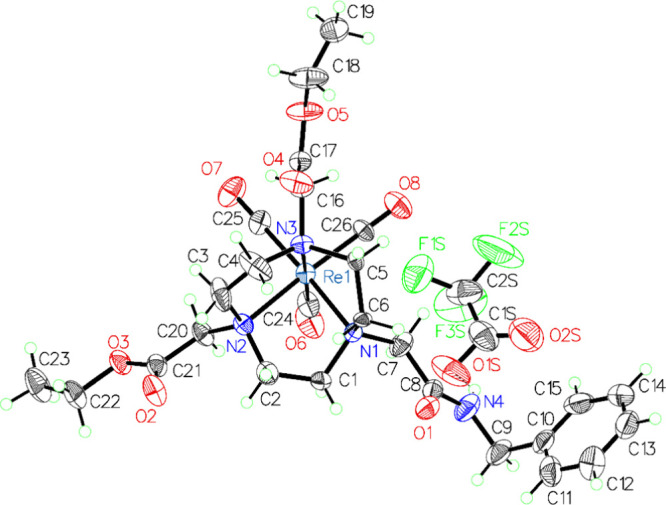 Figure 1
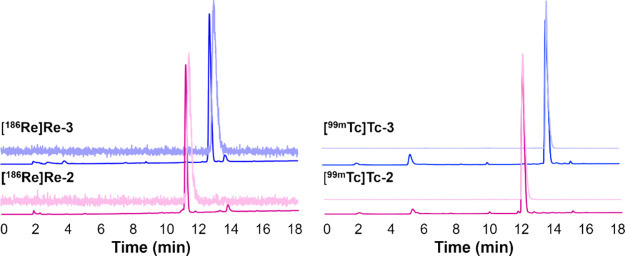 Figure 2
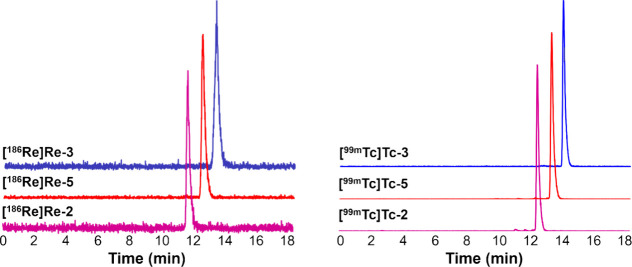 Figure 3
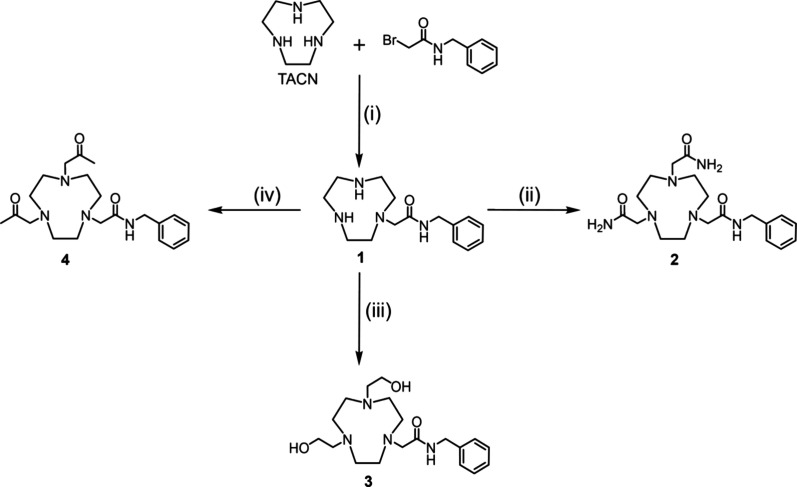 Figure 4
 Figure 5
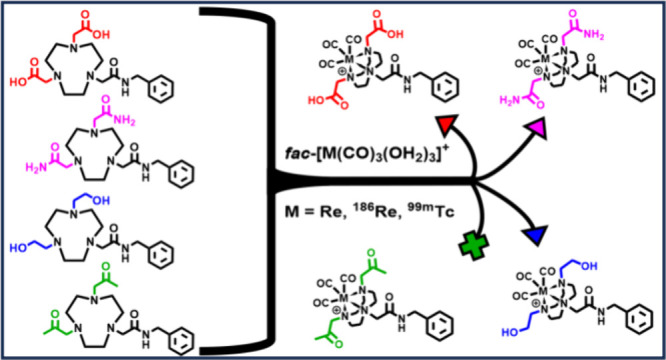 Figure 6
Peer Reviews
No public reviews on file for this paper yet. If you reviewed it on a platform where reviews are public (OpenReview, ICLR, NeurIPS, ICML), you can paste yours below so the community can read it here.
Videos
No videos yet. Explain this paper in a talk, walkthrough, or lecture? Add one.
Taxonomy
TopicsRadiopharmaceutical Chemistry and Applications · Medical Imaging Techniques and Applications · Medical Imaging and Pathology Studies