Shortened radiofrequency delivery time to optimize efficiency and safety of pulmonary vein isolation with the radiofrequency balloon: insights from the COLLABORATE registry
Alexandre Almorad, Domenico Giovanni Della Rocca, Alvise Del Monte, Johan Vijgen, Pieter Koopman, René Worck, Arne Johannessen, Caroline Lepièce, Antoine de Meester de Ravenstein, Teresa Strisciuglio, Sara Poggi, Giuseppe Stabile, Carmelo La Greca, Joseph Antoine Kheir

TL;DR
This study shows that reducing radiofrequency energy delivery time during pulmonary vein isolation procedures is as effective and safer than conventional methods.
Contribution
The study introduces shortened radiofrequency delivery times during pulmonary vein isolation using a balloon catheter, validated through a large registry.
Findings
Shortened RF delivery reduced procedure and fluoroscopy times without compromising efficacy.
The shortened RF strategy had fewer procedural complications compared to conventional delivery.
Freedom from atrial tachyarrhythmias at one year was comparable between groups.
Abstract
Previous clinical studies on pulmonary vein isolation (PVI) with a radiofrequency balloon (RFB) reported safe and effective procedures using conventional ablation settings with 20/60 s RF delivery via posterior/anterior (PST/ANT) electrodes. The latest evidence suggests that reducing the application time to 15 s (s) on the posterior wall when facing the oesophageal region is as effective as applying 20 s. To prospectively assess whether reducing RF time on PST/ANT segments to 15/45 s can ensure sufficient quality of lesion metrics and compare the new shortened ablation settings with the conventional one in terms of safety, and effectiveness at 1-year. A total of 641 patients from seven European centres were enrolled in a collaborative registry, with 374 in the conventional RF delivery group and 267 in the shortened RF delivery group. Procedural outcomes, lesion metrics, and safety…
Genes, proteins, chemicals, diseases, species, mutations and cell lines named across the full text — each resolved to its canonical identifier and authoritative record.
Click any figure to enlarge with its caption.
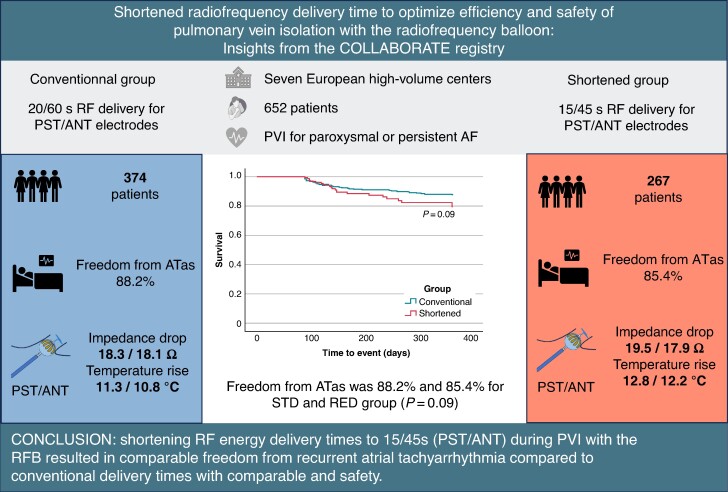 Figure 1
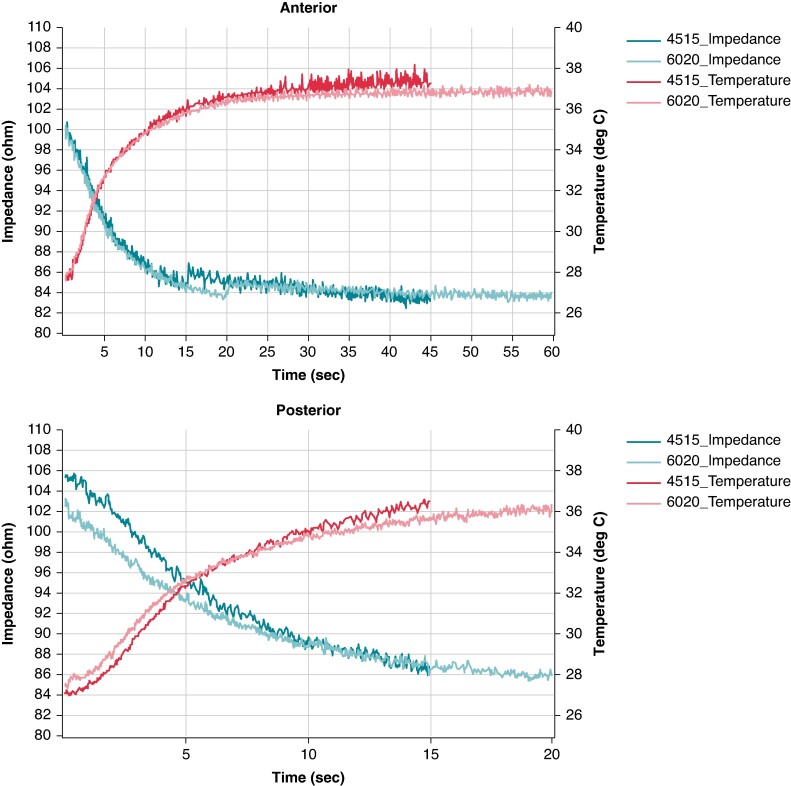 Figure 2
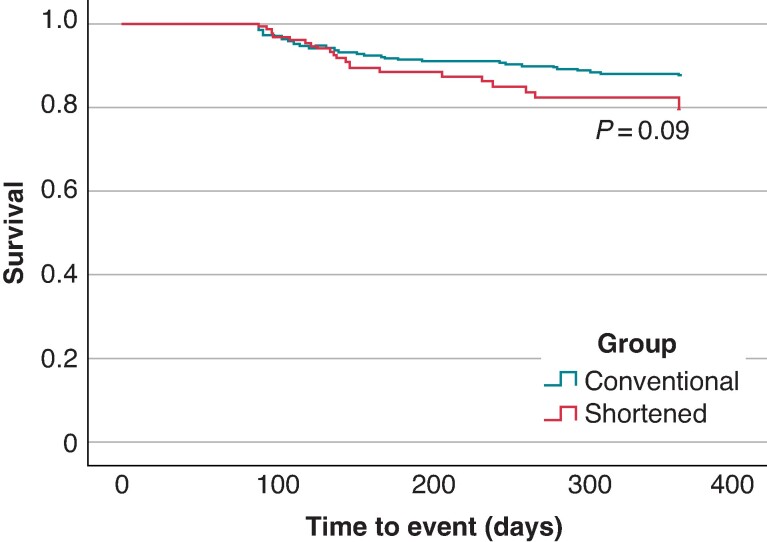 Figure 3
Peer Reviews
No public reviews on file for this paper yet. If you reviewed it on a platform where reviews are public (OpenReview, ICLR, NeurIPS, ICML), you can paste yours below so the community can read it here.
Videos
No videos yet. Explain this paper in a talk, walkthrough, or lecture? Add one.
Taxonomy
TopicsAtrial Fibrillation Management and Outcomes · Cardiac Arrhythmias and Treatments · Cardiac pacing and defibrillation studies