Prospective assessment of probe‐based confocal laser endomicroscopy under direct cholangioscopic visualization for biliary strictures that could not be definitively diagnosed using endoscopic retrograde cholangiopancreatography (with video)
Yuki Tanisaka, Shomei Ryozawa, Masafumi Mizuide, Akashi Fujita, Ryuhei Jinushi, Ryuichi Watanabe, Ryo Sato, Tomoaki Tashima, Yumi Mashimo

TL;DR
A new endoscopic technique called probe-based confocal laser endomicroscopy may help diagnose difficult biliary strictures when other methods fail.
Contribution
This study is the first to prospectively assess the feasibility and safety of pCLE under direct cholangioscopic visualization for indeterminate biliary strictures.
Findings
pCLE provided accurate diagnoses in three cases of indeterminate biliary strictures.
No adverse events were reported during the procedure.
pCLE under direct cholangioscopic visualization appears feasible and safe for diagnosing biliary strictures not identified by endoscopic retrograde cholangiopancreatography.
Abstract
The definitive diagnosis of patients with indeterminate biliary strictures remains challenging. Probe‐based confocal laser endomicroscopy (pCLE) provides real‐time histological assessment of bile duct tissues. Since no previous studies have evaluated the efficacy of pCLE under direct cholangioscopic visualization for biliary strictures that cannot be definitively diagnosed through endoscopic retrograde cholangiopancreatography using fluoroscopy, we prospectively assessed the feasibility and safety of this procedure in three cases. pCLE findings were obtained in three cases, providing accurate diagnoses. Additionally, no adverse event was reported. pCLE under direct cholangioscopic visualization for indeterminate biliary strictures might be feasible and safe, even though these strictures were not previously diagnosed using endoscopic retrograde cholangiopancreatography. Further studies…
Genes, proteins, chemicals, diseases, species, mutations and cell lines named across the full text — each resolved to its canonical identifier and authoritative record.
Click any figure to enlarge with its caption.
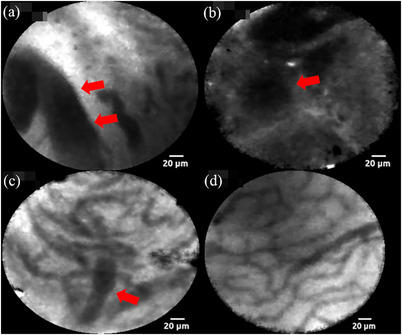 Figure 1
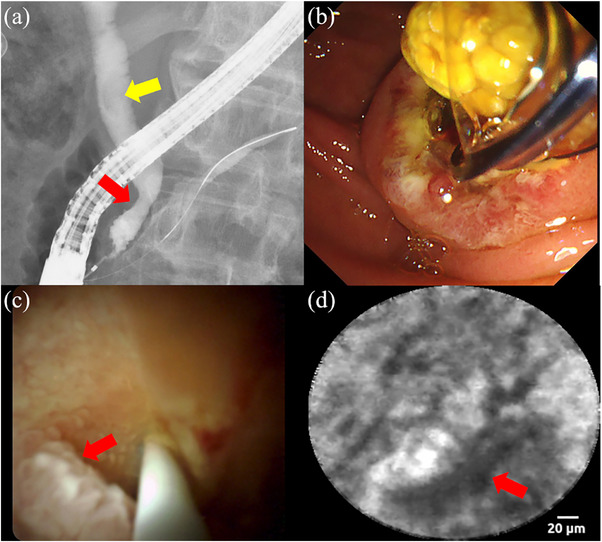 Figure 2
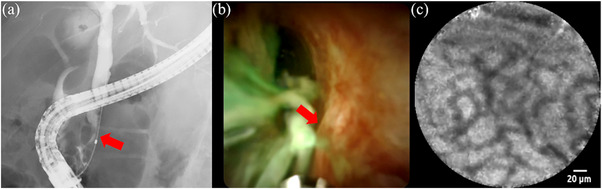 Figure 3
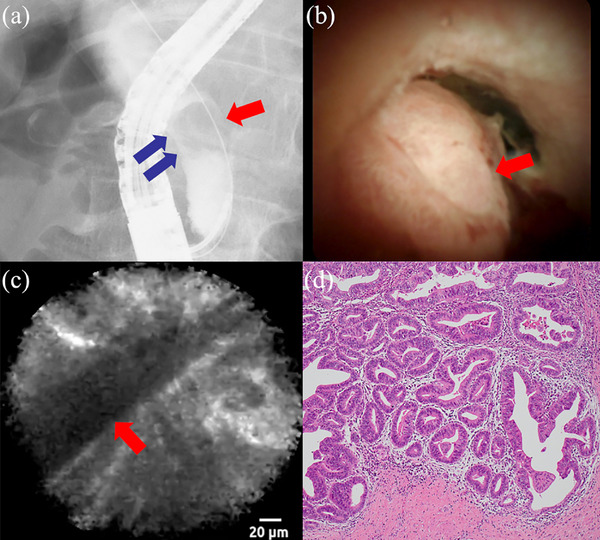 Figure 4
Peer Reviews
No public reviews on file for this paper yet. If you reviewed it on a platform where reviews are public (OpenReview, ICLR, NeurIPS, ICML), you can paste yours below so the community can read it here.
Videos
No videos yet. Explain this paper in a talk, walkthrough, or lecture? Add one.
Taxonomy
TopicsGallbladder and Bile Duct Disorders · Pancreatic and Hepatic Oncology Research · Esophageal and GI Pathology