Genetic evidence for a regulated cysteine protease catalytic triad in LegA7, a Legionella pneumophila protein that impinges on a stress response pathway
Dar Hershkovitz, Emy J. Chen, Alexander W. Ensminger, Aisling S. Dugan, Kaleigh T. Conway, Alex C. Joyce, Gil Segal, Ralph R. Isberg

TL;DR
Researchers found that a protein from Legionella pneumophila, LegA7, uses a cysteine protease domain and ankyrin repeats to activate a stress response pathway in host cells.
Contribution
The study provides genetic evidence that LegA7's cysteine protease domain and ankyrin repeats regulate its activity in a stress response pathway.
Findings
LegA7's catalytic triad is essential for its function in inhibiting yeast growth.
Mutations in ankyrin repeats and inter-domain regions disrupt LegA7's activity.
AlphaFold modeling suggests these regions regulate the protease domain's activity.
Abstract
Legionella pneumophila grows within membrane-bound vacuoles in phylogenetically diverse hosts. Intracellular growth requires the function of the Icm/Dot type-IVb secretion system, which translocates more than 300 proteins into host cells. A screen was performed to identify L. pneumophila proteins that stimulate mitogen-activated protein kinase (MAPK) activation, using Icm/Dot translocated proteins ectopically expressed in mammalian cells. In parallel, a second screen was performed to identify L. pneumophila proteins expressed in yeast that cause growth inhibition in MAPK pathway-stimulatory high-osmolarity medium. LegA7 was shared in both screens, a protein predicted to be a member of the bacterial cysteine protease family that has five carboxyl-terminal ankyrin repeats. Three conserved residues in the predicted catalytic triad of LegA7 were mutated. These mutations abolished the…
Genes, proteins, chemicals, diseases, species, mutations and cell lines named across the full text — each resolved to its canonical identifier and authoritative record.
Click any figure to enlarge with its caption.
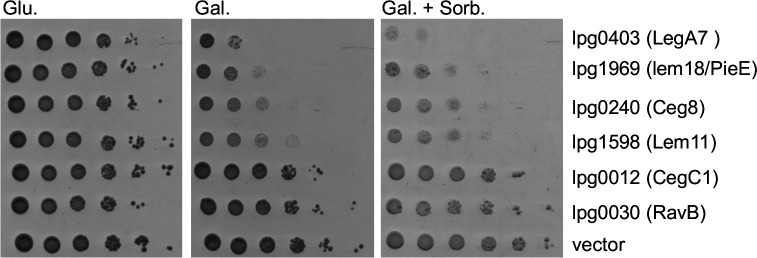 Figure 1
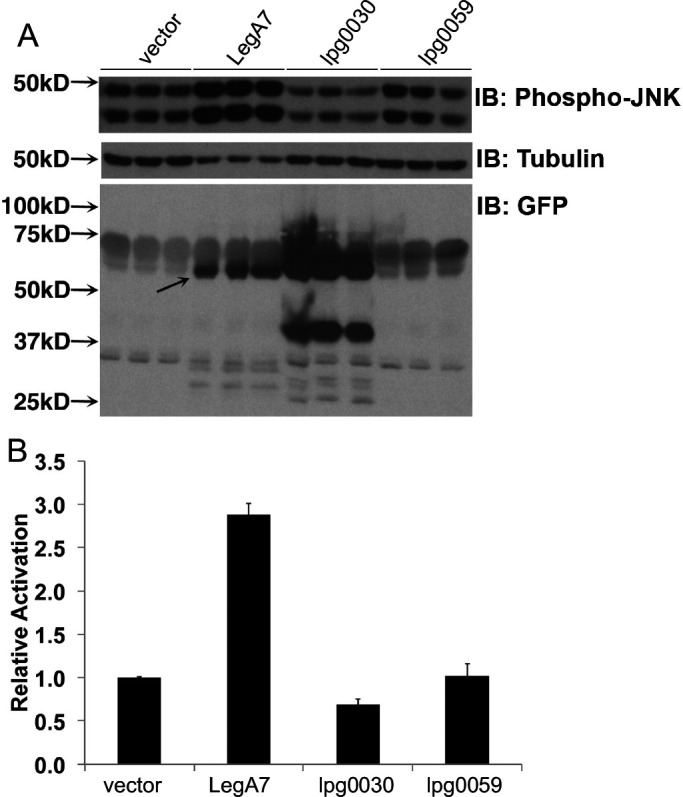 Figure 2
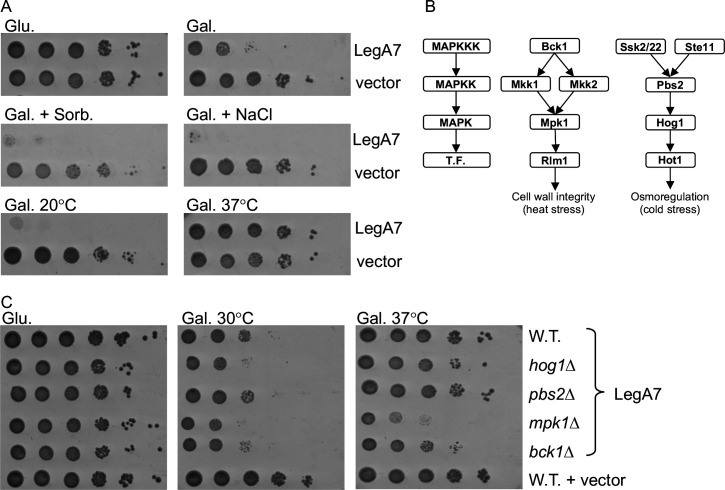 Figure 3
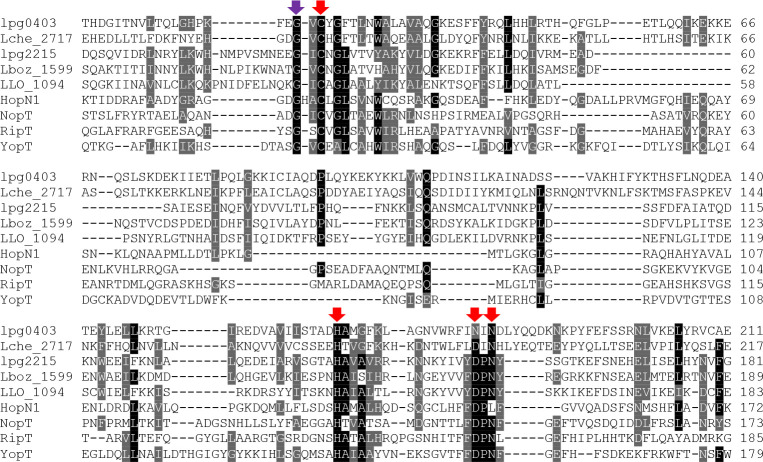 Figure 4
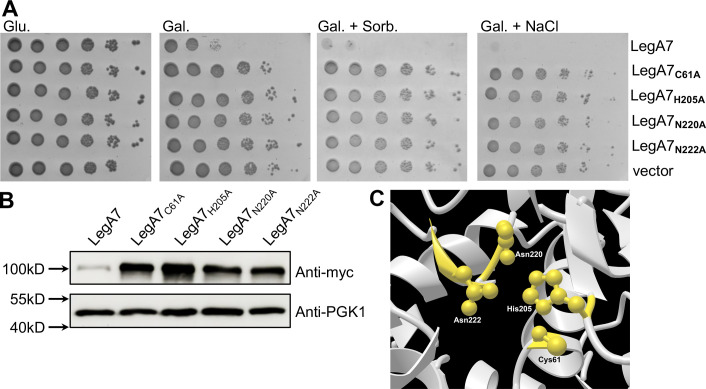 Figure 5
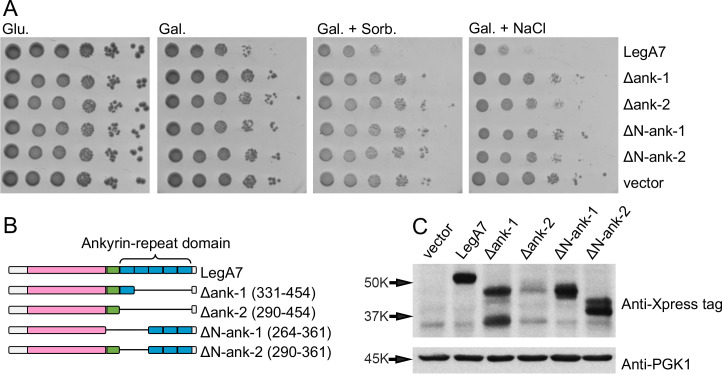 Figure 6
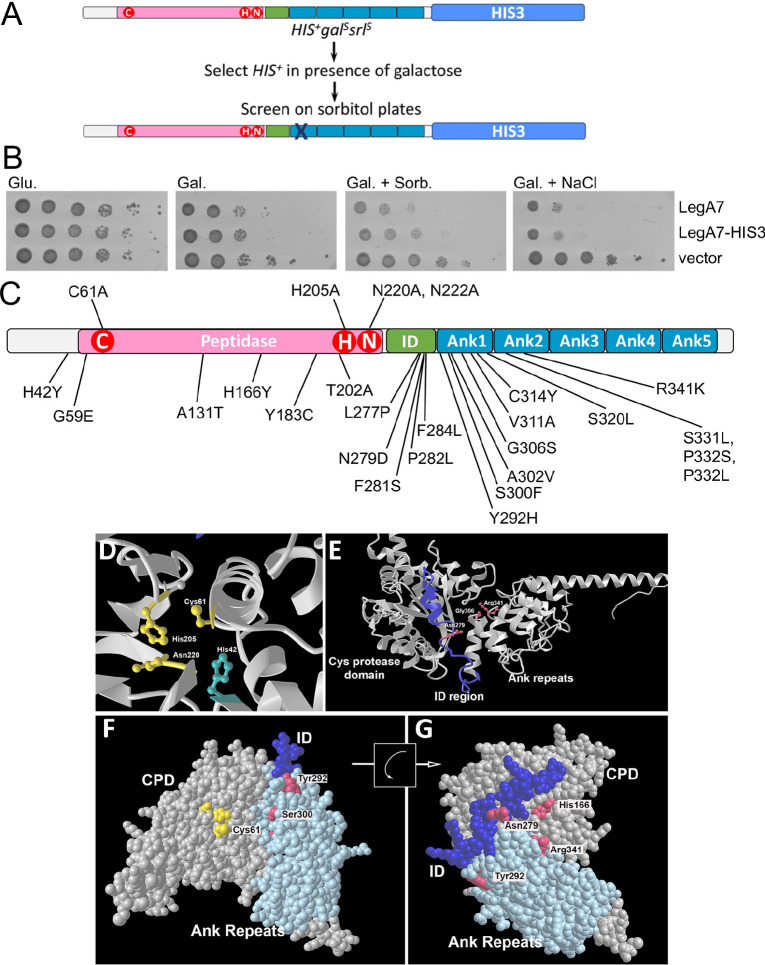 Figure 7
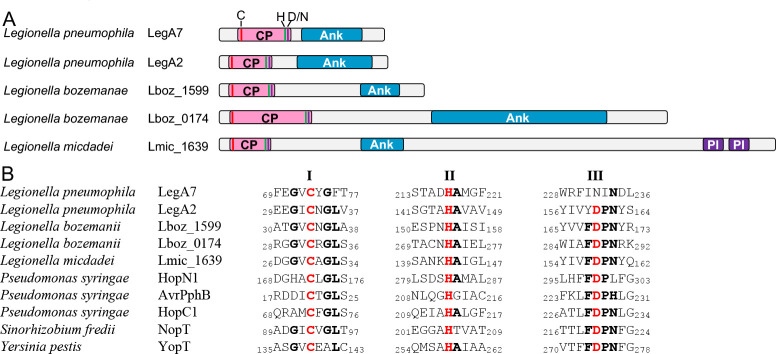 Figure 8
Peer Reviews
No public reviews on file for this paper yet. If you reviewed it on a platform where reviews are public (OpenReview, ICLR, NeurIPS, ICML), you can paste yours below so the community can read it here.
Videos
No videos yet. Explain this paper in a talk, walkthrough, or lecture? Add one.
Taxonomy
TopicsLegionella and Acanthamoeba research · Neutrophil, Myeloperoxidase and Oxidative Mechanisms · Heme Oxygenase-1 and Carbon Monoxide