Chromosome-level genome assemblies of two littorinid marine snails indicate genetic basis of intertidal adaptation and ancient karyotype evolved from bilaterian ancestors
Yan-Shu Wang, Meng-Yu Li, Yu-Long Li, Yu-Qiang Li, Dong-Xiu Xue, Jin-Xian Liu

TL;DR
This study provides detailed genome assemblies for two marine snails, revealing genetic traits linked to intertidal adaptation and a conserved karyotype from ancient ancestors.
Contribution
The study presents chromosome-level genome assemblies and identifies genetic and karyotype features specific to littorinid snails' adaptation and evolutionary history.
Findings
92 expanded gene families and 85 positively selected genes are linked to intertidal adaptation, focusing on stress response and immunity.
Genome macrosynteny analysis shows that the littorinid karyotype has remained highly conserved from the bilaterian ancestor.
Shared chromosomal events between snails and scallops suggest ancient gene linkages preserved in mollusks for over 500 million years.
Abstract
Living in the intertidal environment, littorinid snails are excellent models for understanding genetic mechanisms underlying adaptation to harsh fluctuating environments. Furthermore, the karyotypes of littorinid snails, with the same chromosome number as the presumed bilaterian ancestor, make them valuable for investigating karyotype evolution from the bilaterian ancestor to mollusks. Here, we generated high-quality, chromosome-scale genome assemblies for 2 littorinid marine snails, Littorina brevicula (927.94 Mb) and Littoraria sinensis (882.51 Mb), with contig N50 of 3.43 Mb and 2.31 Mb, respectively. Comparative genomic analyses identified 92 expanded gene families and 85 positively selected genes as potential candidates possibly associated with intertidal adaptation in the littorinid lineage, which were functionally enriched in stimulus responses, innate immunity, and apoptosis…
Genes, proteins, chemicals, diseases, species, mutations and cell lines named across the full text — each resolved to its canonical identifier and authoritative record.
Click any figure to enlarge with its caption.
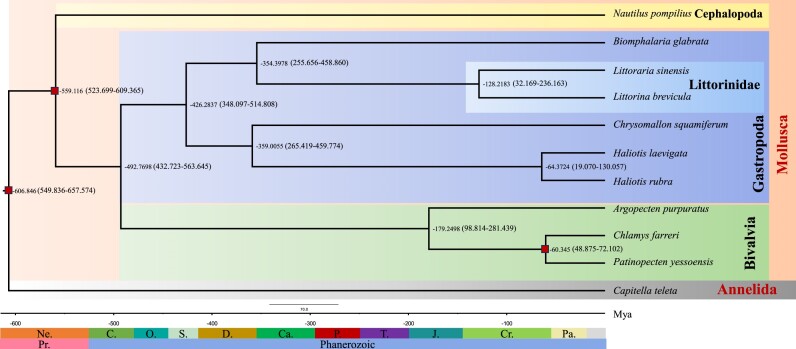 Figure 1
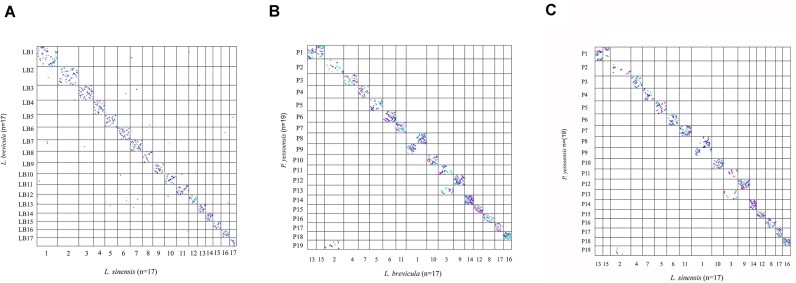 Figure 2
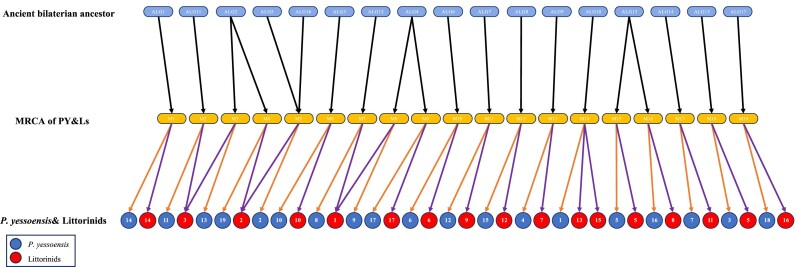 Figure 3
Peer Reviews
No public reviews on file for this paper yet. If you reviewed it on a platform where reviews are public (OpenReview, ICLR, NeurIPS, ICML), you can paste yours below so the community can read it here.
Videos
No videos yet. Explain this paper in a talk, walkthrough, or lecture? Add one.
Taxonomy
TopicsSports injuries and prevention · Shoulder Injury and Treatment