Depressed “ping pong” skull fractures in the newborns: A cohort study
Suhair M. A. Qudsieh, Mohammed M. Al Barbarawi, Omar F. Altal, Ala M. Al Barbarawi, Raed M. Al‐Zoubi, Mazhar S. Al Zoubi

TL;DR
This study examines the causes and outcomes of rare depressed 'ping pong' skull fractures in newborns, finding they are often linked to difficult deliveries and have excellent recovery.
Contribution
The study provides epidemiological data on ping pong skull fractures in newborns in Jordan, highlighting their association with instrumental delivery and favorable outcomes.
Findings
The incidence of ping pong skull fractures in newborns is 0.03% in the Jordanian population.
Most cases are linked to instrumental delivery or difficult childbirth, though some occur spontaneously.
Conservative treatment is typically sufficient, with excellent neurological and cosmetic outcomes.
Abstract
A ping pong fracture is a rare depressed skull fracture (DSF) observed in infants. It occurs due to the inward buckling of the calvarium, creating a cup‐like shape. Trauma during childbirth, particularly from instrumental delivery or the application of pressure by physicians or midwives during challenging deliveries, is the primary cause. This study aimed to investigate the epidemiologic characteristics associated with DSF in newborns and to identify the main factors related to its incidence and the type of hematoma involved. This is a retrospective case‐control analysis of all newborns delivered with DSF at King Abdulla University Hospital in Jordan between January 2008 and December 2020. The medical records were reviewed, and clinical data were collected and analyzed. Out of 42,955 live births delivered at King Abdulla University Hospital, 13 cases of DSF were observed, giving an…
Genes, proteins, chemicals, diseases, species, mutations and cell lines named across the full text — each resolved to its canonical identifier and authoritative record.
Click any figure to enlarge with its caption.
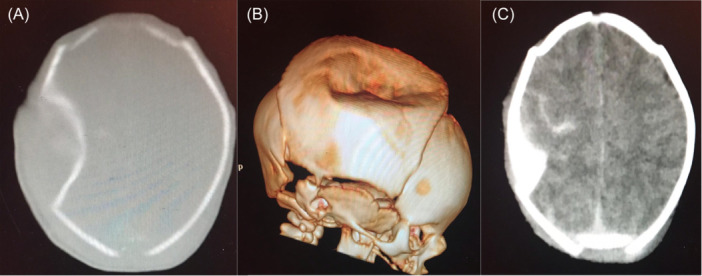 Figure 1
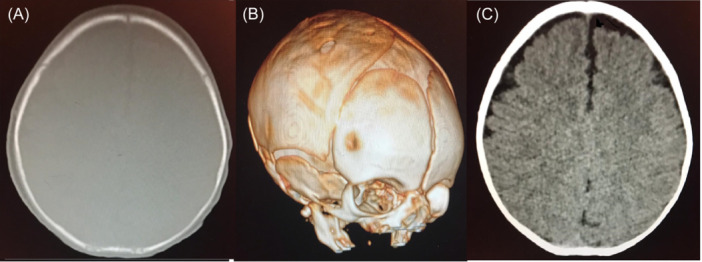 Figure 2
Peer Reviews
No public reviews on file for this paper yet. If you reviewed it on a platform where reviews are public (OpenReview, ICLR, NeurIPS, ICML), you can paste yours below so the community can read it here.
Videos
No videos yet. Explain this paper in a talk, walkthrough, or lecture? Add one.
Taxonomy
TopicsMaternal and Perinatal Health Interventions · Assisted Reproductive Technology and Twin Pregnancy · Pregnancy-related medical research