Collaboration can preserve the integrity of gold standard carbon data from forest inventories
Sara A. Goeking, Christopher W. Woodall, Renate Bush, Linda S. Heath

Abstract
Genes, proteins, chemicals, diseases, species, mutations and cell lines named across the full text — each resolved to its canonical identifier and authoritative record.
Click any figure to enlarge with its caption.
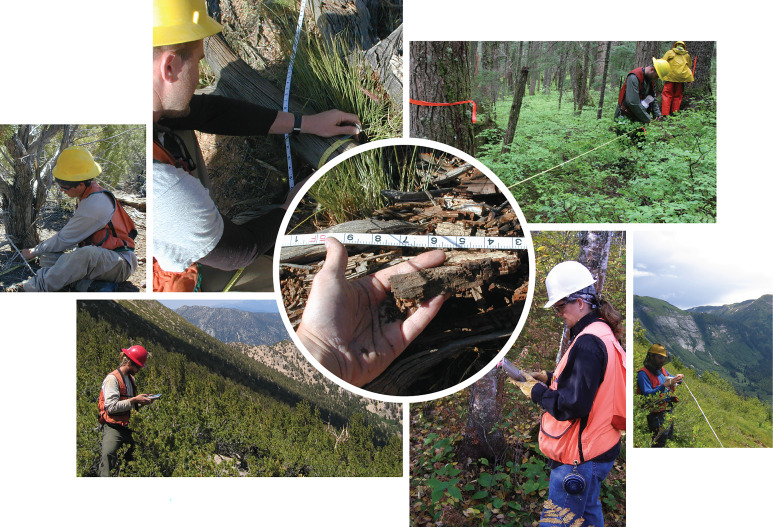 Figure 1
Peer Reviews
No public reviews on file for this paper yet. If you reviewed it on a platform where reviews are public (OpenReview, ICLR, NeurIPS, ICML), you can paste yours below so the community can read it here.
Videos
No videos yet. Explain this paper in a talk, walkthrough, or lecture? Add one.
Taxonomy
TopicsRemote Sensing and LiDAR Applications · Forest ecology and management · Atmospheric and Environmental Gas Dynamics
We applaud the recent commentary (1) proposing robust evaluation of the scientific evidence underlying Nature-based Climate Solutions (NbCS). As demand for credible forest data intensifies due to NbCS proposals, carbon markets and researchers increasingly look to national forest inventories (NFIs) as a credible data source for unbiased appraisals. Although Novick et al. (1) advocate sharing public land NFI plot locations in the United States, unconditional data sharing introduces the possibility that known plot locations will no longer serve as an unbiased sample of forest management, carbon dynamics, and NbCS effectiveness (2).
NbCS have already consumed billions of dollars via private carbon markets, which introduce motivations for particular forest carbon outcomes. The nearly 100-year-old Forest Inventory and Analysis (FIA) program in the USDA Forest Service faces conflicting demands for open data from external entities with financial incentives to meet carbon market expectations and legal requirements to protect plot location confidentiality and data integrity (3). Beyond carbon, FIA data are foundational to forest assessments such as the 2022 Executive Order to inventory mature and old-growth forests, US compliance with European Union’s deforestation regulations, and the United Nations Global Stocktake. Thus, compromised data integrity would adversely affect not only NbCS appraisal but other national-scale assessments.
As an alternative to disclosing plot locations, we support and encourage the establishment of off-grid FIA plots near eddy covariance flux towers (1). Such a “network of networks” (1) facilitates increased precision of scaled forest attributes from the FIA dataset as the foundation of NbCS quantification. This solution encourages collaboration, similar to partnerships between academic institutions and FIA that refined individual tree allometric equations in a flexible framework (4). FIA’s plot network and rich data stream can serve not only as calibration and validation mechanisms for a proliferation of third-party NbCS products, or even reconciliation of divergent land sector carbon budgets, but also as a national, statistically sound framework for NbCS science and applications (Fig. 1).
We encourage potential collaborators to leverage the network of networks proposal (1) in conjunction with the >99% of the FIA database that is already publicly available (https://www.fs.usda.gov/research/programs/fia#data-and-tools). Similar to other nations’ NFIs (2), FIA shares confidential data with collaborators who follow data security plans, do not publish data that would permit the identification of plot locations (3), and advance FIA’s mission as authorized by the US Congress (5). Annually, FIA responds to hundreds of data requests and supports thousands of data downloads (5), leading to insights into carbon dynamics (6?–8), projections of future disturbance risk (9), and calibration or validation of widely used geospatial datasets (10).
We thank Novick et al. (1) for illuminating the need for increasing the scientific veracity of NbCS while empowering social response. We share these goals and foresee collaborations that creatively and transparently advance our collective ability to understand and apply NbCS in forests without compromising foundational datasets such as FIA and other nations’ forest inventories. As climate change progresses, the importance of maintaining FIA data credibility and integrity will grow alongside society’s need for these data (2).
The reference list from the paper itself. Each links out to its DOI / PubMed record.
- 1K. A. Novick , We need a solid scientific basis for nature-based climate solutions in the United States. Proc. Natl. Acad. Sci. U.S.A. 121, e 2318505121 (2024).38536749 10.1073/pnas.2318505121 PMC 10998553 · doi ↗ · pubmed ↗
- 2R. Päivinen , Ensure forest-data integrity for climate change studies. Nat. Clim. Change 13, 495–496 (2023).
- 3Panel on Approaches to Sharing Blended Data in a 21st Century Data Infrastructure, Committee on National Statistics, Division of Behavioral and Social Sciences and Education, National Academies of Sciences, Engineering, and Medicine, “Technical approaches to managing risk when sharing blended data” in Toward a 21st Century National Data Infrastructure: Managing Privacy and Confidentiality Risks with Blended Data, J. P. Reiter, J. Park, Eds. (National Academies Press, 2024), chap. 2.
- 4J. A. Westfall , A National-Scale Tree Volume, Biomass, and Carbon Modeling System for The United States (U.S. Department of Agriculture, Forest Service, 2023).
- 5K. Renwick, 2022 Forest Inventory and Analysis Business Report (2023). https://www.fs.usda.gov/research/understory/2022-forest-inventory-and-analysis-business-report. Accessed 26 April 2024.
- 6J. A. Hogan, G. M. Domke, K. Zhu, D. J. Johnson, J. W. Lichstein, Climate change determines the sign of productivity trends in US forests. Proc. Natl. Acad. Sci. U.S.A. 121, e 2311132121 (2024).38227667 10.1073/pnas.2311132121 PMC 10823222 · doi ↗ · pubmed ↗
- 7S. Healey, Z. Yang, Carbon storage and carbon-equivalent albedo impact for US forests, by age and forest type. Zenodo (2023), 10.5281/ZENODO.8320433. Deposited 6 September 2023. · doi ↗
- 8G. M. Domke , Toward inventory-based estimates of soil organic carbon in forests of the United States. Ecol. Appl. 27, 1223–1235 (2017).28165643 10.1002/eap.1516 · doi ↗ · pubmed ↗