Biophysical mapping of TREM2-ligand interactions reveals shared surfaces for engagement of multiple Alzheimer’s disease ligands
Jessica A. Greven, Joshua R. Wydra, Rory A. Greer, Cynthia Zhi, Christopher Camitta, Yuhua Song, Jennifer M. Alexander-Brett, Tom J. Brett

TL;DR
This study identifies specific regions on the TREM2 receptor involved in binding various Alzheimer's disease-related proteins, suggesting potential drug targets.
Contribution
The study maps TREM2-ligand interactions using TREM2 variants and biolayer interferometry, revealing shared and distinct binding sites.
Findings
Mutations in the hydrophobic site of TREM2 disrupt binding to apoE4 and TDP-43.
apoE4 and oAβ42 share overlapping binding sites on TREM2, while C1q binding is affected by mutations in the basic site.
TREM2 uses the hydrophobic site for multiple ligands and distinct basic sites for others like IL-34.
Abstract
TREM2 is a signaling receptor expressed on microglia that has emerged as an important drug target for Alzheimer’s disease and other neurodegenerative diseases. While a number of TREM2 ligands have been identified, little is known regarding the structural details of how they engage. To better understand this, we created a protein library of 28 different TREM2 variants that could be used to map interactions with various ligands using biolayer interferometry. The variants are located in previously identified putative binding surfaces on TREM2 called the hydrophobic site, basic site, and site 2. We found that mutations to the hydrophobic site ablated binding to apoE4 and TDP-43. Competition binding experiments indicated that apoE4 and oAβ42 share overlapping binding sites on TREM2. In contrast, binding to C1q was disrupted most strongly by mutations to the basic site, including R46, with…
Genes, proteins, chemicals, diseases, species, mutations and cell lines named across the full text — each resolved to its canonical identifier and authoritative record.
Click any figure to enlarge with its caption.
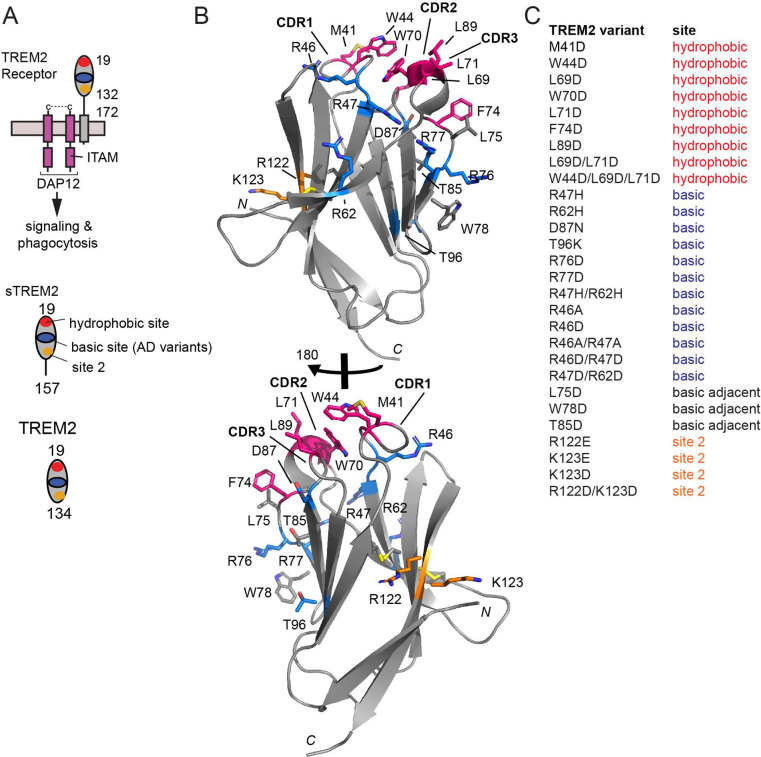 Figure 1
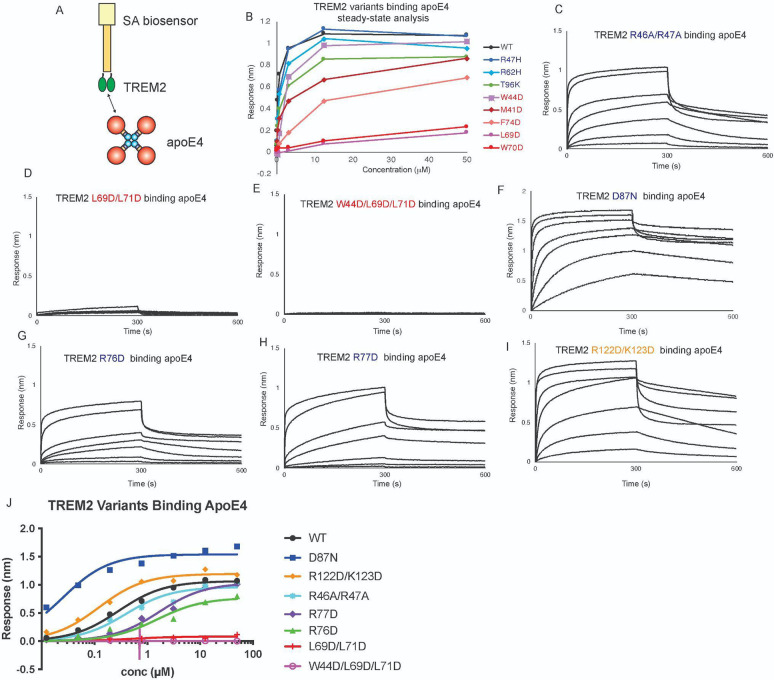 Figure 2
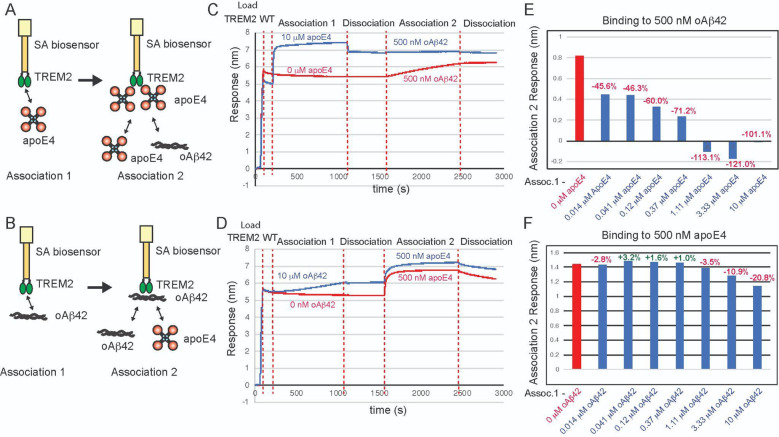 Figure 3
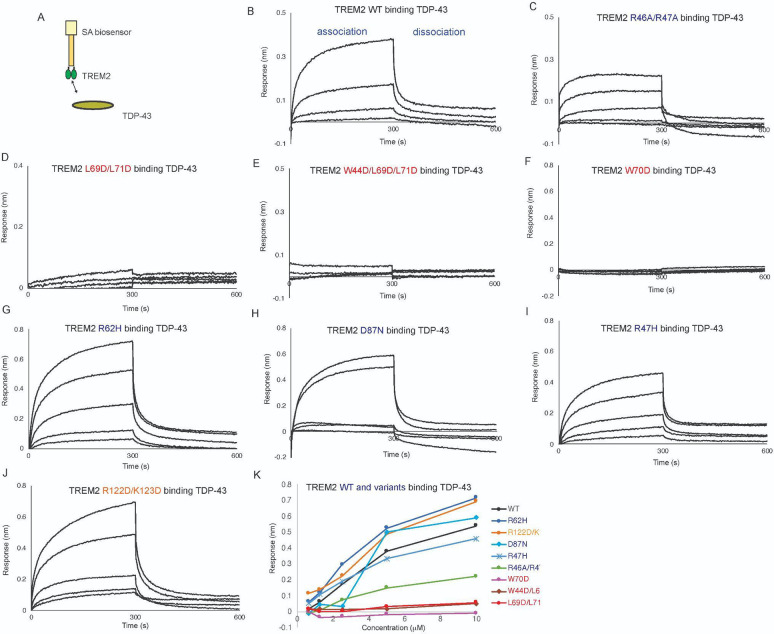 Figure 4
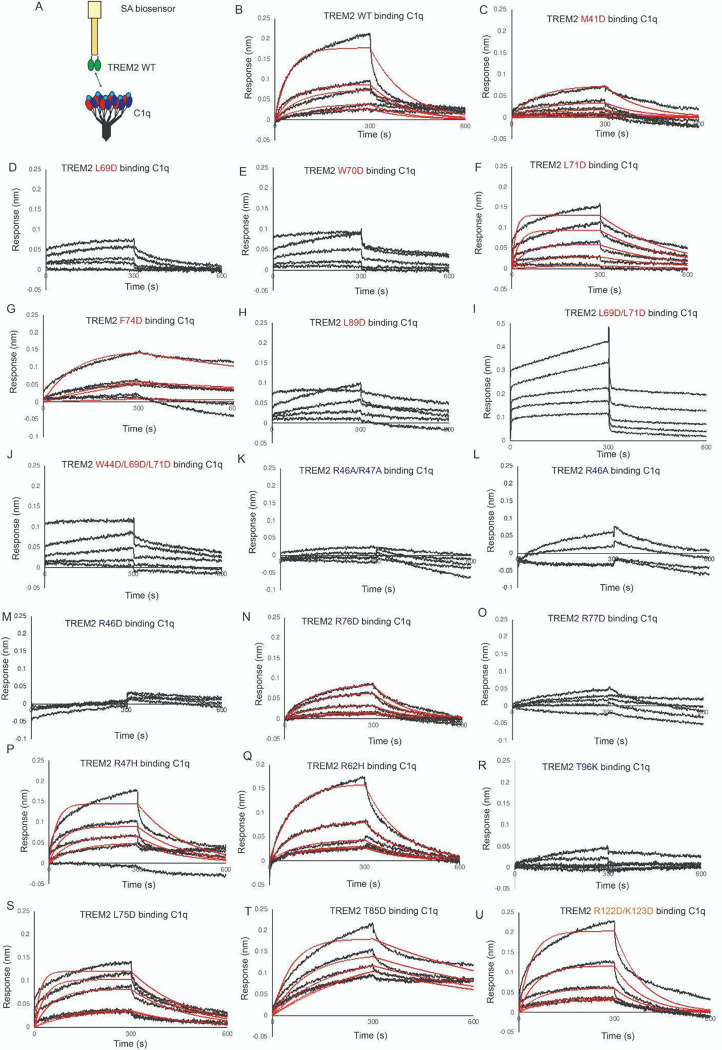 Figure 5
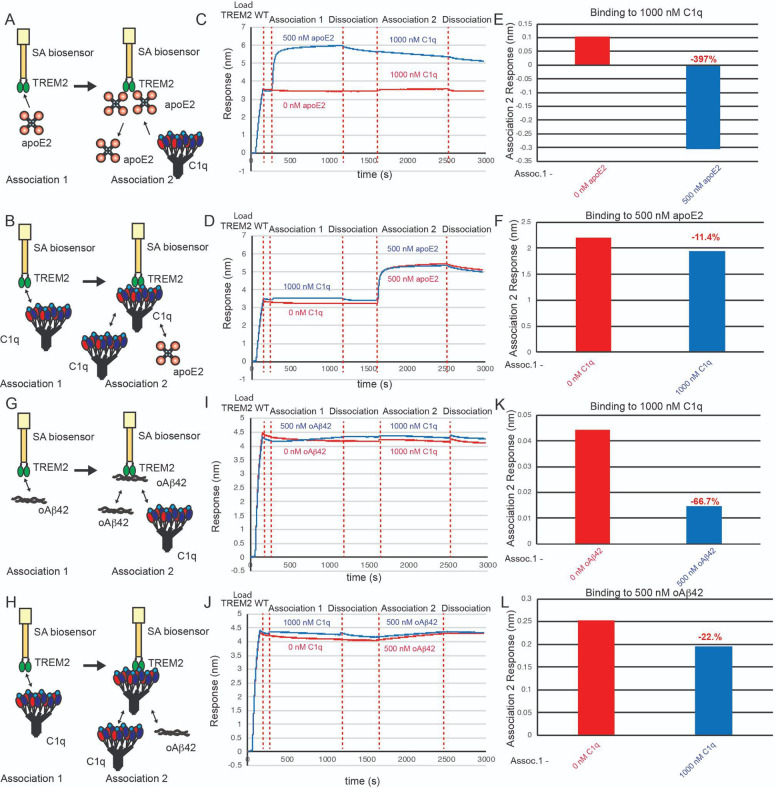 Figure 6
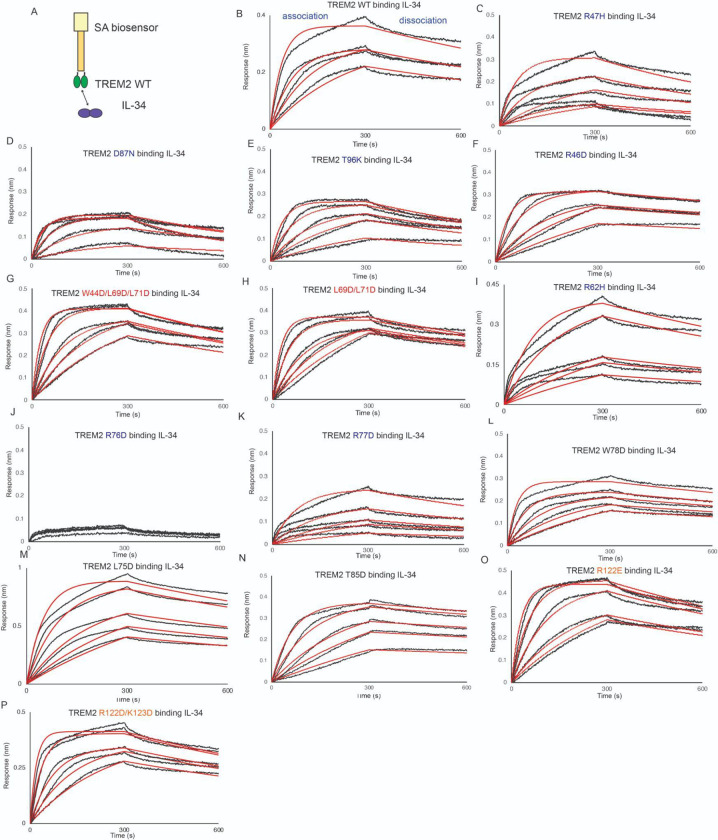 Figure 7
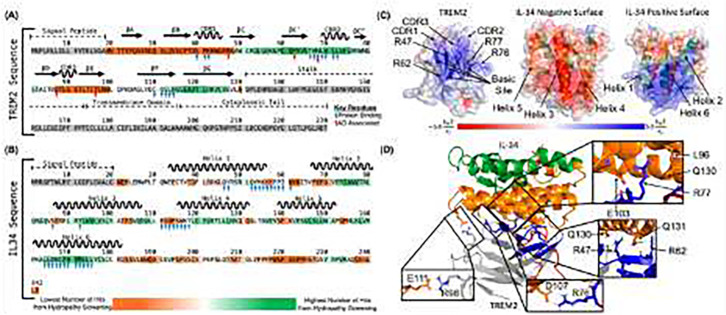 Figure 8
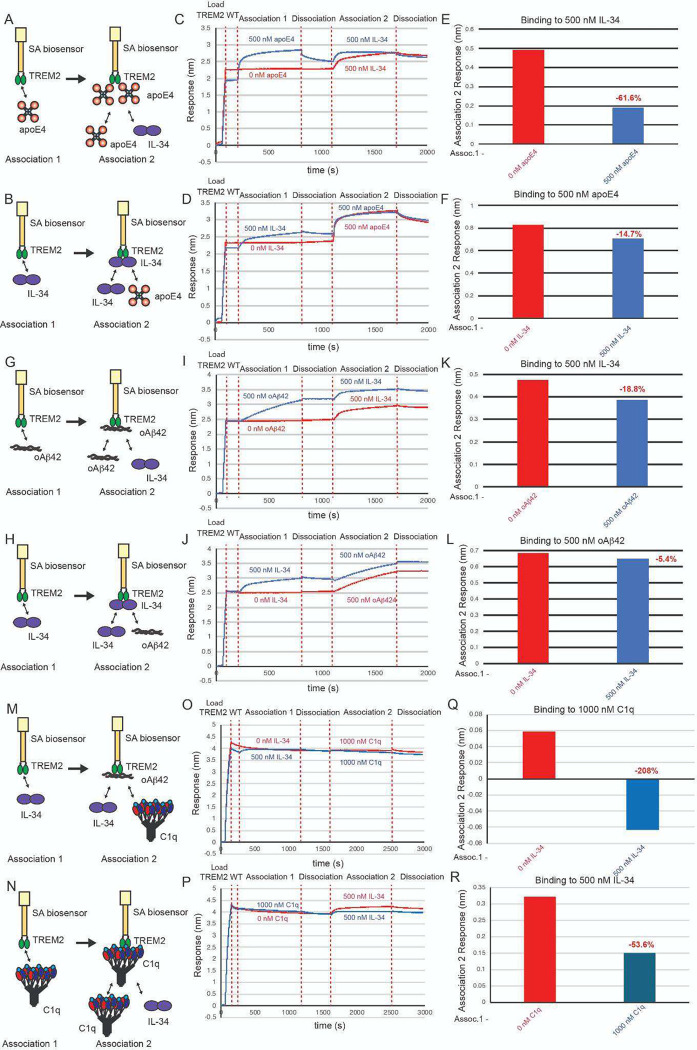 Figure 9
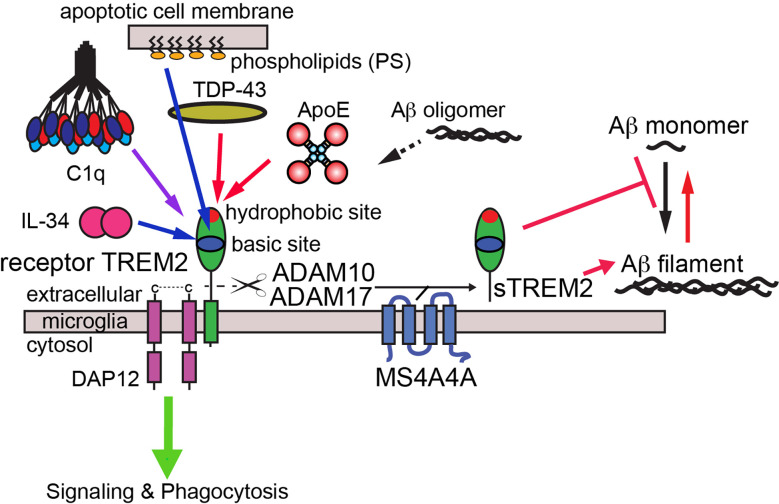 Figure 10
Peer Reviews
No public reviews on file for this paper yet. If you reviewed it on a platform where reviews are public (OpenReview, ICLR, NeurIPS, ICML), you can paste yours below so the community can read it here.
Videos
No videos yet. Explain this paper in a talk, walkthrough, or lecture? Add one.
Taxonomy
TopicsNeuroinflammation and Neurodegeneration Mechanisms · Inflammation biomarkers and pathways · Medicinal Plants and Neuroprotection