Malonate is relevant to the lung environment and induces genome-wide stress responses in Pseudomonas aeruginosa
Karishma Bisht, Moamen M. Elmassry, Hafij Al Mahmud, Shubhra Bhattacharjee, Amrika Deonarine, Caroline Black, Michael J. San Francisco, Abdul N. Hamood, Catherine A. Wakeman

TL;DR
Malonate, a carbon source in lung airways, influences Pseudomonas aeruginosa growth and stress responses, revealing its role in bacterial adaptation.
Contribution
The study reveals novel transcriptional and phenotypic adaptations of P. aeruginosa to malonate, including stress responses and biofilm formation.
Findings
Malonate supports robust growth in P. aeruginosa cystic fibrosis isolates compared to glycerol.
Malonate activates glyoxylate and methylcitrate cycles and induces oxidative and metal stress responses.
Clinical strains show conserved phenotypic responses to malonate, including biofilm-like aggregates and antibiotic tolerance.
Abstract
Versatility in carbon source utilization is a major contributor to niche adaptation in Pseudomonas aeruginosa. Malonate is among the abundant carbon sources in the lung airways, yet it is understudied. Recently, we characterized how malonate impacts quorum sensing regulation, antibiotic resistance, and virulence factor production in P. aeruginosa. Herein, we show that malonate as a carbon source supports more robust growth in comparison to glycerol in several cystic fibrosis isolates of P. aeruginosa. Furthermore, we show phenotypic responses to malonate were conserved among clinical strains, i.e., formation of biomineralized biofilm-like aggregates, increased tolerance to kanamycin, and increased susceptibility to norfloxacin. Moreover, we explored transcriptional adaptations of P. aeruginosa UCBPP-PA14 (PA14) in response to malonate versus glycerol as a sole carbon source using…
Genes, proteins, chemicals, diseases, species, mutations and cell lines named across the full text — each resolved to its canonical identifier and authoritative record.
Click any figure to enlarge with its caption.
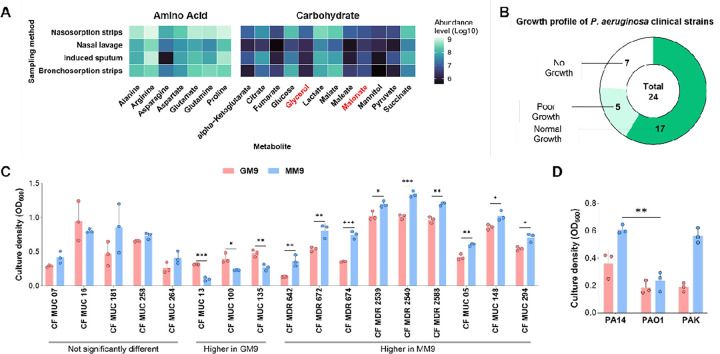 Figure 1
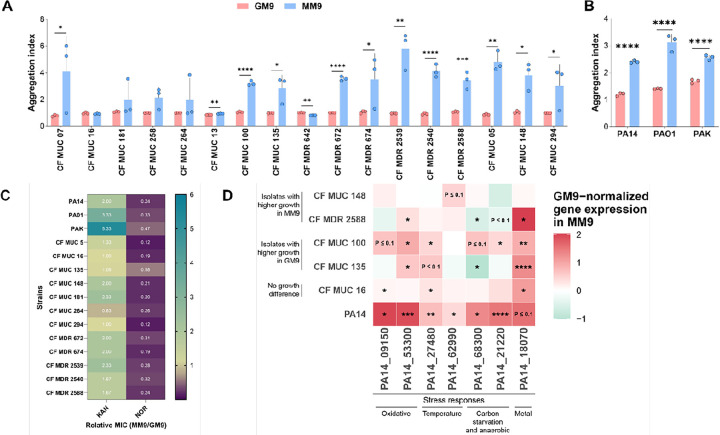 Figure 2
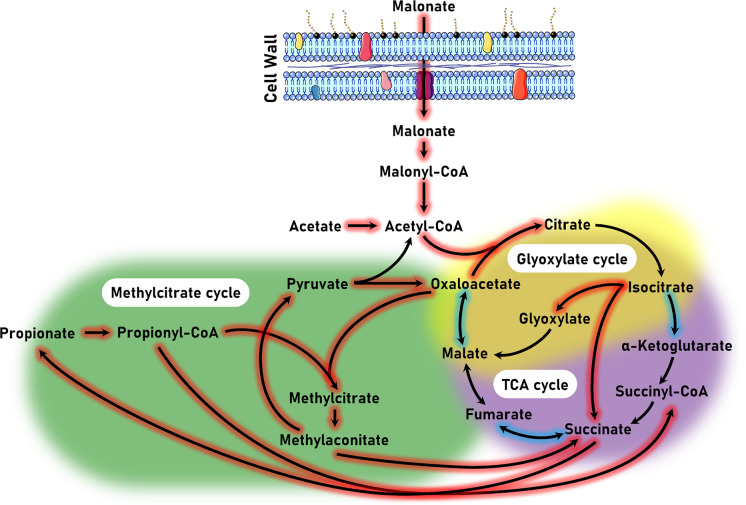 Figure 3
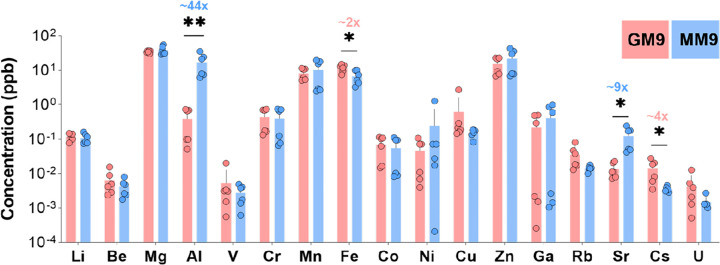 Figure 4
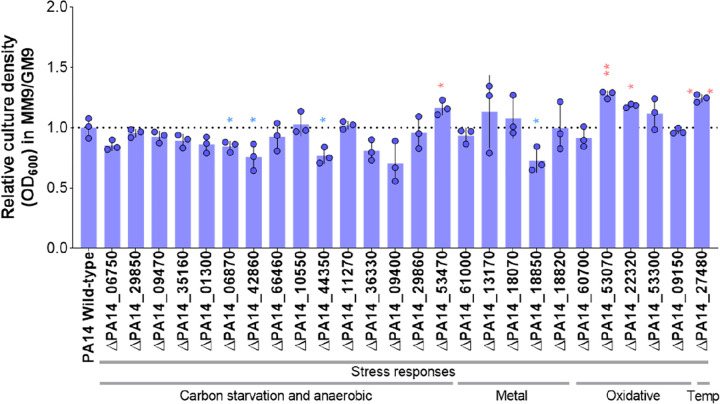 Figure 5
Peer Reviews
No public reviews on file for this paper yet. If you reviewed it on a platform where reviews are public (OpenReview, ICLR, NeurIPS, ICML), you can paste yours below so the community can read it here.
Videos
No videos yet. Explain this paper in a talk, walkthrough, or lecture? Add one.
Taxonomy
TopicsBacterial biofilms and quorum sensing · Antibiotic Resistance in Bacteria · Vibrio bacteria research studies