Translation stalling induced mitochondrial entrapment of ribosomal quality control related proteins offers cancer cell vulnerability
Rani ojha, Ishaq Tantray, Shouryarudra Banerjee, Suman Rimal, Sandiya Thirunavukkarasu, Saripella Srikrishna, Wah Chiu, Uttam Mete, Aditya Sharma, Nandita Kakkar, Bingwei Lu

TL;DR
This study reveals that mitochondrial entrapment of ribosomal quality control proteins, like ABCE1, can make cancer cells vulnerable to treatment.
Contribution
The paper introduces stalling-induced mitochondrial stress (SIMS) as a novel mechanism linking ribosomal quality control to cancer cell vulnerability.
Findings
ABCE1 and ZNF598 are positively correlated with high-grade bladder cancer.
Translational stalling increases mitochondrial localization of RQC proteins, reducing their cytosolic availability.
Cancer stem cells show increased ABCE1 expression, contributing to resistance against mitochondrial dysfunction.
Abstract
Ribosome-associated quality control (RQC) monitors ribosomes for aberrant translation. While the role of RQC in neurodegenerative disease is beginning to be appreciated, its involvement in cancer is understudied. Here, we show a positive correlation between RQC proteins ABCE1 and ZNF598 and high-grade muscle-invasive bladder cancer. Translational stalling by the inhibitor emetine (EME) leads to increased mitochondrial localization of RQC factors including ABCE1, ZNF598, and NEMF, which are continuously imported into mitochondria facilitated by increased mitochondrial membrane potential caused by EME. This reduces the availability of these factors in the cytosol, compromising the effectiveness of RQC in handling stalled ribosomes in the cytosol and those associated with the mitochondrial outer membrane (MOM). Imported RQC factors form aggregates inside the mitochondria in a process we…
Genes, proteins, chemicals, diseases, species, mutations and cell lines named across the full text — each resolved to its canonical identifier and authoritative record.
Click any figure to enlarge with its caption.
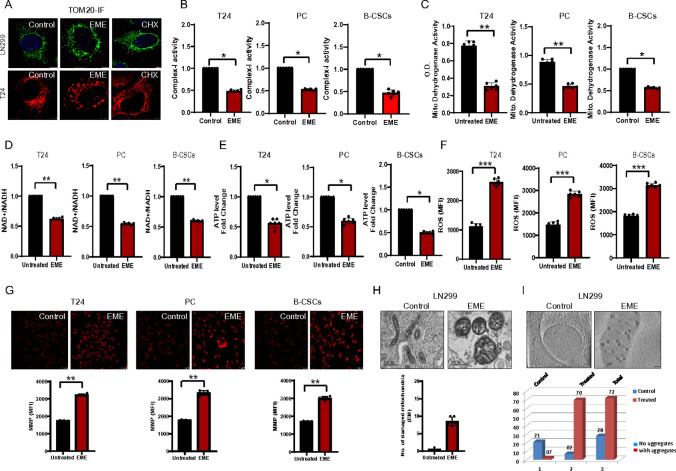 Figure 1
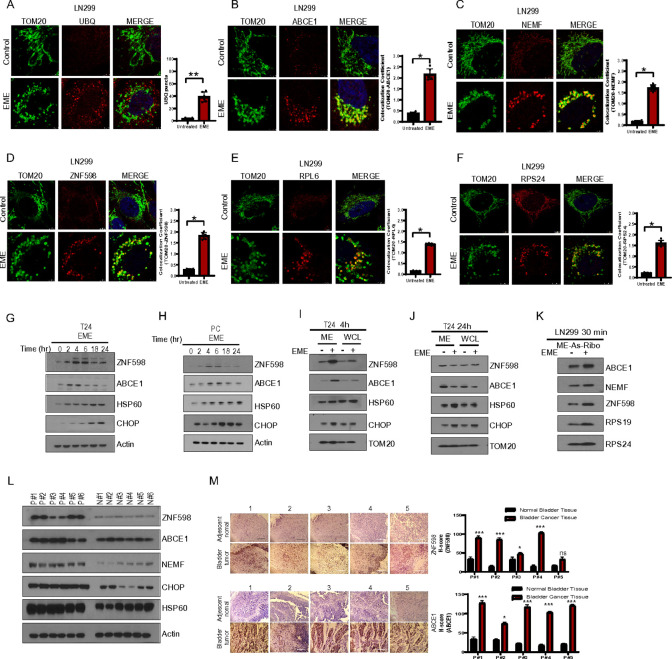 Figure 2
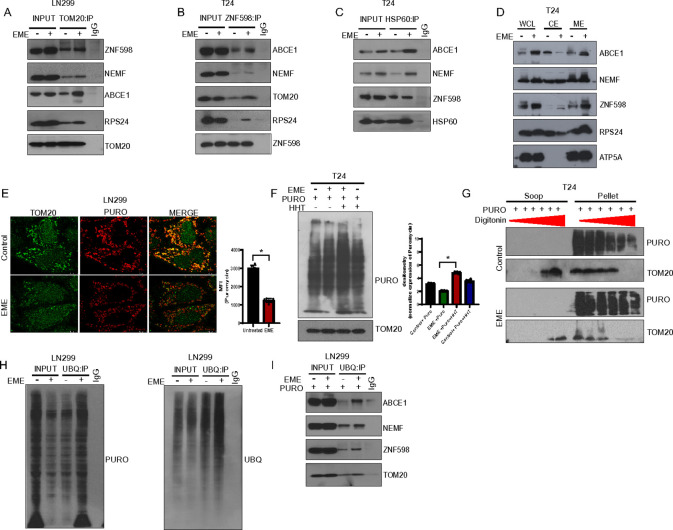 Figure 3
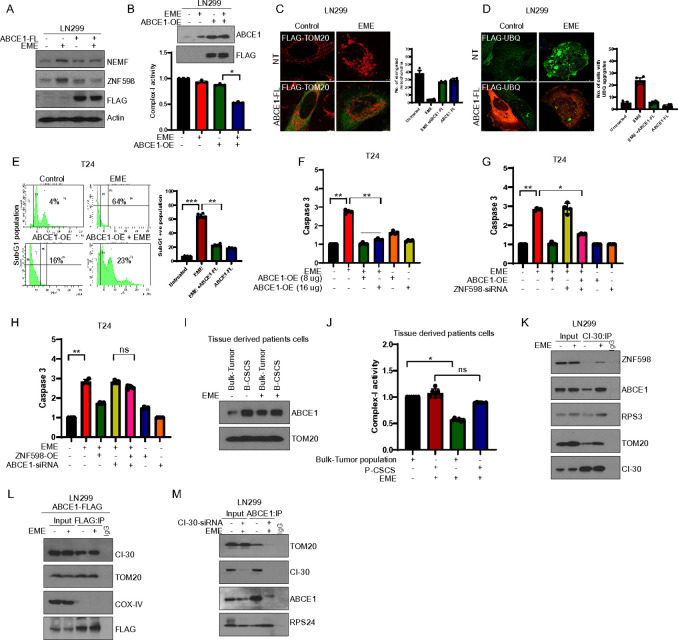 Figure 4
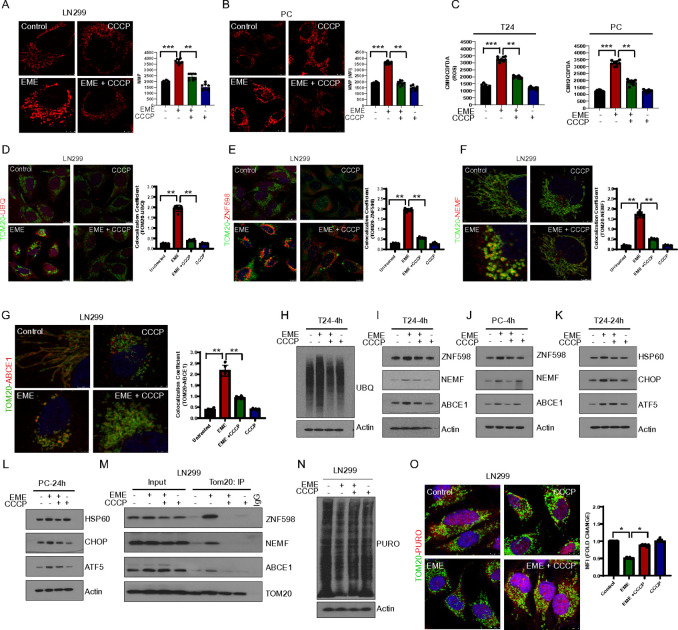 Figure 5
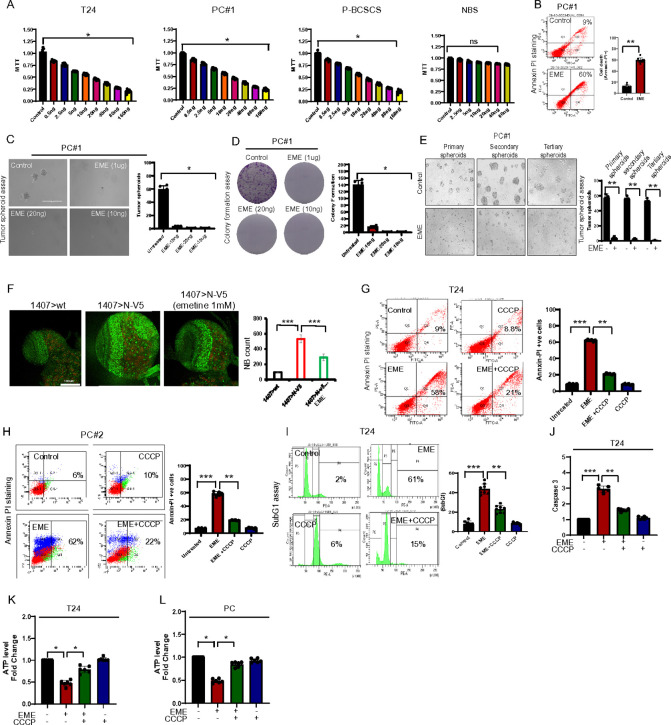 Figure 6
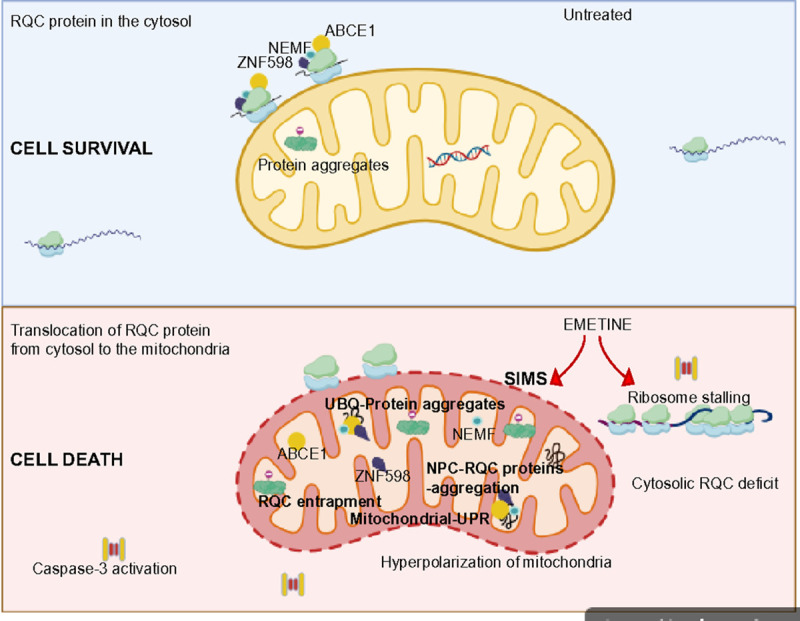 Figure 7
Peer Reviews
No public reviews on file for this paper yet. If you reviewed it on a platform where reviews are public (OpenReview, ICLR, NeurIPS, ICML), you can paste yours below so the community can read it here.
Videos
No videos yet. Explain this paper in a talk, walkthrough, or lecture? Add one.
Taxonomy
TopicsRNA and protein synthesis mechanisms · RNA modifications and cancer · Mitochondrial Function and Pathology