Similarity of Phenotype in Three Male Patients With the c.320A>G Variant in ALG13: Possible Genotype–Phenotype Correlation
Rebecca Finnegan, Mary O'Regan, Máire White, Gianpiero L. Cavalleri, Norman Delanty, Katherine A. Benson, Marie T. Greally

TL;DR
Three males with the same ALG13 gene variant show similar symptoms, suggesting a link between this specific genetic change and a shared condition.
Contribution
Identifies a possible genotype–phenotype correlation for the c.320A>G variant in ALG13 in males.
Findings
Three males with the c.320A>G variant in ALG13 share a consistent phenotype including infantile spasms and drug-resistant epilepsy.
The observed phenotype is not commonly seen in males with other ALG13 pathogenic variants.
The findings suggest a specific genotype–phenotype correlation for the c.320A>G variant in ALG13.
Abstract
Congenital disorders of glycosylation (CDG) are a group of neurometabolic diseases that result from genetic defects in the glycosylation of proteins and/or lipids. Multiple pathogenic genes contribute to the varying reported phenotypes of individuals with CDG‐1 syndromes, most of which are inherited as autosomal recessive traits, although X‐linked inheritance has also been reported. Pathogenic variants in the asparagine‐linked glycosylation 13 homolog (ALG13) gene have been implicated in the aetiology of developmental and epileptic encephalopathy (DEE) 36 (OMIM:*300776, DEE36). The NM_001099922.3:c.320A>G; p.(Asn107Ser) variant is the most frequently described pathogenic variant in ALG13, with 59 females and 2 males with this variant reported to date. We report on a male with a de novo, hemizygous variant in ALG13: c.320A>G; p.(Asn107Ser), whose phenotype resembles that of two…
Genes, proteins, chemicals, diseases, species, mutations and cell lines named across the full text — each resolved to its canonical identifier and authoritative record.
Click any figure to enlarge with its caption.
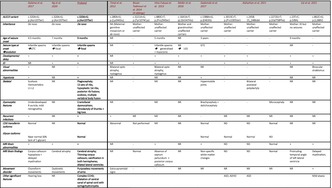 Figure 1
Peer Reviews
No public reviews on file for this paper yet. If you reviewed it on a platform where reviews are public (OpenReview, ICLR, NeurIPS, ICML), you can paste yours below so the community can read it here.
Videos
No videos yet. Explain this paper in a talk, walkthrough, or lecture? Add one.
Taxonomy
TopicsGenomics and Rare Diseases · Connective tissue disorders research · Genetics and Neurodevelopmental Disorders