Maintenance of zilucoplan efficacy in patients with generalised myasthenia gravis up to 24 weeks: a model-informed analysis
Guillemette de la Borderie, Damien Chimits, Babak Boroojerdi, Melissa Brock, Petra W. Duda, Fiona Grimson, Paul Mahoney, Foteini Strimenopoulou, Gary Cutter, Inmaculada Aban, Susanna Brauner, Malin Petersson, James F. Howard, Nathan Bennett

TL;DR
This study shows that zilucoplan remains effective for up to 24 weeks in treating generalized myasthenia gravis.
Contribution
A novel model-informed Bayesian analysis combining real-world and clinical trial data to predict long-term treatment efficacy.
Findings
Zilucoplan showed a predicted mean improvement of −4.55 in MG-ADL scores at 24 weeks compared to control.
The probability of a favorable treatment effect with zilucoplan was over 99.9% at 24 weeks.
The method could reduce the need for long placebo-controlled trials in future studies.
Abstract
Clinical efficacy of zilucoplan has been demonstrated in a 12-week, placebo-controlled, phase III study in patients with acetylcholine receptor autoantibody-positive generalised myasthenia gravis (gMG). However, placebo-controlled zilucoplan data past 12 weeks are not available. Predict the treatment effect of zilucoplan versus control (placebo or standard of care) in patients with gMG up to 24 weeks. A model-informed analysis (MIA) within a Bayesian framework. Part 1 of the MIA comprised a control meta-regression using aggregate data on control response over time from randomised studies and a national myasthenia gravis (MG) registry. In Part 2, a combined Bayesian analysis of individual patient-level data from the phase II (NCT03315130), RAISE (NCT04115293) and RAISE-XT (NCT04225871) studies of zilucoplan was conducted using posterior distributions from Part 1 as informative priors.…
Genes, proteins, chemicals, diseases, species, mutations and cell lines named across the full text — each resolved to its canonical identifier and authoritative record.
Click any figure to enlarge with its caption.
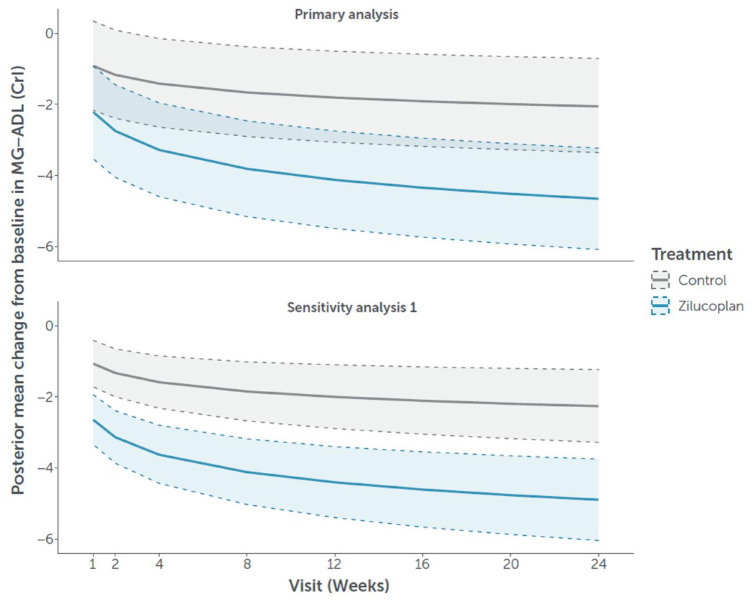 Figure 1
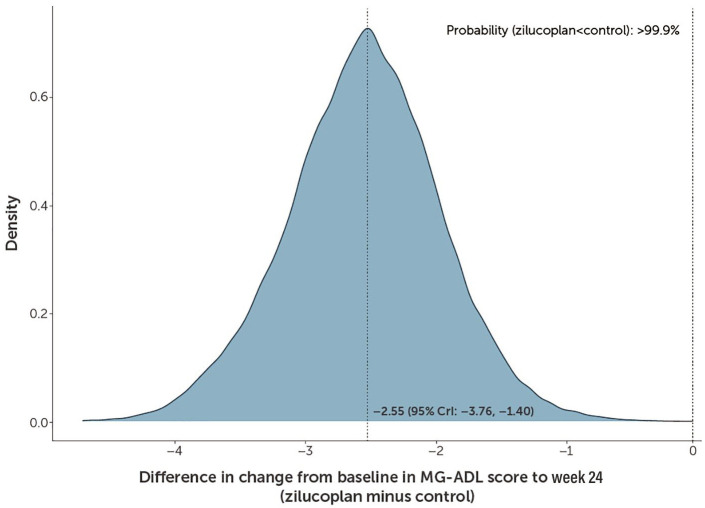 Figure 2
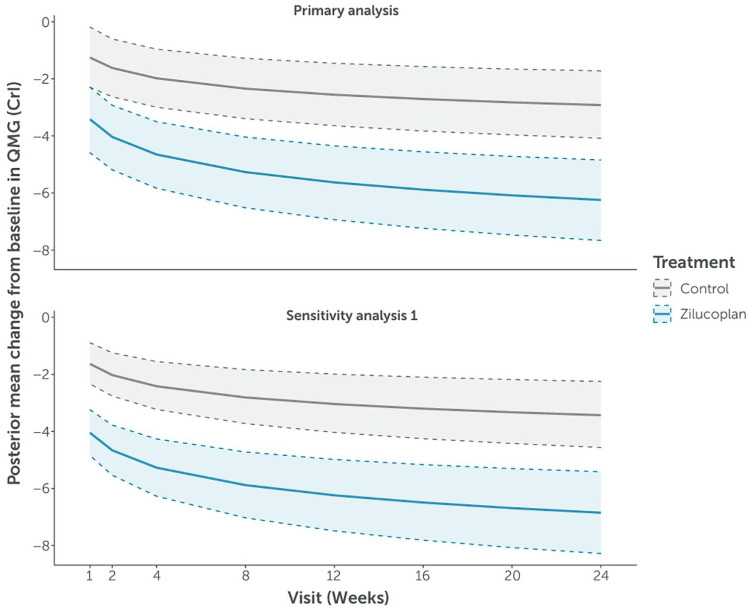 Figure 3
 Figure 4
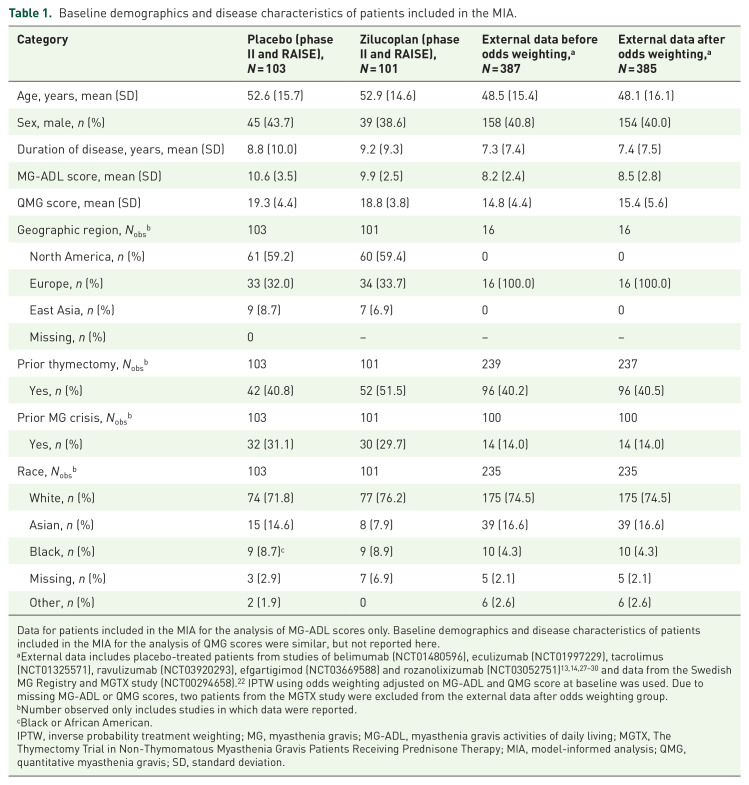 Figure 5
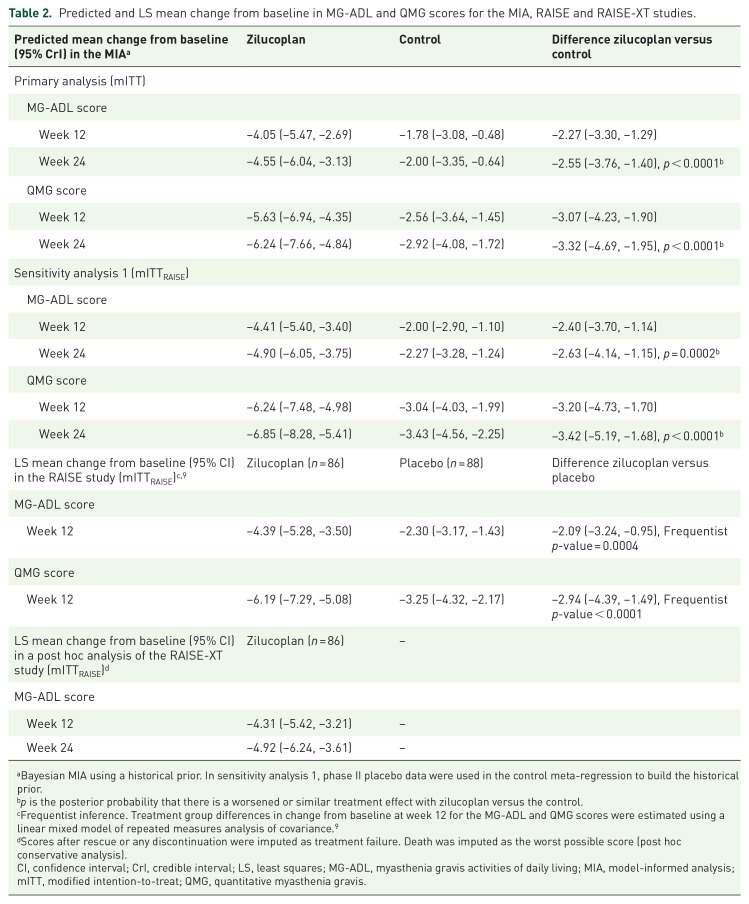 Figure 6
Peer Reviews
No public reviews on file for this paper yet. If you reviewed it on a platform where reviews are public (OpenReview, ICLR, NeurIPS, ICML), you can paste yours below so the community can read it here.
Videos
No videos yet. Explain this paper in a talk, walkthrough, or lecture? Add one.
Taxonomy
TopicsMyasthenia Gravis and Thymoma