Quantifying the Transition from Unconscious to Conscious Detection of Temporal Patterns in Vigilance Tasks: A Unique Adaptation of Mackworth’s Clock Test
Guaraci Lima de Morais, Tatiana Okubo Rocha Pinho, Leonardo Crespim, Osmar Pinto Neto

TL;DR
This study explores how unconscious pattern detection transitions to conscious awareness during vigilance tasks, using a modified version of Mackworth’s Clock Test.
Contribution
The study introduces a novel adaptation of Mackworth’s Clock Test to quantify the transition from unconscious to conscious pattern detection.
Findings
23% of participants showed faster reaction times before consciously identifying the pattern.
56% of participants who reported the pattern demonstrated prior knowledge 40 seconds before conscious recognition.
Results highlight variability in detection accuracy and reaction times among participants.
Abstract
This study investigates the cognitive mechanisms underlying vigilance and pattern recognition using a novel adaptation of Mackworth’s Clock Test. We aimed to quantify the time it takes for temporal patterns detected unconsciously through implicit learning to surface in the conscious mind within a dynamic vigilance task environment. Forty-eight participants detected random and non-disclosed rhythmic anomalous clock hand movements in this setting. Our results indicate significant variability in detection accuracy, reaction times, and the ability to recognize the hidden pattern among participants. Notably, 23% of all participants and 56% of those who consciously reported the pattern exhibited statistically lower reaction times indicative of knowledge of the pattern 40 s before conscious identification. These findings provide valuable insights into the transition from unconscious to…
Genes, proteins, chemicals, diseases, species, mutations and cell lines named across the full text — each resolved to its canonical identifier and authoritative record.
Click any figure to enlarge with its caption.
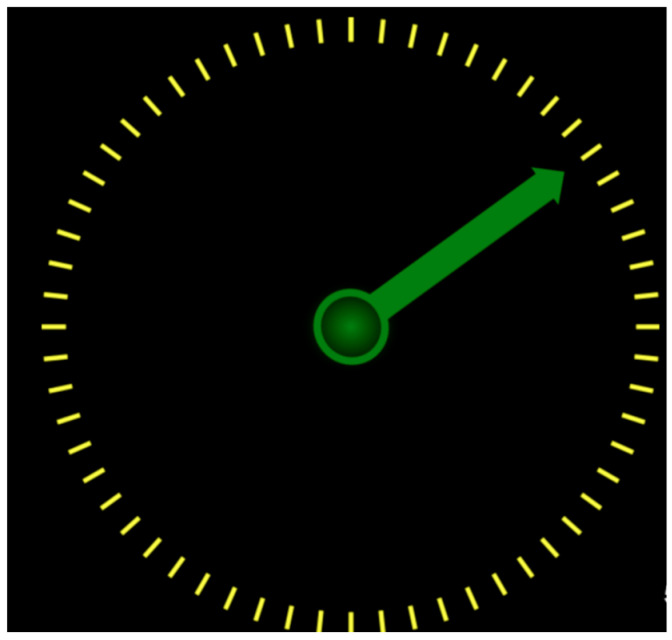 Figure 1
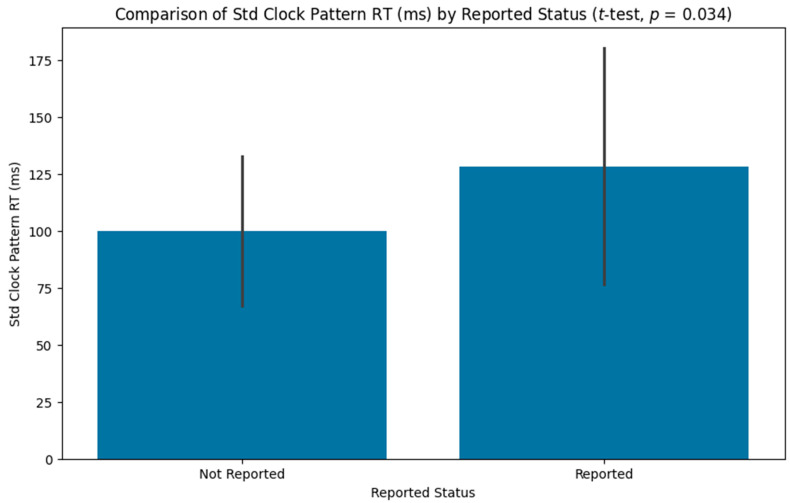 Figure 2
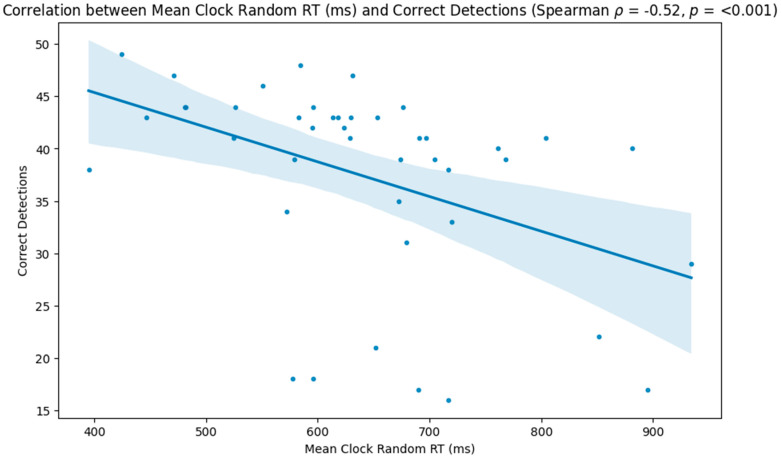 Figure 3
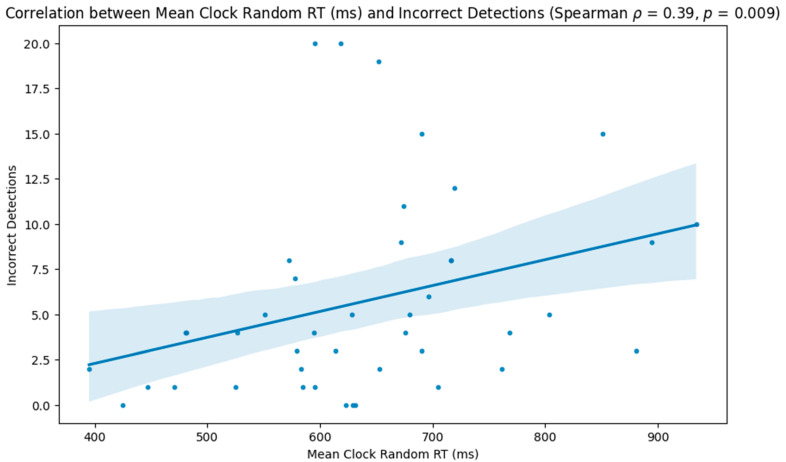 Figure 4
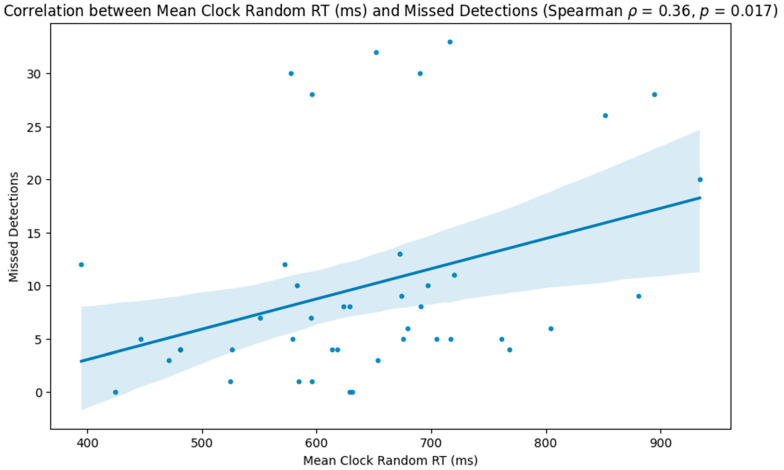 Figure 5
Peer Reviews
No public reviews on file for this paper yet. If you reviewed it on a platform where reviews are public (OpenReview, ICLR, NeurIPS, ICML), you can paste yours below so the community can read it here.
Videos
No videos yet. Explain this paper in a talk, walkthrough, or lecture? Add one.
Taxonomy
TopicsHuman-Automation Interaction and Safety · Safety Warnings and Signage · Neural and Behavioral Psychology Studies