Assessing the Color Stability of Polymethyl Methacrylate (PMMA) Dental Restorations Polished With a Novel Polishing Agent Derived From Pulverized Old Alginate Impressions
Rahul Koppaka, Nabeel Ahmed, Urvi R Echhpal

TL;DR
A new polishing agent made from old alginate impressions improves the color stability of PMMA dental restorations compared to traditional methods.
Contribution
A novel polishing agent derived from recycled alginate impressions is introduced and shown to enhance PMMA color stability.
Findings
Algishine showed significantly lower color change (ΔE) in red wine staining after 7 days compared to pumice.
After 30 days, Algishine consistently outperformed pumice in resisting staining from coffee, tea, and red wine.
The results suggest Algishine improves esthetic longevity and supports sustainable dental practices.
Abstract
Introduction: Interim restorations are essential in restorative dentistry, serving as temporary solutions until permanent restorations can be placed. Polymethyl methacrylate (PMMA) is a promising solution for customizing teeth for removable dentures to match the exact requirements of patients. The color stability of these restorations is critical for patient satisfaction. PMMA is a widely used material for interim restorations due to its favorable properties. The study compares the color stability of PMMA interim restorations polished using traditional pumice versus Algishine, a novel polishing agent derived from pulverized old alginate impressions. Materials and methods: The 3-D design software Geomagic Design X (3D Systems, Rock Hill, CA) created a standard tessellation language file of 2-cm radius circles. Sixty PMMA samples were milled and divided into two groups of 30 each. Group…
Genes, proteins, chemicals, diseases, species, mutations and cell lines named across the full text — each resolved to its canonical identifier and authoritative record.
Click any figure to enlarge with its caption.
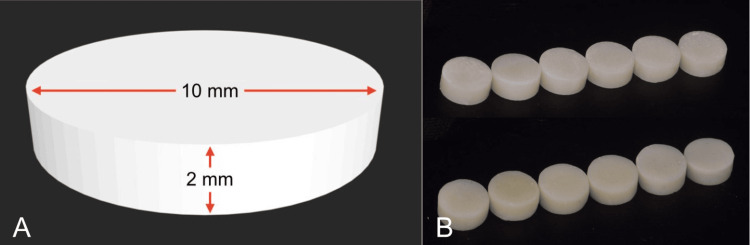 Figure 1
| Groups | Timing | Staining agent | N | Mean | Standard deviation |
| Group A (pumice) | t1 | Coffee | 10 | 0.025 | 0.055 |
| Tea | 10 | 0.109 | 0.032 | ||
| Red wine | 10 | 0.38 | 0.076 | ||
| t2 | Coffee | 10 | 0.236 | 0.015 | |
| Tea | 10 | 0.391 | 0.015 | ||
| Red wine | 10 | 1.309 | 0.074 | ||
| Group B (Algishine) | t1 | Coffee | 10 | 0.024 | 0.058 |
| Tea | 10 | 0.092 | 0.044 | ||
| Red wine | 10 | 0.14 | 0.067 | ||
| t2 | Coffee | 10 | 0.125 | 0.084 | |
| Tea | 10 | 0.254 | 0.087 | ||
| Red wine | 10 | 1.174 | 0.045 |
| Timing | Staining liquid | Standard error | Significance |
| t1 | Coffee | 0.0057 | 0.342 |
| Tea | 0.1056 | 0.083 | |
| Red wine | 0.0202 | 0.000 | |
| t2 | Coffee | 0.02 | 0.001 |
| Tea | 0.0183 | 0.000 | |
| Red wine | 0.0168 | 0.000 |
Peer Reviews
No public reviews on file for this paper yet. If you reviewed it on a platform where reviews are public (OpenReview, ICLR, NeurIPS, ICML), you can paste yours below so the community can read it here.
Videos
No videos yet. Explain this paper in a talk, walkthrough, or lecture? Add one.
Taxonomy
TopicsDental materials and restorations · Dental Erosion and Treatment · Cultural Heritage Materials Analysis
Introduction
In today's world, dentists and patients have a variety of options when it comes to choosing interim restorations. Several factors, like esthetic and functional requirements, determine the material of choice. Commonly used materials include self-cure acrylic, computer-aided design/computer-aided manufacturing polymethyl methacrylate (PMMA), and composite resin materials [1].
Interim dental restorations protect the prepared tooth, restore function and esthetics, and maintain space for the final restoration [2]. PMMA is the material of choice for many practitioners due to its favorable physical properties and ease of fabrication [3]. However, one of the challenges with PMMA is its susceptibility to discoloration over time, particularly when exposed to various staining agents in the oral environment [4]. Polishing is crucial in minimizing discoloration, as a smoother surface is less prone to stain accumulation [5].
Traditionally, pumice has been widely used to polish acrylic resins. This volcanic ash-derived powder effectively smooths rough surfaces, achieving a polished finish. However, its use poses ecological challenges, including habitat disruption and carbon emissions from mining. Moreover, being a finite resource, ongoing extraction raises sustainability concerns. In response to these environmental issues, there is growing interest in sustainable alternatives [6].
This study introduces Algishine, a new polishing agent made from recycled pulverized alginate impressions. Alginate, sourced from seaweed, is commonly used in dental practices to make teeth and oral cavity impressions. It primarily comprises diatomaceous earth particles that act as an abrasive agent. Algishine transforms this waste into a polishing material, typically discarded after use, promoting environmental sustainability and resource efficiency.
This study aims to evaluate the effectiveness of Algishine compared to pumice in maintaining the color stability of PMMA interim restorations. The null hypothesis states that there is no significant difference in the color stability of PMMA polished using pumice and Algishine.
Materials and methods
Sample size calculation
This study involved an in vitro experimental design. The sample size was determined using the G*Power software version 3.1.2 from Heinrich Heine University, Düsseldorf, Germany, setting an alpha level of 0.05 and a test power of 0.80. Consequently, the sample size was 60, which was then divided into two groups of 30 per group. These 30 samples were then subdivided into three groups of 10 each for staining with tea, coffee, and red wine, respectively.
Preparation of Algishine
Alginate impressions were disinfected with 2% glutaraldehyde for 30 minutes. After disinfection, the alginate impressions were collected and ground into a fine powder. The grinding was done using a Foshan Xingle Machinery XL-88 device with a sealable chamber and a freely rotating blade inside. This process resulted in the production of a dehydrated powder [7].
Preparation of samples
Sixty samples in the shape of discs (10 mm in diameter and 2 mm thick) were prepared using the 3-D design software Geomagic Design X (3D Systems, Rock Hill, CA). The standard tessellation language files were saved and then nested using the imes icore software, following which they were milled in PMMA using a 5-axis milling machine (imes icore 350i, Hessen, Germany). The samples were divided into two groups of 30 each: group A and group B (Figure 1).
(A) STL file of the sample. (B) Milled specimen. The STL sample was designed to be 10 mm in diameter and 2 mm in width. This digital design was then milled in PMMA materialSTL: standard tessellation language; PMMA: polymethyl methacrylate
Polishing protocol
Samples were polished with sandpaper of various grits, 100→400→1,000. Shofu Acrylic Polishing bur kit (Shofu, Kyoto, Japan) was used with four burs: extra coarse (gray), coarse (blue), fine (dark green), and extra fine (light green). Group A samples were polished using a low-speed pumice paste applied with a rotary brush. Group B samples were polished with Algishine. The same polishing technique and duration were applied to both groups to ensure consistency. The samples were then polished with a buff (wet buffing was followed by dry buffing).
Baseline color measurement
All samples were measured for baseline color using a spectrophotometer (VITA Easyshade V, VITA Zahnfabrik, Bad Säckingen, Germany) under standardized lighting conditions. The CIE Lab* color space system was used to record the values, where L* indicates lightness, a* represents the red-green coordinate, and b* represents the yellow-blue coordinate.
Staining protocol
Testing for color stability in this study included coffee, tea, and red wine solutions. The tea, coffee, and red wine solutions were prepared according to the following protocols: Following the manufacturer's guidelines, 8 g of coffee was combined with 400 mL of boiling distilled water to prepare the coffee solution [8]. This was based on the standard value of approximately 3.2 cups, equivalent to 15-20 minutes per cup. For the tea solution, two tea bags were steeped in 400 mL of boiling water and allowed to cool for 15 minutes, after which they were filtered using gauze. Sette by Fratelli Wines was used to prepare the red wine solution.
These containers were housed in an incubator set at 37 ± 1°C. The solutions were changed and refreshed every three days to maintain concentration and stirred daily to prevent particle settling. A single operator prepared all solutions to ensure consistency and minimize methodological variability.
Post-staining color measurement
Following the staining period, the samples were rinsed with distilled water and dried using absorbent paper. Post-staining color measurements were conducted using the same spectrophotometer and under the same conditions as the baseline measurements.
Calculation of color change (ΔE)
The color alteration (ΔE) was evaluated with a spectrophotometer (SpectraMagic NX, RM2002QC, Konica Minolta Corp., Ramsey, Japan) with a white background. Assessments were conducted at two separate time points: after one week (t1) and after one month (t2) of immersion, with the subsequent analysis being standardized by using a positioning index made using autopolymerizing resin. The ΔE value was computed using the formula:
ΔE = √(ΔL)^2 ^+ (Δa)^2 ^+ (Δb)^2^
Statistical analysis
The Shapiro-Wilk test was employed to ascertain whether the data adhered to a normal distribution. A two-way ANOVA test was performed to compare color stability changes across groups at various time points.
Results
At t1, when immersed in coffee, the mean ΔE value for group A was 0.025 ± 0.055, while group B showed a mean ΔE of 0.024 ± 0.058. The difference was not statistically significant (p > 0.01). When immersed in tea, group A exhibited a mean ΔE value of 0.109 ± 0.032, compared to group B's mean ΔE of 0.092 ± 0.044. This difference was not statistically significant (p > 0.01). When in red wine, group A had a mean ΔE of 0.38 ± 0.076, whereas group B demonstrated a mean ΔE of 0.14 ± 0.067. The statistical analysis confirmed the significance of this difference (p < 0.01).
At t2, coffee staining demonstrated the mean ΔE value for group A as 0.236 ± 0.015, while group B showed a mean ΔE of 0.125 ± 0.084. The difference was statistically significant (p < 0.01). In the tea, group A exhibited a mean ΔE value of 0.391 ± 0.015, compared to group B's mean ΔE of 0.254 ± 0.087. This difference was also statistically significant (p < 0.01). For red wine staining, group A had a mean ΔE of 1.309 ± 0.074, whereas group B demonstrated a mean ΔE of 1.174 ± 0.045. The statistical analysis confirmed the significance of this difference (p < 0.01) (Table 1).
Between t1 and t2, data were analyzed to check each solution's staining rate. At the initial time point (t1), red wine showed a statistically significant effect on color stability (p = 0.000), whereas coffee (p = 0.342) and tea (p = 0.083) did not. However, at the subsequent time point (t2), all three staining agents, coffee (p = 0.001), tea (p = 0.000), and red wine (p = 0.000), exhibited statistically significant effects on color stability. This indicates that the staining impact of these liquids becomes more pronounced over time (Table 2).
This study revealed no significant difference between the coffee and tea groups on the seventh day. In comparison, significant differences in color stability between the two polishing agents were seen on the seventh day in the red wine group and all three groups on day 30. Group B (Algishine) samples consistently showed lower ΔE values, indicating better resistance to staining compared to group A (pumice).
Discussion
The main objective of this in vitro analysis was to evaluate the color stability of PMMA interim restorations polished using two different agents: traditional pumice and a novel agent, Algishine, derived from pulverized old alginate impressions. The findings demonstrate that Algishine significantly outperforms pumice in maintaining the color stability of PMMA restorations when exposed to common solutions like coffee, tea, and red wine after 30 days. Therefore, the null hypothesis was rejected.
The superior performance of Algishine can be attributed to several factors. Algishine's finer particle size than pumice allows for a smoother finish on the PMMA surface, minimizing the adherence of staining agents and reducing the likelihood of discoloration [9]. Additionally, the polishing process with Algishine may produce a uniform and less porous surface, which is critical in preventing stain penetration. The chemical properties of alginate could also play a role in enhancing the surface characteristics of PMMA. Alginate, a naturally occurring biopolymer, has inherent hydrophilic properties, possibly contributing to a less stain-retentive surface [10]. When pulverized and used as a polishing agent, these properties could translate into improved resistance to common staining agents.
Moreover, Algishine offers a sustainable alternative to traditional polishing methods by recycling old alginate impressions. This reduces waste and aligns with environmentally conscious practices in dental offices. Utilizing waste materials from alginate impressions addresses environmental concerns and provides a cost-effective resource for dental polishing.
The findings from this study have significant implications for dental practice. Interim restorations are expected to maintain their esthetic appearance for the duration of their use. Patients often have high esthetic expectations, even for temporary solutions. Using Algishine, dental practitioners can ensure that interim restorations retain their color and appearance, enhancing patient satisfaction. Patients are more inclined to follow treatment plans when pleased with the esthetic results. By minimizing discoloration, Algishine can improve the overall patient experience and compliance with interim restorations, particularly in long-term provisional scenarios.
While the initial investment in developing Algishine from recycled materials might be higher, the long-term cost benefits are substantial. Dental practices can reduce expenditures on polishing agents by reusing materials that would otherwise be discarded. These cost savings can be passed on to patients or reinvested into the practice for other improvements.
To understand why Algishine performs better, it is essential to consider the polishing mechanism. The surface roughness of PMMA plays a critical role in stain retention [11]. Polishing with Algishine results in a significant reduction in surface roughness compared to pumice. The interaction between the polished PMMA surface and staining agents is crucial [12]. Algishine-polished surfaces exhibit lower adsorption of staining molecules due to reduced roughness and different surface chemistry. This hypothesis could be tested by analyzing the surface energy and wettability of PMMA samples polished with both agents [13]. Additionally, the durability of the polished surface under oral conditions is another factor. Algishine creates a more robust surface that better withstands the mechanical and chemical challenges in the oral environment. Future studies could involve long-term immersion tests and mechanical cycling to simulate the wear and tear experienced in the oral cavity.
Although this study offers valuable insights, it has several limitations and suggests areas for future research. This study was conducted under in vitro conditions, which may not fully replicate the complex oral environment. Future studies should include in vivo evaluations to confirm these findings under actual clinical conditions. While coffee, tea, and red wine are common staining agents, future studies should explore a broader range of substances, including different dietary habits and oral hygiene products, to provide a more comprehensive understanding of color stability.
Conclusions
This study highlights the potential of Algishine, a novel polishing agent derived from pulverized old alginate impressions, in significantly enhancing the color stability of PMMA interim restorations compared to traditional pumice. The use of Algishine not only improves the esthetic longevity of interim restorations but also promotes sustainable practices in dental offices. By offering a smoother, less porous surface, Algishine reduces the adherence of staining agents, thereby maintaining the visual integrity of PMMA restorations. Further research is warranted to explore long-term effects, broader staining scenarios, and clinical outcomes to fully establish Algishine's role in modern dental practice.
The reference list from the paper itself. Each links out to its DOI / PubMed record.
- 1Color stability of nanohybrid and microhybrid composites after immersion in common coloring beverages at different times: a laboratory study BDJ Open Al-Shami AM Alshami MA Al-Kholani AI Al-Sayaghi AM 39920233758711410.1038/s 41405-023-00161-9PMC 10432500 · doi ↗ · pubmed ↗
- 2Investigating the color changes on resin-based CAD/CAM blocks J Esthet Restor Dent Aydın N Karaoğlanoğlu S Oktay EA Kılıçarslan MA 2512563220203187637010.1111/jerd.12561 · doi ↗ · pubmed ↗
- 3Translucency of esthetic dental restorative CAD/CAM materials and composite resins with respect to thickness and surface roughness J Prosthet Dent Awad D Stawarczyk B Liebermann A Ilie N 53454011320152574909310.1016/j.prosdent.2014.12.003 · doi ↗ · pubmed ↗
- 4Stainability of acrylic resin materials used in CAD-CAM and conventional complete dentures J Prosthet Dent Al-Qarni FD Goodacre CJ Kattadiyil MT Baba NZ Paravina RD 88088712320203170392410.1016/j.prosdent.2019.07.004 · doi ↗ · pubmed ↗
- 5Effect of various staining beverages on the color stability of CAD/CAM PMMA denture teeth: an in vitro study Clin Exp Dent Res Alouch E Karkoutly M Teriaky O 010202410.1002/cre 2.869PMC 1090978738433287 · doi ↗ · pubmed ↗
- 6Reducing the surface roughness of dental acrylic resins by using an eggshell abrasive material J Prosthet Dent Onwubu SC Vahed A Singh S Kanny KM 31031411720172764679410.1016/j.prosdent.2016.06.024 · doi ↗ · pubmed ↗
- 7Evaluation of surface roughness of acrylic denture bases polished using Algishine, a novel polishing material: an in vitro study Cureus Koppaka R Shah KK Ahmed N Echhpal UR 016202410.7759/cureus.63955 PMC 1129922139104981 · doi ↗ · pubmed ↗
- 8Evaluation and assessment of the colour stability of modified polymethyl methacrylate denture base materials and polyether ether ketone in a cast partial denture framework: an in-vitro study Cureus NJ Ahmed N Rattan R 015202310.7759/cureus.48189 PMC 1069439738054115 · doi ↗ · pubmed ↗