Unprecedented Megakaryocytic Blast Phase Transformation in Chronic Myeloid Leukemia After 16 Years of Tyrosine Kinase Inhibitor Therapy
Kaworu Takatsuna, Shuhei Kurosawa, Hitomi Nakayama, Aki Sakurai, Chisako Ito, Yoshinobu Aisa, Tomonori Nakazato

TL;DR
A CML patient remained stable for 16 years on TKIs before suddenly progressing to a rare aggressive phase, but achieved remission with ponatinib and a bone marrow transplant.
Contribution
Demonstrates the rare occurrence of megakaryocytic blast phase transformation after long-term TKI therapy and successful management with ponatinib.
Findings
Patient achieved deep molecular response with ponatinib after progressing to megakaryocytic blast phase.
Undetectable BCR::ABL1 transcript levels were observed within 7 months of ponatinib treatment.
Patient maintained molecular remission for 14 months post-transplantation despite graft-versus-host disease.
Abstract
We report the case of a 51-year-old Japanese man with chronic myeloid leukemia (CML) initially diagnosed in the chronic phase. For 16 years, the patient maintained chronic phase (CP) under treatment with first- and second-generation tyrosine kinase inhibitors (TKIs), including imatinib, dasatinib, and bosutinib, none of which resulted in ABL1 mutations. However, despite long-term disease stability, the patient experienced an abrupt progression to the megakaryocytic blast phase (MBP), a rare and aggressive form of CML. In response to this progression, ponatinib, a third-generation TKI, was introduced as a fourth-line therapy. Remarkably, within 7 months of initiating ponatinib, the patient achieved a deep molecular response (DMR), evidenced by a reduction in BCR::ABL1 transcript levels to undetectable levels (MR5.0). This molecular remission enabled the patient to proceed with an…
Genes, proteins, chemicals, diseases, species, mutations and cell lines named across the full text — each resolved to its canonical identifier and authoritative record.
Click any figure to enlarge with its caption.
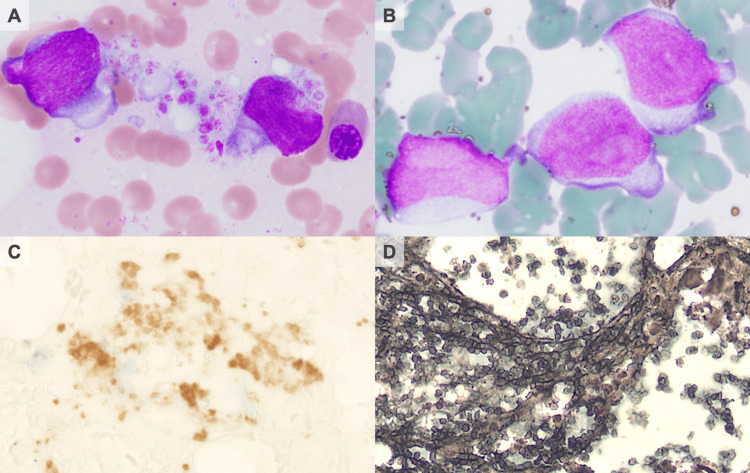 Figure 1
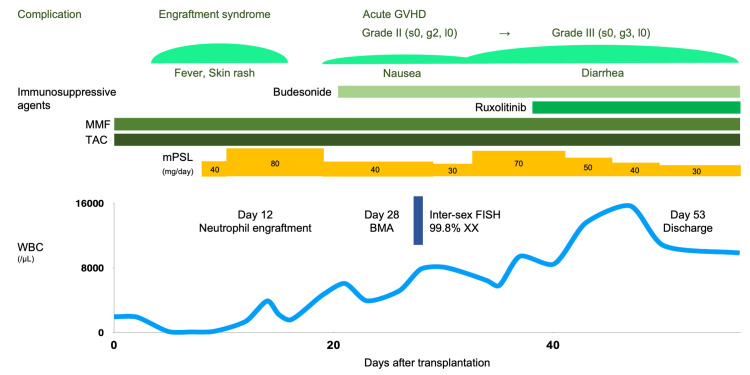 Figure 2
| Reference number | Reported year | Age/Sex | Disease status at CML Dx | TKI after BP | Other chemotherapy | Subsequent HSCT | Outcomes |
| Hirose Y, et al. [ | 2002 | 42/F | Blast phase | Imatinib | VCR+PSL, MTX+6-MP | None | Alive |
| Pelloso LA, et al. [ | 2002 | 25/F | Blast phase | Imatinib | DNR+AraC | None | Alive |
| Bryant BJ, et al. [ | 2007 | 53/F | Blast phase | None | HU | None | Death |
| Campiotti L, et al. [ | 2007 | 60/F | Blast phase | Imatinib | None | None | Alive |
| Pullarkat ST, et al. [ | 2008 | 62/M | Blast phase | Imatinib | HU, IDR+AraC | None | Death |
| Karkuzhali P, et al. [ | 2013 | 36/F | Blast phase | Imatinib | ETP+ADR+AraC | None | Alive |
| Hino Y, et al [ | 2016 | 58/F | Blast phase | Imatinib | None | BMT | Alive |
| Khemka R, et al. [ | 2019 | 31/F | Blast phase | Imatinib | ETP+ADR+AraC | None | Not reported |
| 70/M | Blast phase | Imatinib | ETP+ADR+AraC | None | |||
| 36/M | Chronic phase | NA | NA | NA | |||
| Sasaki H, et al. [ | 2019 | 42/F | Blast phase | Ponatinib | None | BMT | Alive |
| Ureshino H, et al. [ | 2019 | 35/M | Accelerated phase | Ponatinib | AraC | PBSCT | Death |
| Agrawal S, et al. [ | 2022 | 22/M | Blast phase | Dasatinib | DNR+AraC | None | NA |
| The present case | 2024 | 51/M | Chronic phase | Ponatinib | None | BMT | Alive |
Peer Reviews
No public reviews on file for this paper yet. If you reviewed it on a platform where reviews are public (OpenReview, ICLR, NeurIPS, ICML), you can paste yours below so the community can read it here.
Videos
No videos yet. Explain this paper in a talk, walkthrough, or lecture? Add one.
Taxonomy
TopicsChronic Myeloid Leukemia Treatments · Chronic Lymphocytic Leukemia Research · Fibroblast Growth Factor Research
Introduction
The advent of tyrosine kinase inhibitors (TKIs) has significantly improved the prognosis of chronic myeloid leukemia (CML), particularly during its chronic phase (CP) [1]. Imatinib, the first-generation TKI, functions by specifically inhibiting the BCR::ABL1 tyrosine kinase, a fusion protein resulting from the Philadelphia chromosome translocation, which drives the uncontrolled proliferation of leukemic cells. Second-generation TKIs, such as dasatinib and bosutinib, offer broader kinase inhibition, targeting not only BCR::ABL1 but also other kinases involved in disease progression, thus providing effective treatment options in cases where resistance to imatinib has developed.
However, despite the efficacy of these therapies, CML can still progress to the blast phase (BP), which presents a significant clinical challenge and often necessitates allogeneic hematopoietic stem cell transplantation (allo-HSCT) for potential cure [2, 3]. Among BP cases, megakaryocytic blast phase (MBP) in CML (CML-MBP) is rare, and its clinical features and treatment strategies are not well defined. Here, we present a case of CML-MBP that was initially diagnosed in CP and later progressed to MBP after prolonged treatment with TKIs. The patient achieved a deep molecular response (MR) with ponatinib as the fourth-line treatment and subsequently underwent successful bone marrow transplantation (BMT).
Case presentation
A 51-year-old Japanese man with a history of type II diabetes mellitus, hyperlipidemia, and anal fissure was diagnosed with CML-CP in 2006 at Yokohama Rosai Hospital, Japan. The patient was initially treated with imatinib but was switched to dasatinib in 2017, although the specific reasons for the change were not detailed. In May 2017, he was transferred to our hospital with prolonged, unexplained diarrhea. Suspected drug-induced diarrhea led to a switch from dasatinib to bosutinib, starting at 100 mg/day. Following the switch, the patient’s diarrhea resolved, and the dose of bosutinib was gradually increased to 300 mg/day. The treatment efficacy was assessed using the International Scale (IS) for BCR::ABL1, and although a major MR was achieved, MR^4.0^ was not reached. Despite this, the patient expressed a preference to continue bosutinib therapy.
On May 13th, 2022, the patient was admitted with fever. Physical examination revealed no abnormalities, but laboratory tests showed a white blood cell count of 170,060/μL (blasts 7.0%), a platelet count of 555,000/μL, hemoglobin of 14.4 g/dL, and lactate dehydrogenase of 1,510 U/L. The IS for BCR::ABL1 in the peripheral blood was 107.2%. Owing to the dry tap, bone marrow aspiration yielded scant samples but showed a predominance of blasts with a high nucleus-to-cytoplasm (N/C) ratio and bleb-like features (Figure 1A). Myeloperoxidase staining was negative (Figure 1B). Biopsy indicated CD34- and CD42b-positive blasts with high N/C ratios and myelofibrosis (MF), graded as MF-1 (Figure 1C, D). Cytogenetic analysis revealed the presence of 46,XY,t(9;22)(q34.1, q11.2) in 20 cells. Genetic testing was positive for the major BCR::ABL1 without *ABL1 *kinase domain (KD) mutation, confirming MBP diagnosis.
Bone marrow examination on admissionA) Blasts with cytoplasmic blebs and platelet anisocytosis in May-Giemsa stain. B) Myeloperoxidase stain showing negative in megakaryoblasts. C) Immunohistochemistry with CD42b showing positive in blasts. D) Grade I fibrosis on silver impregnation stain.
Ponatinib (45 mg/day) was initiated, but it was temporarily discontinued when the patient was admitted with complaints of abdominal pain. Laboratory tests revealed a slight increase in lipase level (87 U/L), and an abdominal CT scan showed enlargement in the pancreatic tail and surrounding retroperitoneal fat stranding, suggesting drug-induced pancreatitis. Ponatinib (30 mg/day) was resumed 12 days later with no further adverse effects. The patient achieved deep MR (IS for BCR::ABL1, 0.0047%) after 4 months and MR^5.0^ (IS for BCR::ABL1, below the detection limit) at 7 months post-initiation of ponatinib.
Allo-HSCT was planned initially; however, no related donors were available. In January 2023, the patient underwent unrelated BMT using a human leukocyte antigen (HLA) 8/8-allele-matched donor. Figure 2 illustrates the post-transplant course of the case. The conditioning regimen included fludarabine (180 mg/m2), busulfan (12.8 mg/kg), and melphalan (80 mg/m2) along with tacrolimus and mycophenolate mofetil for graft-versus-host disease (GVHD) prophylaxis. On day 12 post-BMT, neutrophil engraftment was achieved, and 1 mg/kg methylprednisolone was initiated to treat the engraftment syndrome. The patient was diagnosed with acute GVHD grade II (skin, stage 0; gut, stage 1; liver, stage 0) on day 34 and successfully managed with ruxolitinib in addition to prophylactic drugs, leading to discharge on day 52. The patient maintained MR^5.0^ 14 months post-BMT. Ponatinib was discontinued before BMT, and TKI was not administered post-transplant.
Clinical course of the patient after bone marrow transplantationBMA, bone marrow examination; FISH, fluorescence in situ hybridization; g, gut; GVHD, graft-versus-host disease; l, liver; MMF, mycophenolate mofetil; mPSL, methylprednisolone; s, skin; TAC, tacrolimus.
Discussion
Table 1 summarizes 12 previously reported cases of CML-MBP [4-14]. Except for one case, all were diagnosed in BP at the initial presentation of CML. Three cases underwent allo-HSCT, and one case included maintenance therapy with ponatinib post-transplantation. Our patient was initially diagnosed in CP and transitioned to BP during prolonged TKI therapy, without additional chromosomal abnormalities or BCR::ABL1 mutations detected via Sanger sequencing. The higher detection limit of Sanger sequencing, compared to mass spectrometry, next-generation sequencing, and droplet digital polymerase chain reaction (PCR), may have contributed to the absence of identified mutations [15]. The observed efficacy of ponatinib without intensive chemotherapy might suggest a potential resistance to first- or second-generation TKIs, even though no ABL1 Kinase Domain (KD) mutations were detected.
Prognostic factors for allo-HSCT in CML indicated poorer outcomes in BP than in CP or accelerated phase, although remission at transplantation is associated with better prognosis [2]. A registry-based study in Japan reported improved outcomes in BC with the use of second- or third-generation TKIs [3]. In this case, although the patient progressed to MBP, ponatinib use achieved MR pre-transplant, and the patient showed no signs of relapse post-transplant. However, there are reports of late relapse post-transplantation in CML, suggesting that the survival curves do not plateau as compared to those of acute leukemia [16, 17]. Post-transplant TKI therapy to prevent relapse has been evaluated, with single-arm prospective trials indicating the efficacy and safety of imatinib or nilotinib in relapse prevention [18-20]. According to the latest National Comprehensive Cancer Network (NCCN) guidelines, TKI therapy for at least one year should be considered in patients with prior BP, even if BCR::ABL quantitative polymerase chain reaction (qPCR) is negative [1]. The present case was complicated by persistent gastrointestinal issues due to acute GVHD, and TKI therapy was not reinstated. Diligent post-transplant monitoring is imperative regardless of post-transplant TKI therapy.
Conclusions
In conclusion, we present the case of a patient initially treated with TKI for CML-CP, who subsequently progressed to MBP. The administration of a third-generation TKI as bridging therapy before allo-HSCT resulted in a sustained MR. Future studies may explore the potential for long-term outcomes in CML-MBP using third-generation TKIs both before and after allo-HSCT.
The reference list from the paper itself. Each links out to its DOI / PubMed record.
- 1Chronic Myeloid Leukemia, Version 2.2024, NCCN Clinical Practice Guidelines in Oncology J Natl Compr Canc Netw Shah NP Bhatia R Altman JK 43692220243839477010.6004/jnccn.2024.0007 · doi ↗ · pubmed ↗
- 2Allogeneic stem cell transplantation for blast crisis chronic myeloid leukemia in the era of tyrosine kinase inhibitors: a retrospective study by the EBMT chronic malignancies working party Biol Blood Marrow Transplant Radujkovic A Dietrich S Blok HJ 20082016252019 https://www.sciencedirect.com/science/article/pii/S 10838791193041243127188410.1016/j.bbmt.2019.06.028 · doi ↗ · pubmed ↗
- 3The new generation tyrosine kinase inhibitor improves the survival of chronic myeloid leukemia patients after allogeneic stem cell transplantation Hematol Oncol Shimazu Y Murata M Kondo T 4424564020223539465810.1002/hon.3000 · doi ↗ · pubmed ↗
- 4Successful treatment with imatinib mesylate of a CML patient in megakaryoblastic crisis with severe fibrosis Int J Hematol Hirose Y Kiyoi H Iwai M Yokozawa T Ito M Naoe T 3493537620021246359910.1007/BF 02982695 · doi ↗ · pubmed ↗
- 5Megakaryocytic blast crisis as a first presentation of chronic myeloid leukemia Eur J Haematol Pelloso LA Baiocchi OC Chauffaille ML Yamamoto M Hungria VT Bordin JO 58616920021227006410.1034/j.1600-0609.2002.01638.x · doi ↗ · pubmed ↗
- 6Paraplegia as the presenting manifestation of extramedullary megakaryoblastic transformation of previously undiagnosed chronic myelogenous leukemia Am J Hematol Bryant BJ Alperin JB Elghetany MT 1501548220071701969210.1002/ajh.20777 · doi ↗ · pubmed ↗
- 7Megakaryocytic blast crisis as first presentation of chronic myeloid leukemia Am J Hematol Campiotti L Grandi AM Biotti MG Ultori C Solbiati F Codari R Venco A 2312338220071702204510.1002/ajh.20797 · doi ↗ · pubmed ↗
- 8Megakaryocytic blast crisis as a presenting manifestation of chronic myeloid leukemia Leuk Res Pullarkat ST Vardiman JW Slovak ML Rao DS Rao NP Bedell V Said JW 177017753220081841721310.1016/j.leukres.2008.02.025 · doi ↗ · pubmed ↗