Peer review of the pesticide risk assessment of the active substance bensulfuron‐methyl
Fernando Álvarez, Maria Arena, Domenica Auteri, Sofia Batista Leite, Marco Binaglia, Anna Federica Castoldi, Arianna Chiusolo, Angelo Colagiorgi, Mathilde Colas, Federica Crivellente, Chloe De Lentdecker, Isabella De Magistris, Mark Egsmose, Gabriella Fait, Franco Ferilli

TL;DR
This paper summarizes the peer review of the pesticide bensulfuron-methyl's risk assessment for use on rice and cereals.
Contribution
The paper provides updated conclusions and concerns from the regulatory peer review process for bensulfuron-methyl.
Findings
The peer review evaluated bensulfuron-methyl's use on rice and spring cereals.
Reliable endpoints for regulatory risk assessment were identified.
Missing information and concerns were highlighted.
Abstract
The conclusions of the European Food Safety Authority (EFSA) following the peer review of the initial risk assessments carried out by the competent authorities of the rapporteur Member State Italy and co‐rapporteur Member State Spain for the pesticide active substance bensulfuron‐methyl are reported. The context of the peer review was that required by Commission Implementing Regulation (EU) No 844/2012, as amended by Commission Implementing Regulation (EU) No 2018/1659. The conclusions were reached on the basis of the evaluation of the representative uses of bensulfuron‐methyl as an herbicide on rice and spring cereals (spring wheat, spring barley, oat, rye, triticale). The reliable end points, appropriate for use in regulatory risk assessment are presented. Missing information identified as being required by the regulatory framework is listed. Concerns are identified.
Genes, proteins, chemicals, diseases, species, mutations and cell lines named across the full text — each resolved to its canonical identifier and authoritative record.
Click any figure to enlarge with its caption.
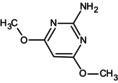 Figure 1
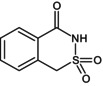 Figure 2
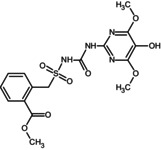 Figure 3
 Figure 4
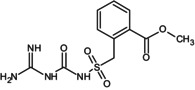 Figure 5
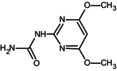 Figure 6
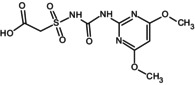 Figure 7
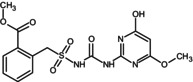 Figure 8
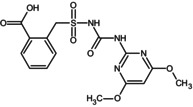 Figure 9
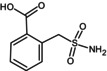 Figure 10
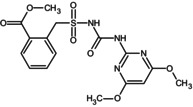 Figure 11
 Figure 12
| Metabolite | Source(s) | Genotoxicity | General toxicity | Reference values/Data gap(s) | |
|---|---|---|---|---|---|
| Gene mutation | Chromosome aberrations | ||||
|
|
|
Open No experimental data/in silico analysis inconclusive (and in any case not sufficient as a GW metabolite) |
Open No experimental data/in silico analysis inconclusive (and in any case not sufficient as a GW metabolite) |
No conclusion No experimental data/in silico analysis inconclusive (and in any case not sufficient as a GW metabolite) | No conclusion, pending data gap in genotoxicity (mutagenicity, clastogenicity and aneugenicity) and general toxicity |
|
| GW and residues |
Negative Ames test negative |
Open No experimental data/in silico analysis inconclusive (and in any case not sufficient as a groundwater metabolite) |
No conclusion The structural similarity of bensulfuron to the parent molecule would support the application of the parent's TRVs to this metabolite; however its genotoxic potential should be first clarified | Reference values of bensulfuron‐methyl might apply, pending clarification on genotoxic potential (clastogenicity and aneugenicity) |
|
| GW and residues |
Negative Ames test negative |
Open No experimental data/in silico analysis inconclusive (and in any case not sufficient as a groundwater metabolite) | No conclusion | No conclusion, pending data gap in genotoxicity (clastogenicity and aneugenicity) and general toxicity |
|
| Residues |
Negative Ames test negative |
Open No experimental data/in silico analysis inconclusive | No conclusion | No conclusion, pending data gap in genotoxicity (clastogenicity and aneugenicity) |
|
| Residues | Negative based on in silico analysis |
Open No experimental data/in silico analysis inconclusive | No conclusion | No conclusion, pending data gap in genotoxicity (clastogenicity and aneugenicity) |
|
| Residues |
Open No experimental data/in silico analysis inconclusive |
Open No experimental data/in silico analysis inconclusive | No conclusion | No conclusion, pending data gap in genotoxicity (mutagenicity, clastogenicity and aneugenicity) |
| Compound (name and/or code) | Ecotoxicology |
|---|---|
|
| Low risk for soil organisms |
|
| Low risk for soil organisms |
|
| Low risk for soil organisms |
|
| Low risk for soil organisms |
|
| Low risk for soil organisms |
|
| Low risk for soil organisms |
| Compound (name and/or code) |
> 0.1 μg/L at 1 m depth for the representative uses Step 2 |
Biological (pesticidal) activity/relevance Step 3a | Hazard identified Steps 3b. and 3c |
Consumer RA triggered Steps 4 and 5 | Human health relevance |
|---|---|---|---|---|---|
|
|
Yes Spring cereals: 6/6 FOCUS scenarios (0.19– | Yes | – | Yes | Yes |
|
|
Yes Spring cereals: 5/6 FOCUS scenarios (0.19–0.40 μg/L) | Data gap |
Open No data for clastogenicity and aneugenicity | Open | Open |
|
| No | Assessment not triggered |
Open No data available for genotoxicity and general toxicity | No | Open |
|
|
Yes Spring cereals: 5/6 FOCUS scenarios (0.17–0.32 μg/L) | Data gap |
Open No data available for genotoxicity and general toxicity | Open | Open |
|
| No | Assessment not triggered |
Open No data for clastogenicity and aneugenicity | No | Open |
|
|
Yes Spring cereals: 6/6 FOCUS scenarios ( | Data gap |
Open No toxicological data/assessment available | Open | Open |
| Compound (name and/or code) | Ecotoxicology |
|---|---|
|
| Low risk to aquatic organisms for the majority of the representative FOCUS surface water scenarios, but high risk for scenario D1 and D4 |
|
| Low risk to aquatic organisms |
|
| Low risk to aquatic organisms |
|
| Data gap for algae study |
|
| Low risk to aquatic organisms |
|
| Data gap for algae study |
|
| Low risk to aquatic organisms |
|
| Low risk to aquatic organisms |
| Compound (name and/or code) | Toxicology |
|---|---|
|
| Rat LC50 inhalation > 7.5 mg/L for 4 h (nose‐only) |
| Representative use |
Rice (pre‐sowing, flooded) Spray |
Rice (post‐emergence, flooded) Spray |
Rice (pre‐sowing, saturated soil) Spray |
Rice (post‐emergence, saturated soil) Spray |
Spring cereals Spray |
|---|---|---|---|---|---|
|
| – | – | – | – | – |
|
| – | – | – | – | – |
|
| – | – | – | – | – |
|
| RMM comparable to a 10 m no‐spray buffer strip for three scenarios | ||||
|
| RMM comparable to a 5 m no‐spray vegetated buffer zone or 75% drift reduction | ||||
|
Rice Pre‐sowing flooded water |
Rice BBCH 12–29 flooded water |
Rice Pre‐sowing saturated soil |
Rice BBCH 12–29 saturated soil |
Spring cereals (spring wheat, spring barley, oat, rye and triticale) BBCH 13–39 | ||
|---|---|---|---|---|---|---|
| Representative use | ||||||
|
| ||||||
|
| Risk identified | |||||
| Assessment not finalised | ||||||
|
| Risk identified | |||||
| Assessment not finalised | ||||||
|
| Risk identified | |||||
| Assessment not finalised | ||||||
|
| Risk identified | |||||
| Assessment not finalised | X1 | x1 | x1 | x1 | x1 | |
|
| Risk identified | |||||
| Assessment not finalised | ||||||
|
| Risk identified | |||||
| Assessment not finalised | X5 | X5 | X5 | X5 | ||
|
| Risk identified | 2/5 scenarios | ||||
| Assessment not finalised | X5 | X5 | X5 | X5 | ||
|
| Legal parametric value breached | X7 | ||||
| Assessment not finalised | X2,7 | X2,7 | X2,7 | X2,7 | ||
|
| Legal parametric value breached | |||||
| Parametric value of 10 μg/L | ||||||
| Assessment not finalised | X2 | X2 | X2 | X2 | X3,4 | |
Peer Reviews
No public reviews on file for this paper yet. If you reviewed it on a platform where reviews are public (OpenReview, ICLR, NeurIPS, ICML), you can paste yours below so the community can read it here.
Videos
No videos yet. Explain this paper in a talk, walkthrough, or lecture? Add one.
Taxonomy
TopicsAgricultural safety and regulations · Pesticide Residue Analysis and Safety · Pesticide Exposure and Toxicity
SUMMARY
Commission Implementing Regulation (EU) No 844/2012, as amended by Commission Implementing Regulation (EU) No 2018/1659, lays down the procedure for the renewal of the approval of active substances submitted under Article 14 of Regulation (EC) No 1107/2009. The list of those substances is established in Commission Implementing Regulation (EU) No 686/2012 as amended by Commission Implementing Regulation (EU) No 2016/183. Bensulfuron‐methyl1 is one of the active substances listed in that Regulation.
In accordance with Article 1 of Regulation (EU) No 844/2012, the rapporteur Member State (RMS), Italy and co‐rapporteur Member State (co‐RMS), Spain, received an application from UPL Europe Ltd for the renewal of approval of the active substance bensulfuron‐methyl.
An initial evaluation of the dossier on bensulfuron‐methyl was provided by the RMS in the renewal assessment report (RAR) and subsequently, a peer review of the pesticide risk assessment on the RMS evaluation was conducted by EFSA in accordance with Article 13 of Commission Implementing Regulation (EU) No 844/2012, as amended by Commission Implementing Regulation (EU) No 2018/1659. The following conclusions are derived.
The uses of bensulfuron‐methyl according to the representative uses as an herbicide on rice and spring cereals (encompassing spring wheat, spring barley, oat, rye, triticale), as proposed at EU level result in a sufficient herbicidal efficacy against broadleaved weeds in crops of rice, spring wheat, spring barley, oat, rye and triticale crops and to control Cyperaceae (sedges) in crops of rice.
The assessment of the data package revealed no issues that could not be finalised or that needed to be included as critical areas of concern with respect to identity, physical–chemical and technical properties of the active substance and the formulation for representative uses, and analytical methods.
The assessment of the data package revealed no issues that could not be finalised or that needed to be included as critical area of concern with respect to mammalian toxicology.
In the area of residues, the consumer risk assessment for groundwater metabolites could not be finalised due to a missing refined groundwater exposure assessment for metabolite IN‐N5297 and missing toxicological information for metabolites IN‐R9419 and IN‐N5297. The consumer risk assessment is not finalised with regard to the unknown nature of residues that might be present in drinking water, consequent to water treatment following abstraction of surface water that might contain the active substance and its metabolites.
The data available on environmental fate and behaviour were sufficient to carry out the required environmental exposure assessments at EU level for the representative uses on spring cereals only. The exposure estimates for bensulfuron‐methyl for the representative uses in rice fields are missing for all environmental compartments. In addition, surface water/sediment exposure for potential metabolites only found in aquatic compartments and groundwater exposure and relevance assessment of soil metabolites could not be finalised for both representative uses. Based on the available estimates for representative uses in spring cereals, there is the potential for groundwater exposure by bensulfuron‐methyl and metabolites bensulfuron (identified as IN‐R9419), IN‐N5297 and IN‐DAT97 above the parametric drinking water limit of 0.1 μg/L in geoclimatic situations represented by 6/6, 5/6, 5/6 and 6/6 FOCUS scenarios, respectively. Since groundwater exposure for bensulfuron‐methyl for uses on rice could not be finalised, the current risk assessment does not permit the conclusion to be drawn, that at least one of the representative uses will not result in the legal parametric drinking water limit being exceeded. It cannot be excluded that the legal parametric drinking water is being exceeded also for the representative use in rice using current scientific and technical knowledge. This led to the identification of a critical area of concern.
In the area of ecotoxicology, due to the absence of reliable exposure estimates for bensulfuron‐methyl in surface water, sediment and soil, the risk assessment for aquatic and soil organisms could not be finalised for the uses in rice. A high risk to aquatic plants was concluded in two out five scenarios for the uses on cereals. Risk mitigation measures are required to conclude low risk for non‐target terrestrial plants.
Based on the available evidence, it can be concluded that bensulfuron‐methyl is not an endocrine disruptor, according to point 3.6.5 and 3.8.2 of Annex II to Regulation (EC) No 1107/2009, as amended by Commission Regulation (EU) 2018/605.
BACKGROUND
Commission Implementing Regulation (EU) No 844/2012,2as amended by Commission Implementing Regulation (EU) No 2018/1659,3 (hereinafter referred to as ‘the Regulation’), lays down the provisions for the procedure of the renewal of the approval of active substances, submitted under Article 14 of Regulation (EC) No 1107/2009.4 This regulates for the European Food Safety Authority (EFSA) the procedure for organising the consultation of Member States, the applicant(s) and the public on the initial evaluation provided by the rapporteur Member State (RMS) and/or co‐rapporteur Member State (co‐RMS) in the renewal assessment report (RAR), and the organisation of an expert consultation where appropriate.
In accordance with Article 13 of the Regulation, unless formally informed by the European Commission that a conclusion is not necessary, EFSA is required to adopt a conclusion on whether the active substance can be expected to meet the approval criteria provided for in Article 4 of Regulation (EC) No 1107/2009 within 5 months from the end of the period provided for the submission of written comments, subject to an extension of an additional 3 months where additional information is required to be submitted by the applicant(s) in accordance with Article 13(3). Furthermore, in accordance with Article 13(3a), where the information available in the dossier is not sufficient to conclude the assessment on whether the approval criteria for endocrine disruption are met, additional information can be requested to be submitted in a period of minimum 3 months, not exceeding 30 months, depending on the type of information requested.
In accordance with Article 1 of the Regulation, the RMS Italy and co‐RMS Spain received an application from UPL Europe Ltd for the renewal of approval of the active substance bensulfuron‐methyl. Complying with Article 8 of the Regulation, the RMS checked the completeness of the dossier and informed the applicant, the co‐RMS (Spain), the European Commission and EFSA about the admissibility.
The RMS provided its initial evaluation of the dossier on bensulfuron‐methyl in the RAR, which was received by EFSA on 18 July 2022 (Italy, 2022).
In accordance with Article 12 of the Regulation, EFSA distributed the RAR to the Member States and the applicant, UPL Europe Ltd, for consultation and comments on 27 September 2022. EFSA also provided comments. In addition, EFSA conducted a public consultation on the RAR. EFSA collated and forwarded all comments received to the European Commission on 19 December 2022. At the same time, the collated comments were forwarded to the RMS for compilation and evaluation in the format of reporting table. In addition, the applicant was invited to respond to the comments received. The comments and the applicant's response were evaluated by the RMS in column 3.
The need for expert consultation and the necessity for additional information to be submitted by the applicant in accordance with Article 13(3) of the Regulation were considered in a teleconference between EFSA and the RMS on 13 March 2023. On the basis of the comments received, the applicant's response to the comments and the RMS's evaluation thereof, it was concluded that additional information should be requested from the applicant, and that EFSA should conduct an expert consultation in the areas of mammalian toxicology, residues, environmental fate and behaviour, and ecotoxicology.
The outcome of the teleconference, together with EFSA's further consideration of the comments, is reflected in the conclusions set out in column 4 of the reporting table. All points that were identified as unresolved at the end of the comment evaluation phase and which required further consideration, including those issues to be considered in an expert consultation, were compiled by EFSA in the format of an evaluation table.
The conclusions arising from the consideration by EFSA, and as appropriate by the RMS, of the points identified in the evaluation table, together with the outcome of the expert consultation and the written consultation on the assessment of additional information, where these took place, were reported in the final column of the evaluation table.
A final consultation on the conclusions arising from the peer review of the risk assessment took place with Member States via a written procedure in July 2024.
This conclusion report summarises the outcome of the peer review of the risk assessment of the active substance and the formulation for representative uses, evaluated on the basis of the representative uses of bensulfuron‐methyl as an herbicide on rice and spring cereals (encompassing spring wheat, spring barley, oat, rye and triticale), as proposed by the applicant. In accordance with Article 12(2) of Regulation (EC) No 1107/2009, risk mitigation options identified in the RAR and considered during the peer review, if any, are presented in the conclusion.
A list of the relevant end points for the active substance and the formulation is provided in Appendix B. In addition, the considerations as regards the cut‐off criteria for bensulfuron‐methyl, according to Annex II of Regulation (EC) No 1107/2009, are summarised in Appendix B.
A key supporting document to this conclusion is the peer review report (EFSA, 2024), which is a compilation of the documentation developed to evaluate and address all issues raised in the peer review, from the initial commenting phase to the conclusion. The peer review report comprises the following documents, in which all views expressed during the course of the peer review, including minority views, where applicable, can be found:
- the comments received on the RAR;
- the reporting table (13 March 2023);
- the evaluation table (25 June 2024);
- the reports of the scientific consultation with Member State experts (where relevant);
- the comments received on the assessment of the additional information (where relevant);
- the comments received on the draft EFSA conclusion.
Given the importance of the RAR, including its revisions (Italy, 2024), and the peer review report, both documents are considered as background documents to this conclusion and thus are made publicly available.
It is recommended that this conclusion and its background documents would not be accepted to support any registration outside the EU for which the applicant has not demonstrated that it has regulatory access to the information on which this conclusion report is based.
THE ACTIVE SUBSTANCE AND THE FORMULATION FOR REPRESENTATIVE USES
Bensulfuron‐methyl is the parent‐ISO name for methyl 2‐({[(4,6‐dimethoxypyrimidin‐2‐yl)carbamoyl]sulfamoyl}methyl)benzoate (IUPAC name). It is a methyl ester of bensulfuron, which is the ISO common name of 2‐({[(4,6‐dimethoxypyrimidin‐2‐yl)carbamoyl]sulfamoyl}methyl)benzoic acid (IUPAC name). This substance was previously assessed under the name bensulfuron but all the data submitted were actually related to bensulfuron‐methyl (EFSA, 2008b).
The formulation for representative uses for the evaluation was ‘Londax 60 DF, (HCG01)’, a wettable granule formulation containing 600 g/kg of pure bensulfuron‐methyl.
The information on the active substance and the formulation for representative uses, including the co‐formulants in this formulation, was considered in the overall assessment during the peer review. None of the co‐formulants is an unacceptable co‐formulant listed in Annex III of Regulation (EC) No 1107/2009,5 however one co‐formulant is currently approved as active substance, one co‐formulant is not approved as active substance, and two co‐formulants are currently approved as basic active substances under Regulation (EC) 1107/2009.6 Details on the composition of the formulation cannot be reported in conclusions because of the provisions in Article 63(2)(d) of Regulation (EC) No 1107/2009, however this information was fully available and evaluated during the peer review. A proposal for classification of the formulation according to Regulation (EC) 1272/2008 was provided by the applicant and assessed by the RMS (please see Volumes 3 CP of the RAR).
The representative uses evaluated comprise applications with tractor‐mounted sprayer to control broadleaved weeds in crops of rice, spring wheat, spring barley, oat, rye and triticale crops and to control Cyperaceae (sedges) in crops of rice. Full details of the GAP can be found in the list of end points in Appendix B.
Data were submitted to conclude that the representative uses of bensulfuron‐methyl proposed at EU level result in a sufficient herbicidal effect following the guidance document SANCO/2012/11251‐rev. 4 (European Commission, 2014b).
CONCLUSIONS OF THE EVALUATION
General aspects
With regard to the mammalian toxicity information available for the formulation for representative uses ‘Londax 60 BF, (HCG01)’, studies were performed for acute toxicity endpoints. With regard to the co‐formulants contained in ‘Londax 60 BF, (HCG01)’, sufficient toxicological data were available for all components but two (one present in significant amount in the final formulation). For these two co‐formulants, insufficient information about their specifications/composition was available and the experts considered that the available toxicological information did not sufficiently address the repeated dose toxicity potential of ‘Londax 60BF, (HCG01)’ over long‐term, therefore this might be considered for further assessment (see Section 10). In addition, for a third co‐formulant,7 (present in significant amount in the final formulation), the experts considered that the available toxicological information show concerns in relation to possible adverse effects over long term and carcinogenicity from exposure via inhalation.8 It is noted that collected information (not covering all endpoints), including the existing approved uses other than plant protection products, under EU regulated frameworks, did not highlight any additional concern.
The available ecotoxicity data with the formulation for representative uses was discussed at the experts' meeting.9 No concerns were identified.
IDENTITY, PHYSICAL/CHEMICAL/TECHNICAL PROPERTIES AND METHODS OF ANALYSIS
1
The following guidance documents were applied in the production of this conclusion: European Commission (2000a, 2000b, 2010, 2012).
The proposed specification for bensulfuron‐methyl was based on batch data from industrial production. The proposed minimum purity is 975 g/kg, however based on the data submitted in support of the renewal of approval process a higher minimum purity could be proposed. An individual source technical specification was derived based on the batch data submitted for the renewal. The RMS compared this individual source specification to the current EU reference specification according to the criteria given in the guidance document SANCO/10597/2003 rev. 10.1 (European Commission, 2012) and concluded that it is equivalent, hence proposed to maintain the current EU reference specification. EFSA notes that two new significant impurities were found in the technical grade active ingredient and the toxicological relevance for one of them is open (see Sections 2 and 10). As a consequence, an update of the proposed reference specification and additional data consisting of spectral data, content of the impurity before and after storage of the formulation and method for its analysis in the formulation might be required. The batches used in the (eco)toxicological assessment support the current EU reference specification (See Sections 2 and 5). The proposed minimum purity of 975 g/kg meets the requirements of the FAO specification 502/TC (2002), that covers bensulfuron‐methyl technical material of E. I. du Pont de Nemours and Company.
The main data regarding the identity of bensulfuron‐methyl and their physical and chemical properties are given in Appendix B. A data gap was set for octanol water partition coefficient data for the metabolites IN‐DAT97 and IN‐YY142 (see Section 10).
Adequate methods are available for the generation of data required for the risk assessment. Methods of analysis are available for the determination of the active substance in the technical material and the formulation for representative uses.
The QuEChERS multi‐residue method using liquid chromatography with tandem mass spectrometry (LC–MS/MS) can be used for the determination of bensulfuron‐methyl residues in all plant commodity groups with a limit of quantification (LOQ) of 0.01 mg/kg. Peer‐review concluded that metabolite O‐desmethyl bensulfuron‐methyl (IN‐F7880) should be set as a residue definition for monitoring in food and feed of animal origin (see Section 3), thus a data gap was set for a respective analytical method (see Section 10).
Bensulfuron‐methyl in soil can be monitored by LC–MS/MS with LOQ of 0.08 μg/kg. An appropriate LC–MS/MS method is available for monitoring residues of bensulfuron‐methyl in groundwater, drinking water and surface water with LOQs of 0.05 μg/L. Residues of bensulfuron‐methyl in air can be monitored by LC–MS/MS with a LOQ of 3 μg/m^3^.
Residues of bensulfuron‐methyl in body fluids (blood) can be monitored by LC–MS/MS with LOQ of 0.01 mg/L, while residues of bensulfuron‐methyl in body tissues can be monitored by the LC–MS/MS method developed for the determination of bensulfuron‐methyl residues in food and feed of animal origin (milk, fat, liver, muscle and eggs) with a LOQ of 0.01 mg/kg.
MAMMALIAN TOXICITY
2
The toxicological profile of the active substance bensulfuron‐methyl and its metabolites was discussed at the Pesticides Peer Review Experts' Teleconference 124–125 in January 2024. The assessment is based on the following guidance documents: European Commission (2003, 2012), EFSA (2014c), EFSA PPR Panel (2012, 2017), and ECHA (2017).
No toxicologically relevant impurity has been identified in the proposed specification that is corresponding to the current EU reference specification. However, two new significant impurities were found in the technical grade active ingredient (see Section 1) and the toxicological relevance of one of these impurities10 still needs to be determined (data gap, see Section 10). Should data to conclude on the relevance of this impurity become available, an update of the proposed reference specification may be required.
As regards the representativeness of the batches used in toxicological studies, information on the impurity profiles is lacking for some of them, thus preventing to conclude whether the test material used in toxicity studies is fully representative of the reference specification. Nevertheless, since the test material in these batches had a lower degree of purity than the reference specification, this can be assumed as a ‘worst‐case’ scenario. Additionally, the outcome of the toxicity studies with these batches having undefined impurity profile did not trigger further experimental investigations to address the impact of impurities on the study results. Therefore, it is concluded that the reference specification is adequately represented by the batches used in the toxicological studies.
The systemic bioavailability of bensulfuron‐methyl is estimated to be around 60% based on the sum of the radioactivity retrieved in urine, cage wash, tissues and G.I. tract values. Excretion occurs predominantly via the urine and bile/faecal route and is completed within 48–72 h post oral administration. In the rat, bensulfuron‐methyl is distributed throughout the body, with minimal potential for bioaccumulation. The main metabolic pathway is O‐demethylation and hydroxylation of the pyrimidine ring, as well as sulphonamide bridge cleavage. Based on comparative in vitro metabolism study, bensulfuron methyl has a similar metabolic pathway in humans and rats. Metabolism in dogs is also similar, with the exception of one metabolite, bensulfuron (IN‐R9419), not detected in dogs.
The residue definition for body fluids and tissues is bensulfuron‐methyl.
Bensulfuron‐methyl has low acute toxicity by oral, dermal and inhalation exposure. It has no irritating properties, but it is a skin sensitiser (harmonised classification: Skin Sens. 1; H 317). Bensulfuron‐methyl was not phototoxic in the OECD 3T3 NRU‐PT test, which however might not be suitable to test UVB absorbers such as bensulfuron‐methyl (data gap, see Section 10).
Based on the results of short‐term oral toxicity studies in rats, mice and dogs, the effects of bensulfuron‐methyl are characterised primarily by changes in haematology parameters in rats, with a no observed adverse effect level (NOAEL) of 93 mg/kg bw per day in a 90‐day study, and changes in serum liver enzyme activity, and liver enlargement in mice and dogs with respective NOAELs of 38.9 mg/kg bw per day in a 90‐day mouse study and of 19.9 mg/kg bw per day in a 1‐year dog study.
Based on the available genotoxicity data package, bensulfuron‐methyl in unlikely to be genotoxic.11
Testing for photomutagenicity is not required for bensulfuron‐methyl.
After long‐term exposure, target organ for toxicity was liver in both rats and mice. The lowest relevant NOAEL of 30 mg/kg bw per day was identified in the 2‐year study in rats, based on reduced body weight and body weight gain and, haematological changes (reduced haemoglobin concentration) and liver toxicity (increased incidence of centrilobular hepatocellular hypertrophy and focal fatty changes).
The substance showed no treatment‐related tumours in rats and mice and it was concluded unlikely to be carcinogenic for humans.12
With regard to reproductive toxicity studies, fertility and overall reproductive performance were not affected. In the multigeneration rat study, the parental NOAEL is 19.5 mg/kg bw per day, based on slightly reduced body weight in F1 adult males. The offspring NOAEL is 22.3 mg/kg bw per day, based on reduced body weight of F1 pups. Finally, in the absence of effect, the reproductive NOAEL is 1404.5 mg/kg bw per day (the highest tested dose).
In the rat teratogenicity study, the maternal NOAEL is the highest tested dose of 2000 mg/kg bw per day. The developmental NOAEL is 50 mg/kg bw per day, based on increased incidences of foetuses with skeletal variations per litter, i.e. partially or unossified hyoid and extra rib ossification centre in the absence of maternal toxicity. In the rabbit teratogenicity study, the maternal NOAEL is 300 mg/kg bw per day based on decreased body weights and food consumption, and on the occurrence of spontaneous deaths. The developmental NOAEL is also 300 mg/kg bw per day, based on increased total resorptions and reduced foetal weights (> 10%) at the next higher dose.
The substance was concluded unlikely to be a developmental toxicant in humans.13
With respect to neurotoxicity and immunotoxicity, bensulfuron methyl did not show any potential for neurotoxic or immunotoxic effects in the available standard regulatory toxicity studies nor in the acute neurotoxicity study in rats.
Toxicological reference values (TRVs) have been derived for bensulfuron‐methyl.14 The acceptable daily intake (ADI) is 0.2 mg/kg bw per day, based on the effects observed in the liver (increased weight, presence of brown pigment in the biliary canaliculi, and increased alanine aminotransferase (ALT) and alkaline phosphatase (ALP) activities) in the 1‐year dog study, applying a standard uncertainty factor (UF) of 100. The acceptable operator exposure level (AOEL) is 0.12 mg/kg bw per day, based on the 1‐year dog study, applying a standard uncertainty factor (UF) of 100 and correcting for the limited oral absorption of 60%. The allocation of an acute reference dose (ARfD) and an acute AOEL (AAOEL) is deemed unnecessary based on the low acute toxicological profile of bensulfuron‐methyl.
Based on the EFSA guidance (EFSA, 2017), and in the absence of experimental data with the formulation for representative uses ‘Londax 60 DF’, the default dermal absorption values to be used for risk assessment are 10% for the concentrate and 50% for the dilution.
For the representative uses on rice (also covering the use on spring cereals), the non‐dietary exposure estimates for the operators (wearing standard workwear) are below the AOEL based on the EFSA calculator (EFSA, 2014c). For the workers, considering re‐entry exposure from entry into flooded paddy fields combined with exposure to dry residues on the plants,15 the predicted estimates are below the AOEL. Similarly, the estimated exposure for residents (covering also bystanders) is below the AOEL without specific risk mitigation measures.
Metabolites of bensulfuron‐methyl found in groundwater and/or in animals/plants were discussed at peer review experts' meeting.16 The ones requiring further toxicological considerations are presented and discussed in the following table. Further assessment of the toxicological profile of metabolites bensulfuron (IN‐R9419), IN‐DAT97 and IN‐N5297 found in groundwater is needed (data gap leading to an issue not finalised, see Sections 3, 4 and 9.1.1). For the residue metabolites IN‐N8989, IN‐B6895, IN‐F78184 and IN‐N5297 genotoxicity data are missing (data gap, see Section 10) (Table 1).
RESIDUES
3
The assessment in the residue section is based on the following guidance documents: OECD (2009, 2011), European Commission (2011) and JMPR (2004, 2007).
Bensulfuron‐methyl was discussed at the Pesticides Peer Review Experts' Meeting TC 128 on 30–31 January 2024.
Metabolism of bensulfuron‐methyl was studied in wheat and rice. The two studies on rice were not acceptable due to the lack of identification of residues in the study with foliar application despite sufficiently high residues and they do not support the EU GAP and the rice growing practices in the EU (the study with application to paddy rice). In the study with wheat, bensulfuron‐methyl together with IN‐N5297 and IN‐F7880 accounted for ca 10% TRR in grain; whereas bensulfuron‐methyl was the major residue in straw (28% TTR) followed by IN‐F78148 (12% TRR), IN‐N5297 (11% TRR) and IN‐F7880 (5% TRR). Based on comparability of the application scenario and the extrapolation rules according to current guidelines, the use of foliar application to rice (after sowing) can therefore still be supported by this wheat study. In contrast, the representative use on rice with pre‐sowing application is not supported by a relevant primary crop metabolism study and a data gap is set for a scientifically based justification to address the expected metabolic pattern in rice with regard to the GAP with pre‐sowing application (see Section 10).
A sufficient number of valid residue field trials analysing for bensulfuron‐methyl supporting the representative uses with foliar application on wheat (NEU and SEU zones) and on rice (both on flooded and on saturated soil) in the SEU zone were presented. A complete set of residue trials in rice with foliar application (both flooded and saturated soil) in the NEU zone are requested to support the GAP requested for Hungary (data gap, see Section 10). The GAPs with pre‐sowing application to rice, both to flooded and saturated soil, were not supported by data (data gap, see Section 10). Some of the wheat and rice trials also included analysis of metabolites. IN‐F7880 and IN‐N5297 were found only in rice straw (HR for both 0.02 mg/kg) and N‐78184 in rice and wheat straw (HR 0.06 and 0.03 mg/kg, respectively). It should be noted that for IN‐N5297 data on stability in cereals are not yet available as the study was ongoing at the time of the peer‐review. The stability data for IN‐N5297 are necessary to validate the results from the residue field trials and hence the relevance assessment of this metabolite for the livestock dietary burden is pending (data gap, see Section 10).
Three studies investigating the metabolism of bensulfuron‐methyl in rotational crops were submitted. Two of them provided only limited information as the residue levels were too low to allow for identification. In the more recent and valid study applying the maximal seasonal application rate, residues above 0.01 mg/kg were only found in wheat plant parts (in straw, at all three PBIs and up to 0.24 mg/kg in the first PBI) and in oilseed rape straw at 120 days after application (DAA). Only the metabolite IN‐N5297 was present at all three PBIs in wheat straw with initial concentrations of 0.024 mg/kg. To fully validate the study further evidence on the storage stability is requested (data gap, see Section 10).
Overall, metabolism in primary and rotational crops can be considered as similar. On this basis the risk assessment and enforcement residue definitions for foliar applications in cereal crops are proposed as bensulfuron‐methyl. Whether these definitions are appropriate to extend to the pre‐sowing application is pending submission of a scientifically based justification to address the expected metabolic pattern in rice with regard to this GAP scenario (see data gap above).
According to livestock burden assessment and considering only residues of bensulfuron‐methyl, livestock studies are triggered for ruminants (sheep, all diets) for the representative uses. Metabolite IN‐F78184 contributes to the dietary burden and it was not clarified whether it is also a metabolite formed by ruminants (see below). Therefore, a data gap is set to address the genotoxic potential of IN‐F78184 (see Sections 2 and 10). The residue definition of risk assessment for feed items is provisionally set as bensulfuron‐methyl.17
Metabolism studies with ruminants and poultry were submitted. The poultry study was not considered acceptable due to shortcomings (no identification of residues) and residue definitions for poultry commodities could not be proposed and they are currently not triggered with regard to the representative uses. The ruminant study with the phenyl label was considered acceptable while a study addressing the metabolism of the pyrimidyl‐moiety part of bensulfuron‐methyl was not available (data gap, Section 10). The main residue in milk and liver was IN‐F7880. Additional metabolites above 10% TRR were observed in milk (IN‐N8989, IN‐B6895 and IN‐N5297) and in liver (bensulfuron (GLU1)); in other tissues the residues levels were below the LOQ. It was noted that in this study the cereal straw major metabolite IN‐F78184 was not analysed.
On the basis of this study, a residue definition for risk assessment for ruminants is proposed as bensulfuron‐methyl and O‐desmethyl bensulfuron‐methyl (IN‐F7880) expressed as bensulfuron‐methyl. The residue definition is provisional and should be revisited once the ruminant study with pyrimidyl‐label and toxicological information (genotoxicity) of the metabolites IN‐N8989, IN‐B6895 and IN‐N5297 become available (data gap, see Sections 2 and 10). Based on the marker approach the residue definition for enforcement for ruminant commodities is proposed as O‐desmethyl bensulfuron‐methyl (IN‐F7880). It should be noted that an analytical method for this metabolite is not available (see data gap in Sections 1 and 10) but it is for bensulfuron‐methyl which is still recovered in milk.
The chronic consumer dietary intake assessment could be concluded with the available data and resulted in a consumer exposure corresponding to 0.3% ADI (NL, toddler) when using the revision 3.1 of the EFSA Pesticide Residue Intake Model (PRIMo).
The peer review conclusions do not trigger the need to review the assessment of existing MRLs for bensulfuron‐methyl according to Article 12 of Regulation (EC) No 396/2005. The uses reported in the framework of the Art.12 MRL review (EFSA, 2016) were on rice only (same GAPs).
The consumer risk assessment for groundwater metabolites could not be finalised due to a missing refined groundwater exposure assessment for metabolite IN‐N5297 and missing toxicological information for metabolites IN‐R9419 and IN‐N5297 (for data gaps see Sections 2, 4 and 9.1.1).
The consumer risk assessment from the consumption of drinking water is not finalised considering the lack of appropriate information to address the effect of water treatment processes on the nature of residues of bensulfuron‐methyl, potentially present in surface water, when surface water is abstracted for drinking water (issue not finalised, see Sections 4 and 9.1.1).
ENVIRONMENTAL FATE AND BEHAVIOUR
4
Bensulfuron‐methyl was discussed at the Pesticides Peer Review Meeting Teleconference (TC) 127 in 24 January 2024.
The rates of dissipation and degradation in the environmental matrices investigated were estimated in agricultural soils using FOCUS (2006) kinetics guidance. In unflooded soil laboratory incubations under aerobic conditions in the dark, bensulfuron‐methyl exhibited moderate to high persistence, forming the major (> 10% applied radioactivity (AR)) metabolites bensulfuron (max. 26% AR) and IN‐D1R84 (max. 18% AR), which exhibited low to moderate persistence and the metabolites aminopyrimidine/IN‐J0290 (max. 21% AR) and IN‐N5297 (max. 12% AR), which exhibited low to medium persistence. Mineralisation of the ^14^C‐phenyl and ^14^C‐pyrimidine radiolabels to carbon dioxide accounted for 0.6%–13% AR after 90–95 days. The formation of unextractable residues (not extracted by ammonium carbonate/acetone, acetonitrile, acetonitrile/water and ammonium hydroxide) for these radiolabels accounted for 17%–26% AR after 90–95 days. A reliable flooded aerobic soil degradation study for bensulfuron‐methyl was not provided. In consequence, experts agreed that the definition of residues triggering assessment in rice is unknown, as well as the required degradation endpoints for bensulfuron‐methyl and metabolites (issue not finalised, see Section 9.1.1).18 In anaerobic soil incubations, bensulfuron‐methyl degraded more slowly than under aerobic conditions, however the route of degradation was similar to the one in aerobic investigations, with the major difference being the formation of a major anaerobic metabolite IN‐DAT97 (max. 44% AR) formed at early stages of flooding conditions. Under soil photolysis conditions, bensulfuron‐methyl was transformed to the major metabolites IN‐N5297 (max. 25% AR) and aminopyrimidine/IN‐J0290 (max. 8% AR).
Bensulfuron‐methyl exhibited high mobility in soil. However, reliable adsorption endpoints for bensulfuron‐methyl in two additional soils (including soils in acidic conditions) are missing (issue not finalised, see Section 9.1.1). Metabolites bensulfuron, IN‐N5297 and IN‐DAT97 exhibited high to very high soil mobility, aminopyrimidine/IN‐J0290 exhibited very high to immobile soil mobility and IN‐D1R84 exhibited low to medium mobility. In the Pesticides Peer Review TC 127, experts agreed that adsorption of soil metabolites was not pH dependent.19 Reliable field dissipation studies were unavailable for bensulfuron‐methyl and its soil metabolites IN‐N5297 and aminopyrimidine/IN‐J0290 (data gap, see Section 10). In two satisfactory paddy field dissipation studies carried out at five sites from Italy and the US (spray application to flooded soil plots at the end of tillering rice growth and spray application to non‐cropped bare ground flooded test plots), bensulfuron‐methyl exhibited low persistence in paddy water. No reliable DT50 values could be obtained in paddy soil. Sample analyses were carried out for the parent bensulfuron‐methyl only. Due to some limitations of the studies, only persistence endpoints could be derived for bensulfuron‐methyl in paddy field dissipation studies.
A reliable water/sediment study for bensulfuron‐methyl is not available and, therefore, potential metabolites only formed in water/sediment systems could not be assessed (issue not finalised, see Section 9.1.1). In a laboratory sterile aqueous photolysis experiment, bensulfuron‐methyl exhibited low to medium persistence. Chromatographically resolved components accounting for > 10% AR were IN‐T5831 (max. 14% AR) and IN‐YY142 (max. 14.7% AR). The necessary surface water and sediment exposure assessments (Predicted environmental concentrations (PEC) calculations) for the representative use in spring cereal fields were carried out for the metabolites bensulfuron (IN‐R9419), IN‐D1R84, IN‐N5297, aminopyrimidine/IN‐J0290, IN‐DAT97 and IN‐T5831 using the FOCUS (FOCUS, 2001) step 1 and step 2 approach (version 3.2 of the Steps 1–2 in FOCUS calculator) and for the metabolite IN‐YY142 up to Step 3, derived from the max Step 3 of bensulfuron‐methyl. For the active substance bensulfuron‐methyl, appropriate step 3 (FOCUS, 2001) and step 4 calculations were available.20 The step 4 calculations appropriately followed the FOCUS (FOCUS, 2007) guidance, with no‐spray drift buffer zones of up to 20 m for both drainage and run‐off scenarios (representing a 72%–93% spray drift reduction). The SWAN tool (version 5.0.1) was appropriately used to implement these mitigation measures in the simulations. Experts of the Pesticides Peer Review TC 127 agreed that current PEC surface water and PEC sediment calculations are based on reliable adsorption endpoints for bensulfuron‐methyl investigated only in alkaline soil conditions and they may need to be recalculated once new adsorption endpoints of bensulfuron‐methyl for acidic soils are provided and the pH dependency on adsorption becomes clear (data gap, see Section 10).21 However, based on the literature on soil adsorption assessed as supportive, a conclusion that the available PEC calculations for the active substance are conservative for acidic soil conditions would result. In addition, the available PEC calculations for the known metabolites were carried out up to Step 2, and thus are independent from the parent adsorption, or up to Step 3 based on PEC from the active substance, and thus are conservative enough. Surface water and sediment exposure assessments for the representative uses in rice fields are currently missing, pending on data gaps (issue not finalised, see above and see Section 9.1.1).
The necessary groundwater exposure assessments for the representative use on spring cereals were appropriately carried out using FOCUS (European Commission, 2014a) scenarios and the models PEARL 4.4.4, PELMO 5.5.3 and MACRO 5.5.4.22 Bensulfuron‐methyl 80th percentile annual average concentrations moving below 1‐m depth were predicted to be above the parametric drinking water limit of 0.1 μg/L in 6/6 of the pertinent FOCUS groundwater scenarios for the representative use on spring cereals (critical area of concern, see Section 9.1.2). Concentrations expressed in this basis were estimated to be > 0.1 μg/L for metabolites bensulfuron (IN‐R9419) and IN‐N5297 in 5/6 scenarios and IN‐DAT97 in 6/6 scenarios. Based on the information available in the mammalian toxicity section, the human health relevance assessment for these metabolites could not be finalised (see Sections 2 and 9.1.1). Information on the aerobic soil degradation rate of IN‐DAT97 and soil formation fraction of IN‐DAT97 and IN‐N5297 would support a refined groundwater assessment (issue not finalised, see Section 9.1.1). Current PEC groundwater calculations are based on reliable adsorption endpoints for bensulfuron‐methyl investigated only in alkaline soil conditions and may need to be recalculated once new adsorption endpoints of bensulfuron‐methyl for acidic soils are provided and the pH dependency on adsorption becomes clear (data gap, see Section 10).23 As discussed above for surface water, a conclusion that the available PEC calculations for the active substance are conservative for acidic soil conditions would result. Conversely, the leaching potential of metabolites that may occur under acidic conditions may be underestimated by the results at alkaline pH because of potential higher leaching of the active substance to deeper soil layers under alkaline soil conditions, where metabolite formation might be lower (issue not finalised, see Section 9.1.1). Groundwater exposure assessments for the representative uses in rice fields are currently missing, pending on data gaps (issue not finalised, see above and see Section 9.1.1).
The applicant did not provide appropriate information to address the effect of water treatments processes on the nature of the residues that might be present in surface water and groundwater, when surface water or groundwater are abstracted for drinking water. This has led to the identification of a data gap and results in the consumer risk assessment not being finalised (see Sections 3 and 9.1.1).
The PEC in soil, surface water, sediment and groundwater covering the representative uses assessed on spring cereals can be found in Appendix B of this conclusion. A key to the wording used to describe the persistence and mobility of the compounds assessed can be found in Appendix C of this conclusion.
ECOTOXICOLOGY
5
The risk assessment was based on the following documents: European Commission (2002), SETAC (2001), EFSA (2009), EFSA PPR Panel (2013) and EFSA (2013).
Bensulfuron methyl was discussed at the Pesticides Peer Review meeting (TC 124 and 129 from January 22nd to February 2nd 2024).
The batches used in the ecotoxicity studies were sufficiently comparable to the reference specification.
Acute and reproductive toxicity studies with birds and mammals with the active substance (a.s.) were available. The reproductive endpoint selection for birds24 and wild mammals25 was agreed at the experts' meeting. A low risk to birds and mammals from exposure to bensulfuron methyl and relevant plant metabolites was concluded on the basis of screening or Tier‐1 assessment and considered relevant for all representative uses under the assumption that cereals are a suitable surrogate crop for the uses in rice. However, the RMS pointed out that the use of cereals as surrogate for rice paddies would be uncertain. An assessment of the risk to birds and mammals from secondary poisoning was not required (under the assumption that the log K OW is below 3).
Suitable aquatic acute and chronic toxicity data (fish, aquatic invertebrates, algae and macrophytes) were available with the active substance. Toxicity data for fish (acute only) and aquatic invertebrates (acute and chronic) were available for the metabolites aminopyrimidine/IN‐J0290 and IN‐N5297. Toxicity data for algae and aquatic macrophytes were available for the metabolites aminopyrimidine/IN‐J0290, IN‐F7880, bensulfuron (IN‐R9419), IN‐T5831, IND1R84, IN‐N5297 (macrophytes only) and IN‐DAT97 (macrophytes only). Acute toxicity data for fish and aquatic invertebrates as well as toxicity data for algae and aquatic plants were available with the formulation for representative uses (Londax 60 DF HCG01).
The aquatic risk assessment for bensulfuron‐methyl was driven by the regulatory acceptable concentration (RAC) derived for macrophytes. Toxicity data were available with 10 macrophyte species for bensulfuron‐methyl, which allowed calculating a Tier‐2 RAC based on a Species Sensitivity Distribution.26 The Tier‐2 RAC for macrophytes was still protective for all other groups of aquatic organisms.
In the absence of suitable PECs for the uses on rice, no risk assessment could be performed for such uses for either the active substance or the metabolites (issue not finalised, see Sections 4 and 9.1.1). For the use on spring cereals, the comparison of the available PEC with either the Tier‐1 or the Tier‐2 RAC for bensulfuron‐methyl revealed a high risk in all scenarios, when mitigation measured were not applied. No‐spray buffer zones of 10 meters were sufficient to achieve a low risk in three out of five FOCUS scenarios (see Section 8.1), while a high risk was still concluded for two out of five scenarios (D1 and D4), even when the buffer zones were increased to 20 meters.
The risk assessment for metabolites was carried out for every group of aquatic organisms either using available toxicity data for the individual metabolites or, when these were missing, toxicity data related to bensulfuron‐methyl (i.e. screening assessment). For the use on spring cereals, a low risk to all metabolites could be concluded based on Step 2 PECs (step 3 for metabolite IN‐YY142), with the only exception of IN‐N5297 and IN‐DAT97. For these two metabolites, the screening assessment for algae did not result in a low risk when the endpoint from bensulfuron‐methyl and Step 2 PEC were used (data gap, see Section 10).
For honey bees acute studies with the a.s. or formulation ‘BSM 600 WG (product code HCG04)’ and chronic and larval studies with the formulation for representative uses were available. Toxicity data with bumble bees or solitary bees were not available. The acute risk for honey bees was quantified as low according to the European Commission (2002). Additionally, a risk assessment based on EFSA (2013) was provided, indicating low risk for honey bees from exposure to the active substance and relevant plant metabolites. No assessment of the risks to honeybees from consumption of contaminated drinking water was provided. A suitable assessment of accumulative and sublethal effects was not available (data gap, see Section 10).
Low risk for non‐target arthropods other than bees was concluded for all representative uses.
Valid earthworm and soil microorganism studies were carried out with the formulation for representative uses and the metabolites IN‐N5297; aminopyrimidine/IN‐J0290; IN‐F7880; bensulfuron (IN‐R9419); IN‐T5831 and IN‐D1R84. The study with soil microorganisms with IN‐N5297 was not conducted in full compliance with the OECD guideline 216. Nonetheless, a screening assessment assuming 10 times higher toxicity than bensulfuron methyl indicated low risk for soil organisms to this metabolite. Overall, based on the available information low risk for soil organisms to bensulfuron methyl and the relevant soil metabolites was concluded for all representative uses.
For the uses in cereals a revised exposure assessment was provided by the RMS after the experts' meeting, based on which a low risk to soil organisms was identified. For the uses in rice no risk assessment could be performed due to the lack of reliable exposure estimates (issue not finalised, see Section 4 and 9.1.1).
Effects on non‐target terrestrial plants (NTTPs) were investigated in vegetative vigour and seedling emergence study designs with the formulation for representative uses. The seedling emergence study was discussed at the meeting,27 where experts agreed on its use in risk assessment while highlighting uncertainties related to the species selection; statistical aspects of the endpoint derivation and overcrowding of seeds in the test units. Based on the available information, a low risk to NTTPs could only be concluded with mitigation measures comparable to a 5 m no‐spray vegetated buffer zone or 75% drift reduction.
No concern was highlighted on the potential impacts on biological methods for sewage treatment of the representative uses of bensulfuron‐methyl.
ENDOCRINE DISRUPTION PROPERTIES
6
The endocrine disruption properties of bensulfuron methyl were discussed at the Pesticides Peer Review Joint Mammalian Toxicology‐Ecotoxicology Experts' Teleconference (TC) 124 (22nd – 30th January 2024).
With regard to the assessment of the human endocrine disruption potential of bensulfuron‐methyl for humans, according to the ECHA/EFSA ED Guidance (2018), in determining whether bensulfuron‐methyl interacts with the oestrogen, androgen and steroidogenesis (EAS) and thyroid (T) mediated pathways, the number and type of effects induced and the magnitude and pattern of responses observed across studies were considered. Additionally, the conditions under which effects occur were considered, in particular, whether or not endocrine‐related responses occurred at dose(s) that also resulted in overt toxicity. The assessment is therefore providing a weight‐of‐evidence analysis of the potential interaction of bensulfuron‐methyl with the EAS‐ and T‐signalling pathways using the available evidence in the data set.
For the T modality, T parameters were considered sufficiently investigated and a pattern of T‐mediated adversity was not identified. Therefore, based on the available and sufficient dataset, it was concluded that the ED criteria are not met for the T modality (Scenario 1a of the ECHA/EFSA (2018) ED Guidance).
Regarding the EAS‐modalities, EAS parameters were not sufficiently investigated and no EAS‐mediated adversity was observed in the available dataset. Overall, since the endocrine activity was considered sufficiently investigated and negative there is no need for further investigation. Therefore, it was concluded that the ED criteria are not met for the EAS modalities (Scenario 2a(ii) of the ECHA/EFSA (2018) ED Guidance).
The outcome of the assessment reported above for humans also applies to wild mammals as non‐target organisms.
For non‐target organisms other than mammals, the valid and available fish short‐term reproduction assay (FSTRA, OECD TG 229) and amphibian metamorphosis assay (AMA, OECD TG 231)28 were considered negative and as such, a pattern of EATS‐mediated endocrine activity was not identified in the available dataset.
Based on the available evidence, it can be concluded that bensulfuron‐methyl is not an endocrine disruptor, according to point 3.6.5 and 3.8.2 of Annex II to Regulation (EC) No 1107/2009, as amended by Commission Regulation (EU) 2018/605.
OVERVIEW OF THE RISK ASSESSMENT OF COMPOUNDS LISTED IN RESIDUE DEFINITIONS TRIGGERING ASSESSMENT OF EFFECTS DATA FOR THE ENVIRONMENTAL COMPARTMENTS (TABLES 2, 3, 4, 5)
7
TABLE 3: Groundwater a – Covering only spring cereal uses.
TABLE 4: Surface water and sediment a ‐ Covering only spring cereal uses.
Residue definitions triggering assessment for representative uses in rice fields is unknown, pending on flooded aerobic soil degradation and water/sediment studies to be provided. The rates of degradation in flooded conditions of the active substance and the potential metabolites are unknown. Therefore, the following tables apply only to the overview of risk assessment of the representative use in spring cereal fields. In addition, for groundwater, surface water and sediment, the current assessment is based on reliable adsorption endpoints for bensulfuron‐methyl only investigated in alkaline soil conditions and may need to be recalculated once new adsorption endpoints of bensulfuron‐methyl are provided and the pH dependency on adsorption becomes clear (see further details in Section 4).
PARTICULAR CONDITIONS PROPOSED TO BE TAKEN INTO ACCOUNT BY RISK MANAGERS
8
Risk mitigation measures (RMMs) identified following consideration of Member State (MS) and/or applicant's proposal(s) during the peer review, if any, are presented in this section. These measures applicable for human health and/or the environment leading to a reduction of exposure levels of operators, workers, bystanders/residents, environmental compartments and/or non‐target organisms for the representative uses are listed below. The list may also cover any RMMs as appropriate, leading to an acceptable level of risks for the respective non‐target organisms.
It is noted that final decisions on the need of RMMs to ensure the safe use of the plant protection product containing the concerned active substance will be taken by risk managers during the decision‐making phase. Consideration of the validity and appropriateness of the RMMs remains the responsibility of MSs at product authorisation, taking into account their specific agricultural, plant health and environmental conditions at national level.
Particular conditions proposed for the representative uses evaluated (Table 6)
8.1
CONCERNS AND RELATED DATA GAPS
9
Concerns and related data gaps for the representative uses evaluated
9.1
Issues that could not be finalised
9.1.1
An issue is listed as ‘could not be finalised’ if there is not enough information available to perform an assessment, even at the lowest tier level, for one or more of the representative uses in line with the uniform principles in accordance with Article 29(6) of Regulation (EC) No 1107/2009 and as set out in Commission Regulation (EU) No 546/201129 and if the issue is of such importance that it could, when finalised, become a concern (which would also be listed as a critical area of concern if it is of relevance to all representative uses).
An issue is also listed as ‘could not be finalised’ if the available information is considered insufficient to conclude on whether the active substance can be expected to meet the approval criteria provided for in Article 4 of Regulation (EC) No 1107/2009.
The following issues or assessments that could not be finalised have been identified, together with the reasons including the associated data gaps where relevant, which are reported directly under the specific issue to which they are related:
- The consumer risk assessment is not finalised with regard to the unknown nature of residues that might be present in drinking water, consequent to water treatment following abstraction of surface water that might contain the active substance and its metabolites (see Sections 3 and 4).
- Further data and information were not available to demonstrate that residues of bensulfuron‐methyl will have no immediate or delayed harmful effects on human health, including that of vulnerable groups or animal health, through drinking water (taking into account substances resulting from water treatment) (relevant to comply with the conditions of approval, not dependent of any specific use, see Section 4).
- Groundwater exposure to the active substance and relevance assessment of metabolites (if any) for uses on rice could not be finalised:
- A reliable flooded aerobic soil degradation study for bensulfuron‐methyl is missing. In consequence, the definition of residues triggering assessment in rice is unknown, as well as the required degradation endpoints for this substance and any metabolites that are formed, and their groundwater exposure (relevant for representative uses in rice fields, see Section 4).
- Groundwater exposure and relevance assessment of aerobic soil metabolites for uses on spring cereals could not be finalised (and consequently the potential consumer risk assessment, see Section 3):
- Reliable adsorption endpoints for bensulfuron‐methyl in two additional soils (including acidic soils) are missing. In consequence, PECgw for representative uses on spring cereals for metabolites in acidic soil conditions were unavailable. The leaching potential of metabolites that may occur under acidic conditions may be underestimated by the results at alkaline pH because of potential higher leaching of the active substance to deeper soil layers under alkaline soil conditions, where metabolite formation might be lower (relevant for representative uses in spring cereals, see Section 4).
- There is a need for a more refined groundwater exposure assessment for the metabolite IN‐N5297. Information on the soil formation fraction of this metabolite would support a refined groundwater assessment (relevant for representative uses in spring cereals, see Section 4).
- Further assessment is needed for the toxicological profile of metabolites bensulfuron (IN‐R9419) (clastogenicity and aneugenicity potential) and IN‐N5297 (genotoxicity and general toxicity) (see Section 2).
- Groundwater exposure and relevance assessment of anaerobic soil metabolites for uses on spring cereals could not be finalised:
- There is a need for a more refined groundwater exposure assessment for the anaerobic metabolite IN‐DAT97. Information on the aerobic soil degradation rate and formation fraction of this metabolite would support a refined groundwater assessment (relevant for member states where anaerobic conditions cannot be excluded, see Section 4).
- Further assessment is needed for the toxicological profile of IN‐DAT97 (genotoxicity and general toxicity), should the refined exposure assessment indicate the parametric value of 0.1 μg/L is exceeded (see Sections 2 and 3).
- Soil and surface water/sediment exposure and risk assessment for non‐target organisms (i.e. soil and aquatic organisms) for the uses on rice could not be finalised:
- A reliable flooded aerobic soil degradation study for bensulfuron‐methyl is missing. In consequence, the definition of residues triggering assessment in rice is unknown, as well as the required degradation endpoints for this substance and any metabolites that are formed (relevant for representative uses in rice fields, see Section 4).
- Consequent to data gaps 5.a and 6.a, PECsoil, PECsw and PECsed for active substance and potential metabolites are not available (relevant for representative uses in rice fields, see Section 4).
- Surface water/sediment exposure for potential metabolites only formed in these two compartments for the uses on spring cereals could not be finalised:
- A reliable water/sediment study for bensulfuron‐methyl is missing. In consequence, PECsw/sed for potential metabolites only formed in water/sediment systems were unavailable (relevant for representative uses in spring cereals, see Section 4).
Critical areas of concern
9.1.2
An issue is listed as a critical area of concern if there is enough information available to perform an assessment for the representative uses in line with the uniform principles in accordance with Article 29(6) of Regulation (EC) No 1107/2009 and as set out in Commission Regulation (EU) No 546/2011, and if this assessment does not permit the conclusion that, for at least one of the representative uses, it may be expected that a plant protection product containing the active substance will not have any harmful effect on human or animal health or on groundwater, or any unacceptable influence on the environment.
An issue is also listed as a critical area of concern if the assessment at a higher tier level could not be finalised due to lack of information, and if the assessment performed at the lower tier level does not permit the conclusion that, for at least one of the representative uses, it may be expected that a plant protection product containing the active substance will not have any harmful effect on human or animal health or on groundwater, or any unacceptable influence on the environment.
An issue is also listed as a critical area of concern if, in the light of current scientific and technical knowledge using guidance documents available at the time of application, the active substance is not expected to meet the approval criteria provided for in Article 4 of Regulation (EC) No 1107/2009.
The following critical areas of concern are identified, together with any associated data gaps, where relevant, which are reported directly under the specific critical area of concern to which they are related:
- 7The potential for groundwater exposure by bensulfuron‐methyl above the legal parametric drinking water limit of 0.1 μg/L is high over a wide range of geo‐climatic conditions represented by 6 out of 6 of the modelled FOCUS groundwater scenarios for uses on spring cereals. Since groundwater exposure for bensulfuron‐methyl for uses on rice could not be finalised, the current risk assessment does not permit the conclusion to be drawn, that at least one of the representative uses will not result in the legal parametric drinking water limit being exceeded. It cannot be excluded that the legal parametric drinking water is being exceeded also for the representative use in rice using current scientific and technical knowledge. (Considering the degradation rate in the available aerobic mineralisation study (DT_50_ ~ 500 days), when used as input for both paddy water and paddy soil in calculations, bensulfuron‐methyl exceeds 0.1 μg/L in the less vulnerable MED‐RICE clay scenario. In the more vulnerable MED‐RICE sand scenario, to achieve a bensulfuron‐methyl concentration below 0.1 μg/L, the aerobic DT_50_ needs to be less than 22.5 days).
Overview of the concerns identified for each representative use considered (Table 7)
9.1.3
LIST OF OTHER OUTSTANDING ISSUES
10
Remaining data gaps not leading to critical areas of concern or issues not finalised but considered necessary to comply with the data requirements, and which are relevant for some or all of the representative uses assessed at EU level. Although not critical, these data gaps may lead to uncertainties in the assessment and are considered relevant.
These data gaps refer only to the representative uses assessed and are listed in the order of the sections:
- For two of the components of the formulation for representative uses ‘Londax 60 BF, (HCG01)’, in order to allow a final conclusion on the safety assessment of ‘Londax 60 BF, (HCG01)’, further information on these components in relation to their specifications/composition and repeated‐dose toxicity information over the long‐term might be considered for further assessment (to be confirmed by Member States when assessing applications for PPP authorisation; relevant for all representative uses evaluated; see Section ‘Conclusions of the evaluation’ under ‘General aspects’).
- Octanol water partition coefficient data for the metabolites IN‐DAT97 and IN‐YY142 were missing (relevant for all representative uses evaluated; see Section 1).
- Biological activity (herbicide screening data) for the groundwater metabolites IN‐R9419, IN‐N5297 and IN‐DAT97 with a predicted groundwater concentration higher than 0.1 μg/L was unavailable (relevant for at least the representative uses evaluated on spring cereals; see Section 7).
- An analytical method for monitoring metabolite O‐desmethyl bensulfuron‐methyl (IN‐F7880) in food and feed of animal origin (relevant for all representative uses evaluated; see Section 1).
- Toxicological data/information are missing to conclude on the relevance of one significant impurity present in the technical grade active ingredient (relevant for all representative uses evaluated; see Sections 1 and 2 and confidential evaluation table point 0.4)
- A literature review for the assessment of the toxicological relevance of groundwater metabolites is lacking; a literature review for the assessment of the genotoxicity and/or general toxicity of the residue metabolites is also lacking (for further details and the specific metabolites concerned, see data requirements 2.18 and 2.19 in the evaluation table Section 2 respectively).
- Bensulfuron‐methyl was not phototoxic in the OECD 3T3 NRU‐PT test. However, the OECD 3T3 NRU‐PT might not allow concluding properly on the phototoxicity potential of bensulfuron‐methyl since this test might not be suitable to test UVB absorbers such as bensulfuron‐methyl. It is noted however that phototoxicity testing applying the OECD TG 498 test would allow for proper assessment of UVB absorbers as well (relevant for all representative uses evaluated; see Section 2).
- A scientifically based justification, considering the specific agricultural conditions of the GAP in rice with pre‐sowing application, the environmental fate data applicable to saturated and/or flooded soil and the available data on metabolism in cereals, to address the expected metabolic pattern in rice with regard to the GAP with pre‐sowing application (relevant for representative uses on rice with pre‐sowing on flooded water and on saturated soil; see Section 3).
- A complete set of residue trials with application at growth stage of BBCH 12–29 to rice in the NEU zone in order to support the GAP requested for Hungary (relevant for representative uses on rice with at growth stage of BBCH 12–29 on flooded water and on saturated soil; see Section 3).
- A complete set of residue trials in NEU and SEU to support the proposed use on rice with pre‐sowing application (relevant for representative uses on rice on flooded water and on saturated soil with pre‐sowing application; see Section 3).
- Storage stability data for IN‐N5297 in cereal straw and grain to support the storage period of the specimen of the current residue field trials (stability study is ongoing). (Relevant for representative uses on rice on flooded water and on saturated soil; see Section 3).
- Evidence is requested that residue composition in samples and sample extracts from the recent rotational crop metabolism study (KCA6.6.1/03) were not changing over the storage period of the specimen (relevant for all representative uses evaluated; see Section 3).
- Further assessment is needed for the toxicological profile (genotoxicity) of metabolites IN‐F78184 (mutagenicity, clastogenicity and aneugenicity), IN‐N8989 (clastogenicity and aneugenicity) and IN‐B6895 (clastogenicity and aneugenicity) and IN‐N5297 (clastogenicity and aneugenicity) (relevant for all representative uses; see Sections 2 and 3)
- A ruminant metabolism study with pyrimidyl‐labelled bensulfuron‐methyl or a study addressing the metabolism of the pyrimidyl‐moiety part of bensulfuron‐methyl is requested (relevant for all representative uses evaluated; see Section 3).
- An appropriate identification of the radioactivity of the two unidentified peaks (RT = 14min, R = 15 min) detected in the aqueous photolysis study (2003) was unavailable (relevant for all representative uses evaluated, see Evaluation Table for Section 4 (experts' consultation 4.6), (EFSA, 2024)).
- Reliable field dissipation studies for bensulfuron‐methyl and the soil metabolites IN‐N5297 and aminopyrimidine/IN‐J0290 are needed, according to the results of laboratory incubations and the data requirements (relevant for the representative uses in spring cereal fields and other possible non rice uses, see Section 4).
- PEC gw, PECsw and PECsed for bensulfuron‐methyl in acidic soil conditions are not available. The available PEC calculations for bensulfuron‐methyl may only cover alkaline soil conditions and may need to be recalculated once new adsorption endpoints of bensulfuron‐methyl for acidic soils are provided and the pH dependency on adsorption becomes clear (pending on the data gap for reliable adsorption endpoints for bensulfuron‐methyl in two additional (acidic) soils, see Section 9.1.1) (relevant for all representative uses evaluated, see Section 4).
- A valid study with algae should be provided for metabolites IN‐N5297 (relevant for all representative uses evaluated; see Section 5) and IN‐DAT97 (relevant for member states where anaerobic conditions cannot be excluded, see Sections 4 and 5).
- A study investigating sublethal effects to honeybees is needed (relevant for all representative uses evaluated; see Section 5).
ABBREVIATIONSa.s.active substanceAChEacetylcholinesteraseADEactual dermal exposureADIacceptable daily intakeAFassessment factorAMAAmphibian Metamorphosis AssayAOELacceptable operator exposure levelAOPadverse outcome pathwayAPalkaline phosphataseARapplied radioactivityARandrogen receptorARfDacute reference doseASTaspartate aminotransferase (SGOT)AVavoidance factorBCFbioconcentration factorBUNblood urea nitrogenbwbody weightCASChemical Abstracts ServiceCFUcolony forming unitsCIconfidence intervalCLconfidence limitsDAAdays after applicationDARdraft assessment reportDATdays after treatmentDDDdaily dietary doseDMdry matterDT_50_ period required for 50% dissipation (define method of estimation)DT_90_ period required for 90% dissipation (define method of estimation)dwdry weightEbC_50_ effective concentration (biomass)EC_50_ effective concentrationECHAEuropean Chemicals AgencyEECEuropean Economic CommunityEINECSEuropean Inventory of Existing Commercial Chemical SubstancesELINCSEuropean List of New Chemical SubstancesEMDIestimated maximum daily intakeER_50_ emergence rate/effective rate, medianErC_50_ effective concentration (growth rate)EROecological recovery optionETOecological threshold optionEUROPOEMEuropean Predictive Operator Exposure Modelf(twa)Time‐weighted average factorFAOFood and Agriculture Organization of the United NationsFIDflame ionisation detectorFIRfood intake rateFOBfunctional observation batteryFOCUSForum for the Co‐ordination of Pesticide Fate Models and their UseFSTRAfish short‐term reproduction assayGAPGood Agricultural PracticeGCgas chromatographyGGTgamma glutamyl transferaseGMgeometric meanGSgrowth stageHGPRThypoxanthine‐guanine phosphoribosyl transferaseHPLChigh‐pressure liquid chromatography or high‐performance liquid chromatographyHPLC–MShigh‐pressure liquid chromatography–mass spectrometryHPGhypopharygeal glandsHQhazard quotientHQ_contact_ hazard quotient for contact exposureHRhazard rateIEDIinternational estimated daily intakeIESTIinternational estimated short‐term intakeISOInternational Organization for StandardizationIUPACInternational Union of Pure and Applied ChemistryivintravenousJMPRJoint Meeting of the FAO Panel of Experts on Pesticide Residues in Food and the Environment and the WHO Expert Group on Pesticide Residues (Joint Meeting on Pesticide Residues)K_doc_ organic carbon linear adsorption coefficientK_Foc_ Freundlich organic carbon adsorption coefficientLCliquid chromatographyLOAELlowest observable adverse effect levelLODlimit of detectionLOQlimit of quantificationMCVmean corpuscular volumeMOAmode of actionMRLmaximum residue levelMSmass spectrometryMTDmaximum tolerated doseNESTInational estimated short‐term intakeNOAECno observed adverse effect concentrationNOAELno observed adverse effect levelNOECno observed effect concentrationNOELno observed effect levelNPDnitrogen–phosphorus detectorOECDOrganisation for Economic Co‐operation and DevelopmentOMorganic matter contentPDproportion of different food typesPECpredicted environmental concentrationPHIpre‐harvest intervalPIEpotential inhalation exposurepK_a_ negative logarithm (to the base 10) of the dissociation constantP_ow_ partition coefficient between n‐octanol and waterPPEpersonal protective equipmentPTproportion of diet obtained in the treated areaPTTpartial thromboplastin timeQSARquantitative structure–activity relationshipr^2^ coefficient of determinationRACregulatory acceptable concentrationRARRenewal Assessment ReportREACHRegistration, Evaluation, Authorisation of Chemicals RegulationRPErespiratory protective equipmentRUDresidue per unit doseSCsuspension concentrateSDstandard deviationSPGspecific protection goalSSDspecies sensitivity distributionSTMRsupervised trials median residuet_1/2_ half‐life (define method of estimation)TERtoxicity exposure ratioTKtechnical concentrateTLVthreshold limit valueTmaxtime until peak blood levels achievedToxCAST(US EPA) Toxicity ForecasterTWAtime‐weighted averageUDSunscheduled DNA synthesisUFuncertainty factorUVultravioletWGwater‐dispersible granuleWHOWorld Health Organization
CONFLICT OF INTEREST
If you wish to access the declaration of interests of any expert contributing to an EFSA scientific assessment, please contact [email protected].
REQUESTOR
European Commission
QUESTION NUMBER
EFSA‐Q‐2017‐00300
COPYRIGHT FOR NON‐EFSA CONTENT
EFSA may include images or other content for which it does not hold copyright. In such cases, EFSA indicates the copyright holder and users should seek permission to reproduce the content from the original source.
Supporting information
List of end points for the active substance and the formulation for representative uses
The reference list from the paper itself. Each links out to its DOI / PubMed record.
- 1ECHA (European Chemicals Agency) . (2017). Guidance on the Application of the CLP Criteria; Guidance to Regulation (EC) No 1272/2008 on classification, labelling and packaging (CLP) of substances and mixtures. Version 5.0, July 2017. Reference: ECHA‐17‐G‐21‐EN; ISBN: 978‐92‐9020‐050‐5. https://echa.europa.eu/guidance‐documents/guidance‐on‐clp
- 2ECHA and EFSA (European Chemicals Agency and European Food Safety Authority) with the technical support of the Joint Research Centre (JRC) , Andersson, N. , Arena, M. , Auteri, D. , Barmaz, S. , Grignard, E. , Kienzler, A. , Lepper, P. , Lostia, A. M. , Munn, S. , Parra Morte, J. M. , Pellizzato, F. , Tarazona, J. , Terron, A. , & Van der Linden, S. (2018). Guidance for the identification of endocrine disruptors in the context of regulations (EU) No 528/2012 and (EC) No 1107/2009. · doi ↗ · pubmed ↗
- 3EFSA (European Food Safety Authority) . (2008 a). Opinion on a request from EFSA related to the default Q 10 value used to describe the temperature effect on transformation rates of pesticides in soil. EFSA Journal, 6(1), 622. 10.2903/j.efsa.2008.622 · doi ↗
- 4EFSA (European Food Safety Authority) . (2008 b). Conclusion regarding the peer review of the pesticide risk assessment of the active substance bensulfuron. EFSA Journal, 7(1), 178. 10.2903/j.efsa.2009.178r PMC 1019363937213852 · doi ↗ · pubmed ↗
- 5EFSA (European Food Safety Authority) . (2009). Guidance on risk assessment for birds and mammals on request from EFSA. EFSA Journal, 7(12), 1438. 10.2903/j.efsa.2009.1438 · doi ↗
- 6EFSA (European Food Safety Authority) . (2013). EFSA guidance document on the risk assessment of plant protection products on bees (Apis mellifera, Bombus spp. and solitary bees). EFSA Journal, 11(7), 3295. 10.2903/j.efsa.2013.3295 PMC 1017385237179655 · doi ↗ · pubmed ↗
- 7EFSA (European Food Safety Authority) . (2014 a). EFSA guidance document on clustering and ranking of emissions of active substances of plant protection products and transformation products of these active substances from protected crops (greenhouses and crops grown under cover) to relevant environmental compartments. EFSA Journal, 12(3), 3615. 10.2903/j.efsa.2014.3615 · doi ↗
- 8EFSA (European Food Safety Authority) . (2014 b). EFSA guidance document for evaluating laboratory and field dissipation studies to obtain Deg T 50 values of active substances of plant protection products and transformation products of these active substances in soil. EFSA Journal, 12(5), 3662. 10.2903/j.efsa.2014.3662 · doi ↗