Reconceptualizing the Interaction of Behavior and Environment
Jan Philippe de Haan, Carsta Simon

TL;DR
The paper argues that the concept of response strength in behavior is problematic and suggests a new framework to better explain how behavior and environment interact.
Contribution
The paper introduces the Multilevel Model of Behavioral Selection as a novel alternative to traditional strength-based theories.
Findings
The MLBS framework avoids misconceptions like circular reasoning and essentialist thinking.
The MLBS provides a more coherent explanation of phenomena like blocking in Pavlovian conditioning.
The MLBS makes the concept of response strength unnecessary.
Abstract
The concept of response strength and the process of strengthening by reinforcement are controversial in terms of their explanatory power. We clarify potential theoretical misconceptions following from a strength-based account such as essentialist thinking and circular reasoning. These problems also arise in the practice of latent variable modeling in psychometrics. To solve these conceptual problems, we discuss the Multilevel Model of Behavioral Selection (MLBS; Borgstede & Eggert, 2021) as an alternative theoretical framework. We use blocking from Pavlovian conditioning as an example to demonstrate how the MLBS framework prevents misconceptions arising from strength-based accounts and how it provides a more parsimonious and coherent explanation of the phenomenon. We illustrate the need for precisely defined and theoretically meaningful concepts and offer a reinterpretation of…
Genes, proteins, chemicals, diseases, species, mutations and cell lines named across the full text — each resolved to its canonical identifier and authoritative record.
Click any figure to enlarge with its caption.
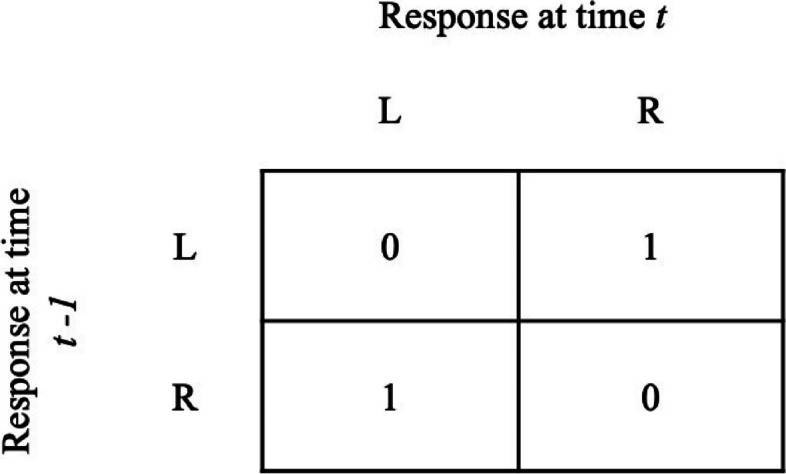 Figure 1
Peer Reviews
No public reviews on file for this paper yet. If you reviewed it on a platform where reviews are public (OpenReview, ICLR, NeurIPS, ICML), you can paste yours below so the community can read it here.
Videos
No videos yet. Explain this paper in a talk, walkthrough, or lecture? Add one.
Taxonomy
TopicsBehavioral and Psychological Studies