“Living with a question mark”: psychosocial experience of Portuguese young adults at risk for hereditary amyloid transthyretin amyloidosis with polyneuropathy
José D. Pereira, Catarina Costa, Andreia Santos, Marina S. Lemos, Jorge Sequeiros, Milena Paneque, Álvaro Mendes

TL;DR
This study explores the psychosocial experiences of young Portuguese adults at risk for a genetic disease, focusing on how it affects their mental health and life decisions.
Contribution
The first study to examine the psychosocial experience of young adults at risk for hATTR-PN in Portugal.
Findings
Four key themes emerged: psychological representations, psychosocial impacts, coping strategies, and perceived support.
Young adults experience anxiety, suffering, and relief related to their genetic risk.
Genetic counseling and family support are crucial for managing psychosocial challenges.
Abstract
This study is the first to explore the psychosocial experience of young Portuguese adults at genetic risk for hereditary amyloid transthyretin amyloidosis with polyneuropathy (hATTR-PN). The work focuses on the developmental peculiarities of their experience with the disease. Sixteen semi-structured interviews were conducted with young adults coming for pre-symptomatic testing (PST) at a single genetics outpatient center in Portugal. The data were analyzed qualitatively. The main findings suggest that four themes mark the psychosocial experience of the young adults interviewed. The first refers to the development of psychological representations, namely beliefs, mental representations, and social perceptions about hATTR-PN. The second regards the experienced and anticipated psychosocial impacts, namely, suffering, anxiety, and relief related to the disease. The third is related to using…
Genes, proteins, chemicals, diseases, species, mutations and cell lines named across the full text — each resolved to its canonical identifier and authoritative record.
Click any figure to enlarge with its caption.
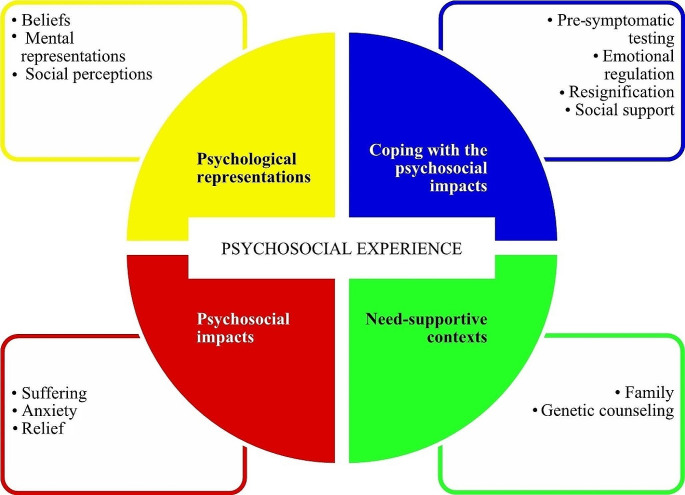 Figure 1
Peer Reviews
No public reviews on file for this paper yet. If you reviewed it on a platform where reviews are public (OpenReview, ICLR, NeurIPS, ICML), you can paste yours below so the community can read it here.
Videos
No videos yet. Explain this paper in a talk, walkthrough, or lecture? Add one.
Taxonomy
TopicsChromium effects and bioremediation · Adsorption and biosorption for pollutant removal