Protamine cleavage specificity of the avian pathogen Escherichia coli OmpT reveals two substrate-binding sites related to virulence
Juanhua Liu, Luyao Jiang, Hang Wang, Jiayan Wu, Qingqing Gao, Changchao Huan, Song Gao

TL;DR
This study explores how a bacterial enzyme from avian pathogenic Escherichia coli (APEC) cleaves immune peptides, revealing key residues that influence its pathogenicity.
Contribution
The study identifies specific residues in pOmpT that determine substrate specificity and contribute to APEC virulence.
Findings
Residues 267 and 276 in pOmpT are critical for cleaving human antimicrobial peptide RNase 7 but not protamine.
These residues are linked to APEC virulence and could inform antimicrobial drug development.
Loop 5 residues in cOmpT enhance substrate cleavage, while similar residues in pOmpT inhibit protamine cleavage.
Abstract
The pathogenic nature of bacteria can be increased by cleaving antimicrobial peptides using omptins, to avoid or counter the host’s natural immune defenses. Plasmid-encoded OmpT (pOmpT or ArlC) in avian pathogenic Escherichia coli (APEC), like the chromosome-encoded OmpT (cOmpT), belongs to the omptin family and both exhibit highly similar sequences and structures. Through sequence alignment and physiological examinations, pOmpT has been identified as a virulence factor, distinct from cOmpT in terms of substrate specificity. When pOmpT is compared with cOmpT regarding their proteolytic activities and target substrates, Asp267 and Ser276 on loop 5 of cOmpT are found to be binding sites that facilitate substrate anchoring and enhance substrate cleavage (protamine or synthetic peptide) by the catalytic center. Conversely, the characteristics of residues at positions 267 and 276 on loop 5…
Genes, proteins, chemicals, diseases, species, mutations and cell lines named across the full text — each resolved to its canonical identifier and authoritative record.
Click any figure to enlarge with its caption.
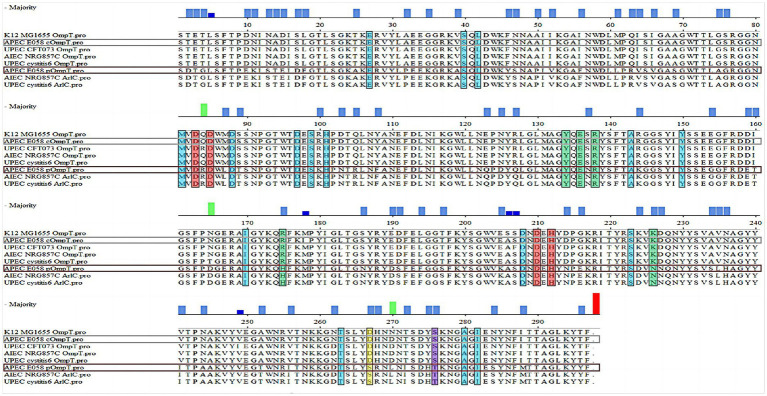 Figure 1
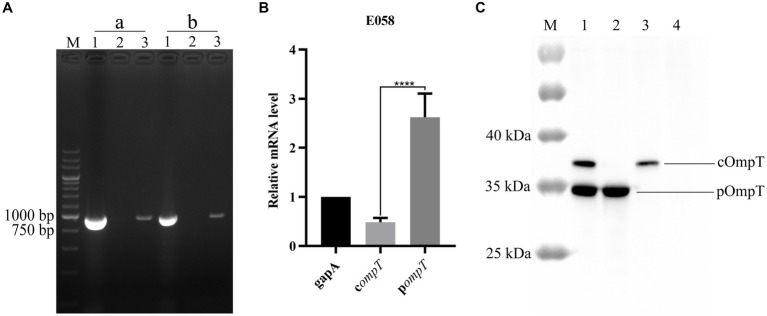 Figure 2
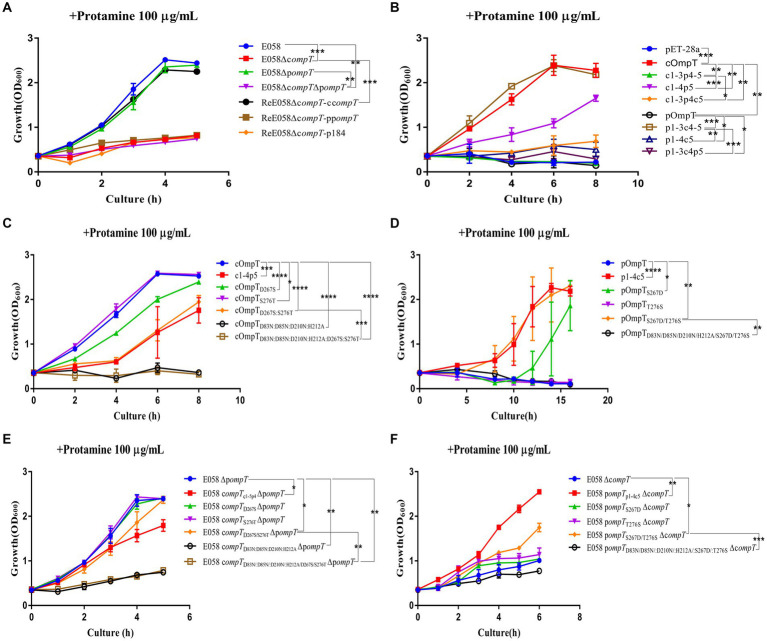 Figure 3
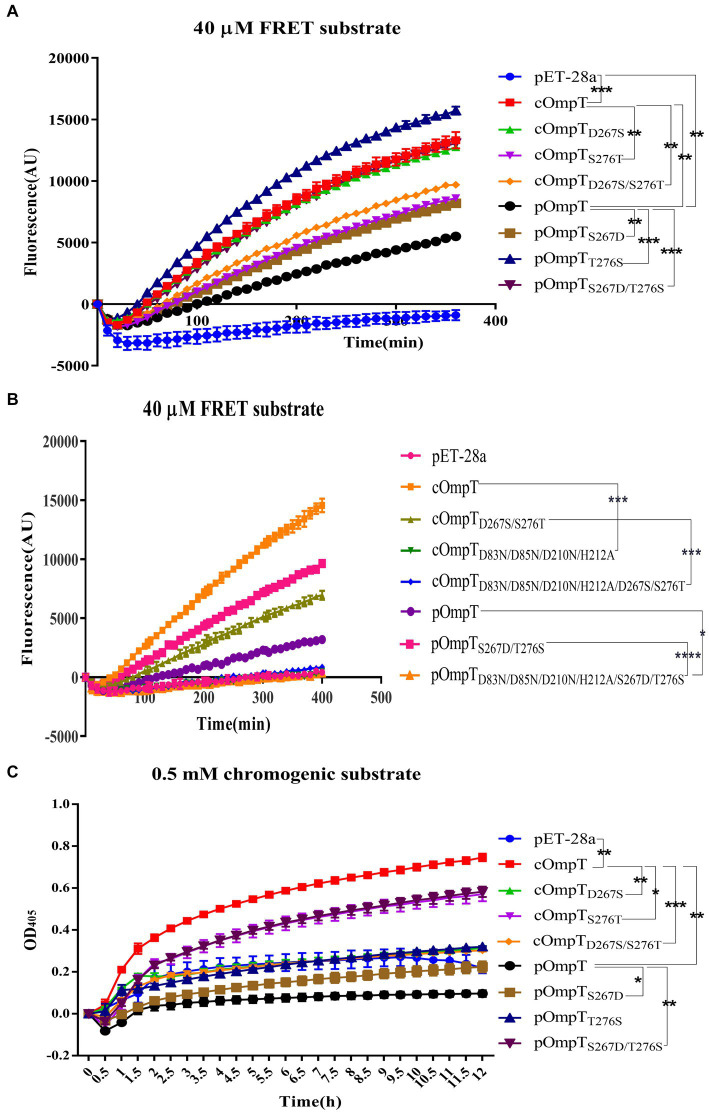 Figure 4
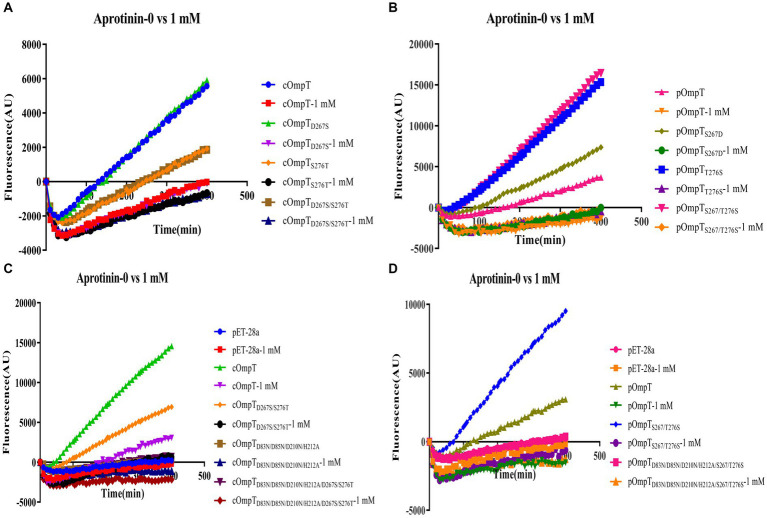 Figure 5
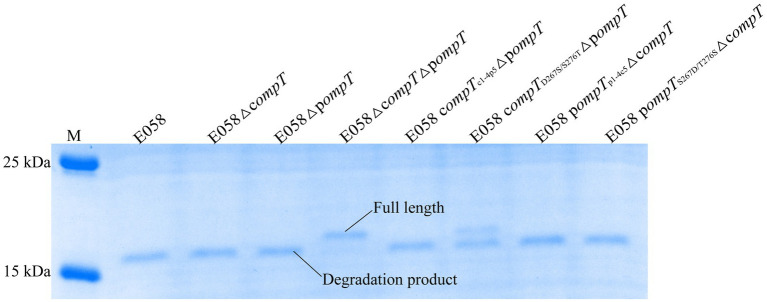 Figure 6
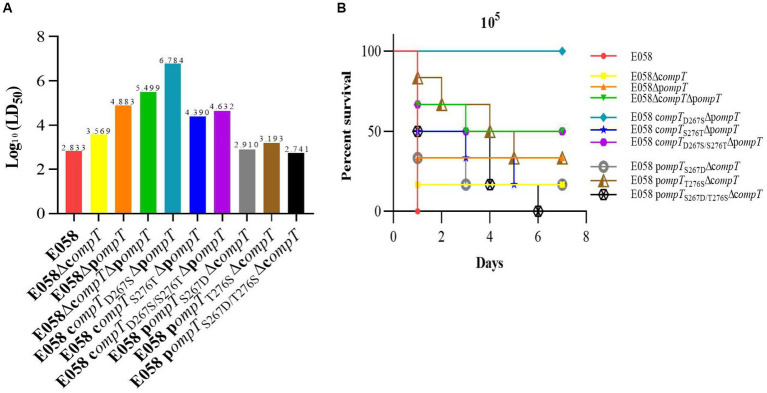 Figure 7
Peer Reviews
No public reviews on file for this paper yet. If you reviewed it on a platform where reviews are public (OpenReview, ICLR, NeurIPS, ICML), you can paste yours below so the community can read it here.
Videos
No videos yet. Explain this paper in a talk, walkthrough, or lecture? Add one.
Taxonomy
TopicsAntimicrobial Peptides and Activities · Escherichia coli research studies · RNA and protein synthesis mechanisms