Noise-induced modality-specific pretext learning for pediatric chest X-ray image classification
Sivaramakrishnan Rajaraman, Zhaohui Liang, Zhiyun Xue, Sameer Antani

TL;DR
This paper shows that using modality-specific learning improves pediatric chest X-ray classification over traditional ImageNet pretraining.
Contribution
A novel attention-based fuzzy ensemble of pretext-learned models for pediatric CXR classification is introduced.
Findings
CXR modality-specific pretext learning outperforms ImageNet-only pretraining in classification metrics.
The attention-based fuzzy ensemble further improves performance across multiple evaluation metrics.
Results suggest modality-specific techniques are a viable alternative to conventional pretraining for medical imaging.
Abstract
Deep learning (DL) has significantly advanced medical image classification. However, it often relies on transfer learning (TL) from models pretrained on large, generic non-medical image datasets like ImageNet. Conversely, medical images possess unique visual characteristics that such general models may not adequately capture. This study examines the effectiveness of modality-specific pretext learning strengthened by image denoising and deblurring in enhancing the classification of pediatric chest X-ray (CXR) images into those exhibiting no findings, i.e., normal lungs, or with cardiopulmonary disease manifestations. Specifically, we use a VGG-16-Sharp-U-Net architecture and leverage its encoder in conjunction with a classification head to distinguish normal from abnormal pediatric CXR findings. We benchmark this performance against the traditional TL approach, viz., the VGG-16 model…
Genes, proteins, chemicals, diseases, species, mutations and cell lines named across the full text — each resolved to its canonical identifier and authoritative record.
Click any figure to enlarge with its caption.
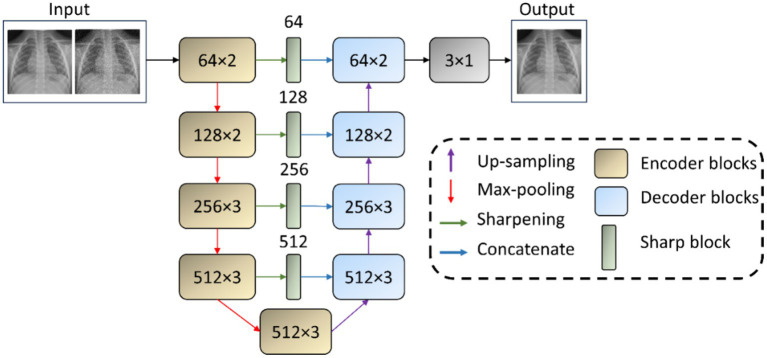 Figure 1
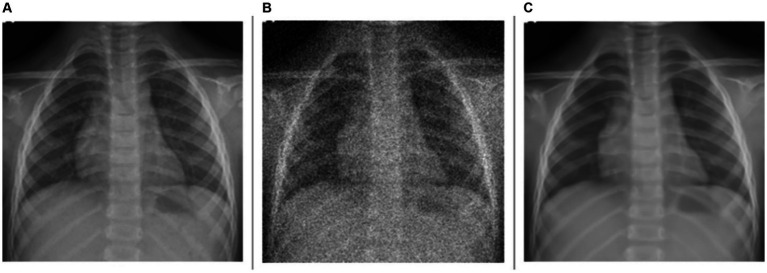 Figure 2
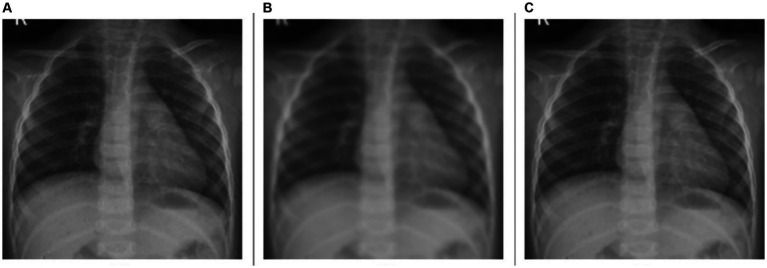 Figure 3
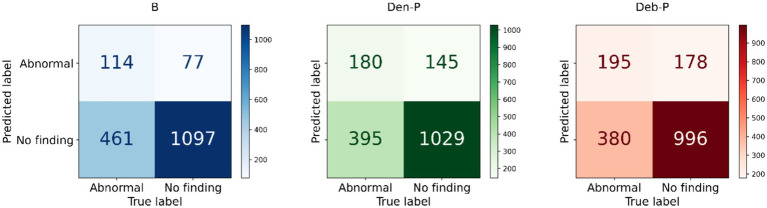 Figure 4
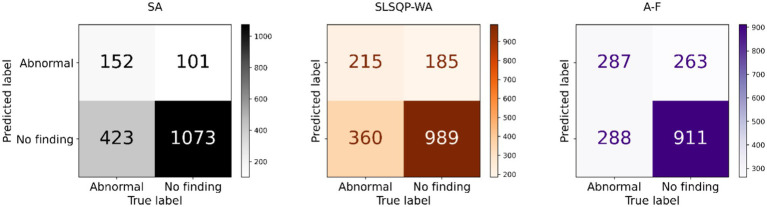 Figure 5
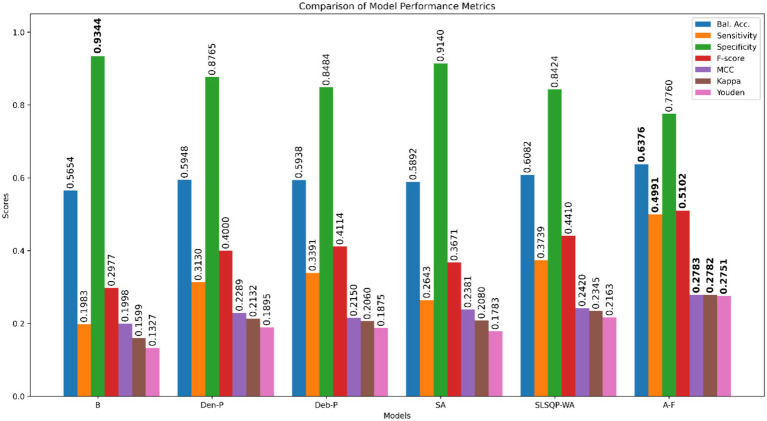 Figure 6
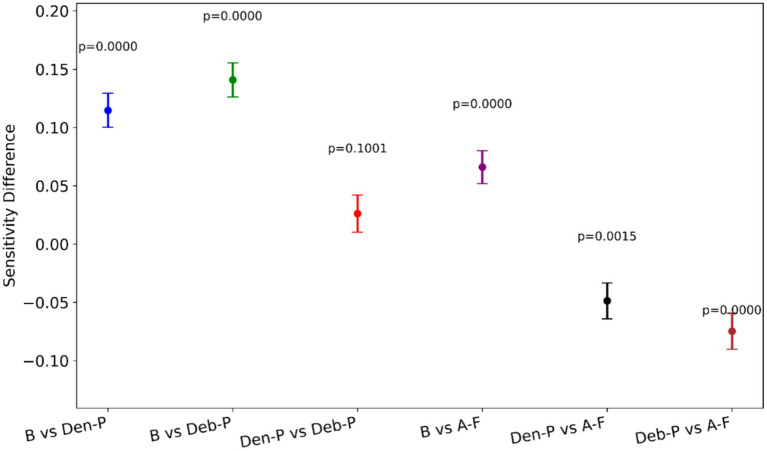 Figure 7
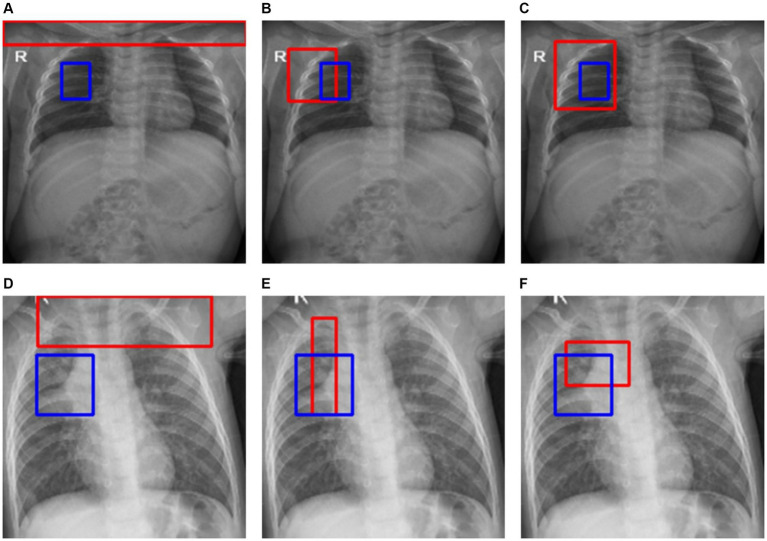 Figure 8
Peer Reviews
No public reviews on file for this paper yet. If you reviewed it on a platform where reviews are public (OpenReview, ICLR, NeurIPS, ICML), you can paste yours below so the community can read it here.
Videos
No videos yet. Explain this paper in a talk, walkthrough, or lecture? Add one.
Taxonomy
TopicsCOVID-19 diagnosis using AI · Phonocardiography and Auscultation Techniques · AI in cancer detection