Case report: Two cases of prostate adenocarcinoma progressing to rare sarcomatoid carcinoma with normal PSA levels following endocrine therapy
Zhicheng Dai, Weikang Wang, Haifang Guan, Xiaohui Wang, Yongheng Ren, Ying Qiu, Jie Liu

TL;DR
Two prostate cancer patients with normal PSA levels progressed to a rare and aggressive cancer type after endocrine therapy, highlighting the need for better monitoring methods.
Contribution
Highlights the limitations of PSA monitoring in high-grade prostate cancer and suggests the need for MRI or biopsies during endocrine therapy.
Findings
Prostate cancer patients with normal PSA levels can progress to sarcomatoid carcinoma during endocrine therapy.
Regular MRI or repeat biopsies may be necessary for high-grade prostate cancer patients undergoing endocrine therapy.
Clinical and pathological data, including immunohistochemistry, could improve understanding of sarcomatoid carcinoma.
Abstract
Patients with prostate adenocarcinoma undergoing regular endocrine therapy may maintain normal PSA levels during follow-up, yet still progress to the highly malignant and rare prostatic sarcomatoid carcinoma, which is seldom reported. This article presents two case studies of prostatic sarcomatoid carcinoma. To date, only a few publications have described prostatic sarcomatoid carcinoma, and the clinical, morphological, and molecular dimensions of prostate adenocarcinoma warrant further investigation. Patient A was admitted two years ago due to difficulty urinating, with a PSA level of 6.35 ng/ml. A prostate needle biopsy was performed, and the postoperative pathology diagnosed prostate adenocarcinoma with a Gleason score of 9 (5 + 4, grade group 5). Citing personal reasons, the patient declined a radical prostatectomy and instead received ongoing androgen deprivation therapy (ADT),…
Genes, proteins, chemicals, diseases, species, mutations and cell lines named across the full text — each resolved to its canonical identifier and authoritative record.
Click any figure to enlarge with its caption.
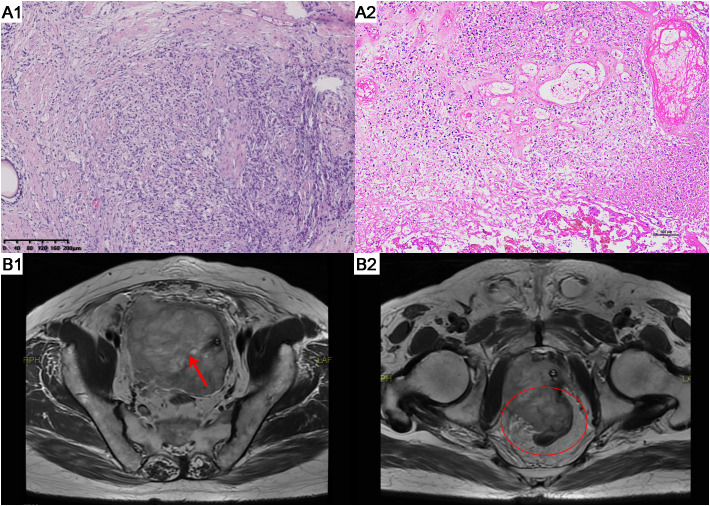 Figure 1
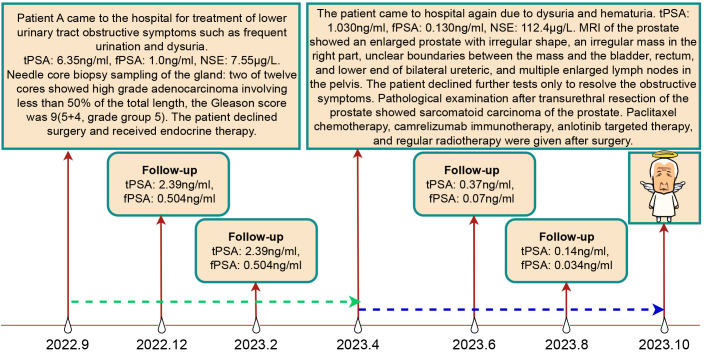 Figure 2
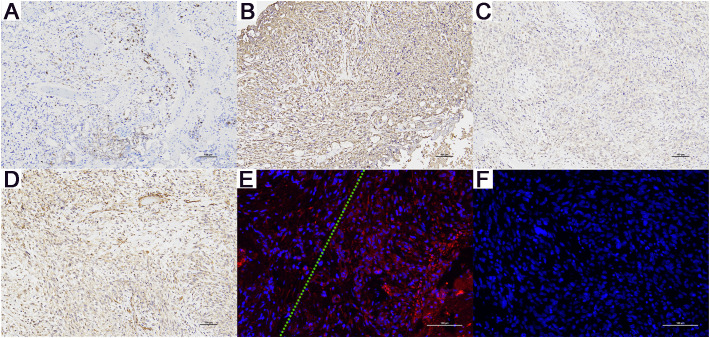 Figure 3
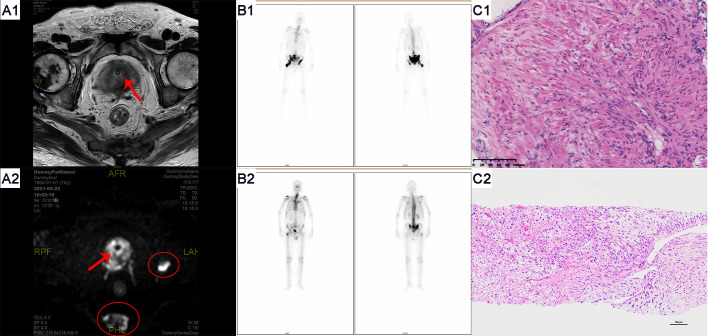 Figure 4
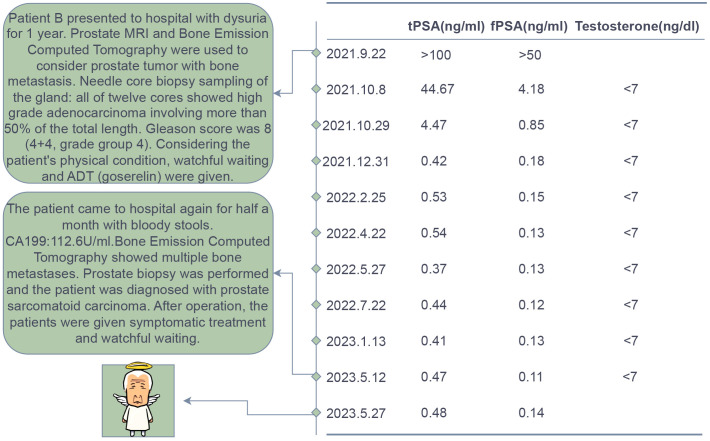 Figure 5
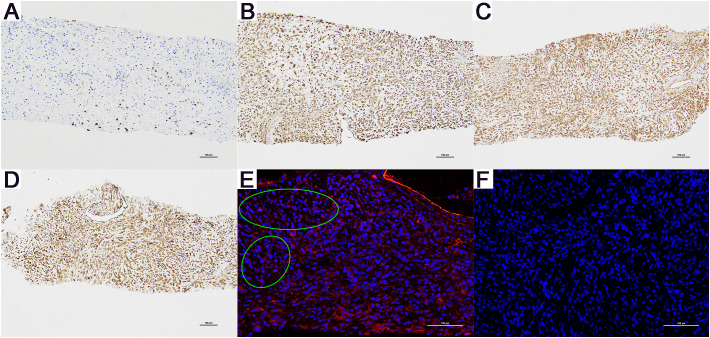 Figure 6
Peer Reviews
No public reviews on file for this paper yet. If you reviewed it on a platform where reviews are public (OpenReview, ICLR, NeurIPS, ICML), you can paste yours below so the community can read it here.
Videos
No videos yet. Explain this paper in a talk, walkthrough, or lecture? Add one.
Taxonomy
TopicsUrologic and reproductive health conditions · Prostate Cancer Treatment and Research · Prostate Cancer Diagnosis and Treatment