Genetic, Structural, Physicochemical, and Molecular Epidemiological Landscape of Three New Mutations Found in the Spike (S) Protein of Highly Transmissible Sri Lankan Delta Variant Sub-lineage AY.28: A222V, A701S, and A1078S
Dilantha Gunawardana

TL;DR
This paper analyzes three new mutations in the spike protein of the Sri Lankan Delta variant and their potential impact on virus transmission and vaccine effectiveness.
Contribution
The study identifies the A701S mutation as a globally convergent and structurally significant change in the SARS-CoV-2 spike protein.
Findings
The A701S mutation is structurally disruptive and may enhance virus transmission by aiding protease cleavage.
The A701S mutation is found in multiple SARS-CoV-2 strains across different regions, indicating global convergence.
The A222V mutation is deemed conservative and likely not impactful, while A1078S is highly prevalent in SARS-CoV-2.
Abstract
Recently, three new mutations were identified in Sri Lanka in the spike protein of the rapidly spreading delta variant of the SARS-CoV-2 virus identified by the sublineage AY.28. They were A222V, A701S, and A1078S. The primary focus here is on the A701S mutation that is (1) found in the immediate vicinity of the S1/S2 cleavage site (PRRAR∗SV) that separates S1 and S2 subunits of the spike protein; (2) has high structural disorder of the region spanning Serine-701 (Ser-701), which promotes a longer flexible loop forming a better substrate; (3) collapses a loose, short, unstable, tripeptide beta strand (ENS), which is likely to assist the host proteases to cleave the S1-S2 interface easily than when an alanine is present. The same A701S mutation is found in at least 10 other strains of SARS-CoV-2 found in India, USA (East and West Coasts), and China, which classifies this mutation as…
Genes, proteins, chemicals, diseases, species, mutations and cell lines named across the full text — each resolved to its canonical identifier and authoritative record.
Click any figure to enlarge with its caption.
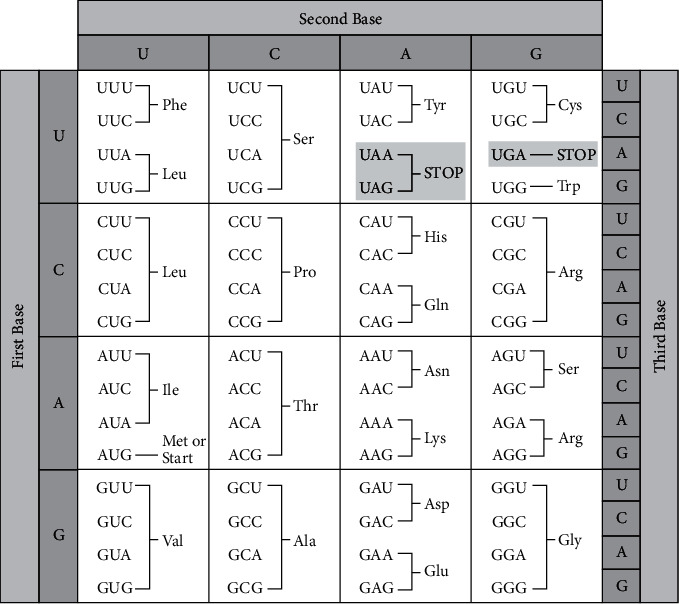 Figure 1
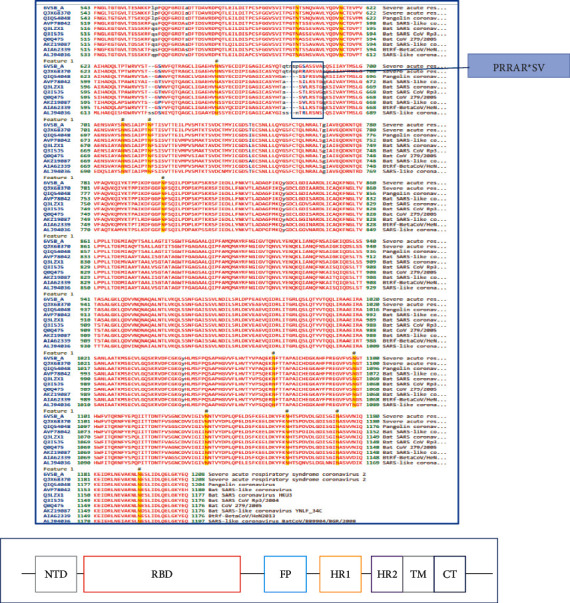 Figure 2
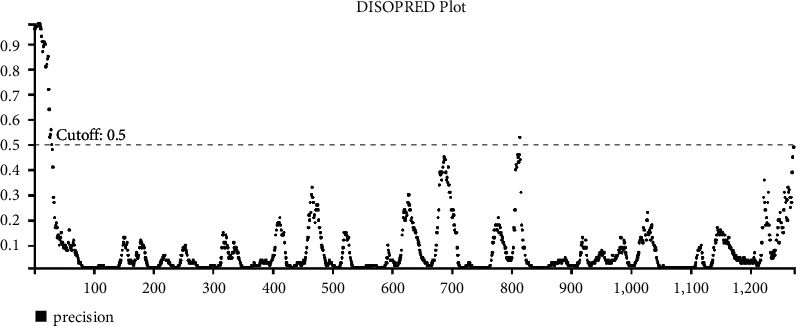 Figure 3
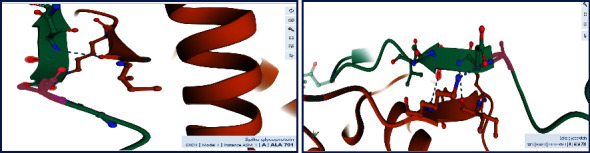 Figure 4
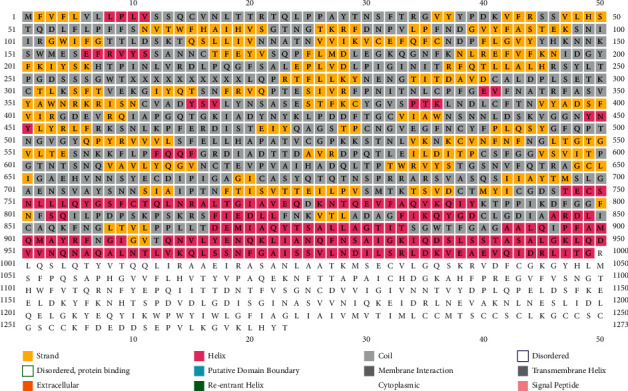 Figure 5
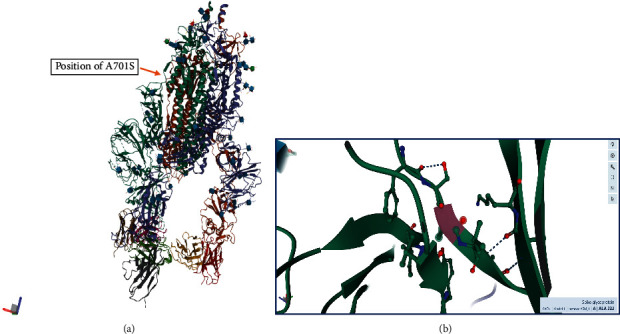 Figure 6
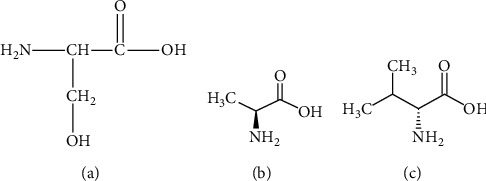 Figure 7
Peer Reviews
No public reviews on file for this paper yet. If you reviewed it on a platform where reviews are public (OpenReview, ICLR, NeurIPS, ICML), you can paste yours below so the community can read it here.
Videos
No videos yet. Explain this paper in a talk, walkthrough, or lecture? Add one.
Taxonomy
TopicsMachine Learning in Bioinformatics · Genomics and Phylogenetic Studies