FeBr3-catalysed synthesis of 3-aroylimidazo[1,2-a]pyridine and 3,3′-(arylmethylene)bis(2-phenylimidazo[1,2-a]pyridines) derivatives from 2-arylimidazo[1,2-a]pyridines and aromatic aldehydes: an investigation about mechanistic insights
Tran Quang Hung, Ban Van Phuc, Mai Phuong Nguyen, Tuan Linh Tran, Dang Van Do, Ha Thanh Nguyen, Van Tuyen Nguyen, Hien Nguyen, Tuan Thanh Dang

TL;DR
A new FeBr3-catalyzed method efficiently produces imidazo[1,2-a]pyridine derivatives under air or argon atmospheres.
Contribution
A novel FeBr3-catalyzed aerobic oxidative coupling method for synthesizing imidazo[1,2-a]pyridine derivatives is introduced.
Findings
FeBr3 catalyzes the synthesis of 3-aroylimidazo[1,2-a]pyridine derivatives under aerobic conditions.
Argon atmosphere leads to the formation of bis(2-phenylimidazo[1,2-a]pyridines) derivatives.
Oxygen is identified as the key oxidant in the catalytic process.
Abstract
In a new approach, a series of 3-aroylimidazo[1,2-a]pyridine derivatives were prepared in high yields. This approach revealed the direct Fe-catalyzed functionalization of imidazo[1,2-a]pyridine derivatives with aryl aldehydes via an aerobic oxidative cross-dehydrogenative coupling process. This transformation occurred in the presence of air, and FeBr3 served as a homogeneous Lewis catalyst. O2 was found to be the principal oxidant responsible for the method's success. Interestingly, when these reactions were carried out under an argon atmosphere, 3,3′-(arylmethylene)bis(2-phenylimidazo[1,2-a]pyridines) derivatives were prepared in good yields. FeBr3-catalysed synthesis of either 3-aroylimidazo[1,2-a]pyridines or 3,3′-(arylmethylene)bis(2-phenylimidazo[1,2-a]pyridines) derivatives from the same starting materials such as 2-arylimidazo[1,2-a]pyridines and aromatic aldehydes were reported.
Genes, proteins, chemicals, diseases, species, mutations and cell lines named across the full text — each resolved to its canonical identifier and authoritative record.
Click any figure to enlarge with its caption.
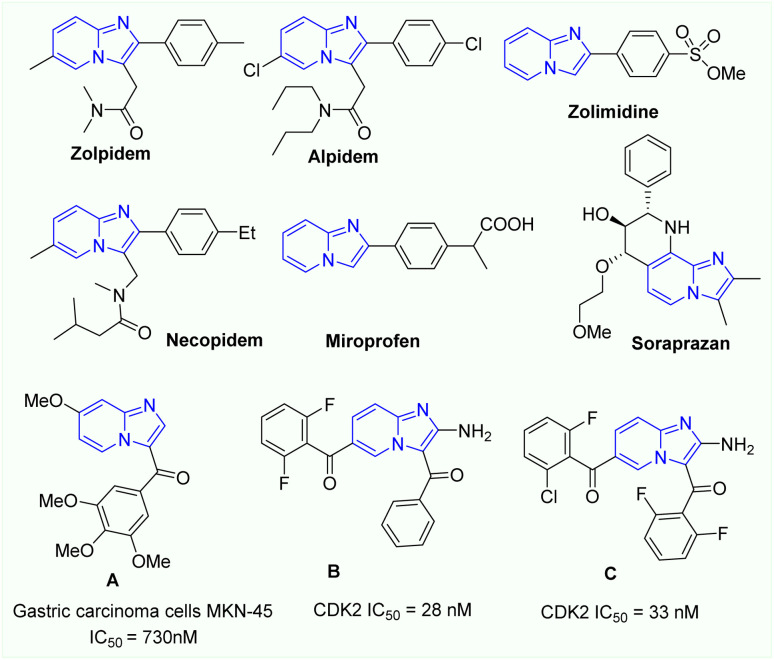 Figure 1
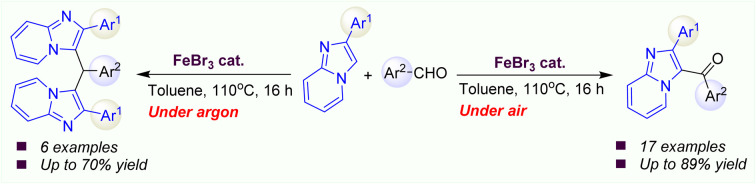 Figure 2
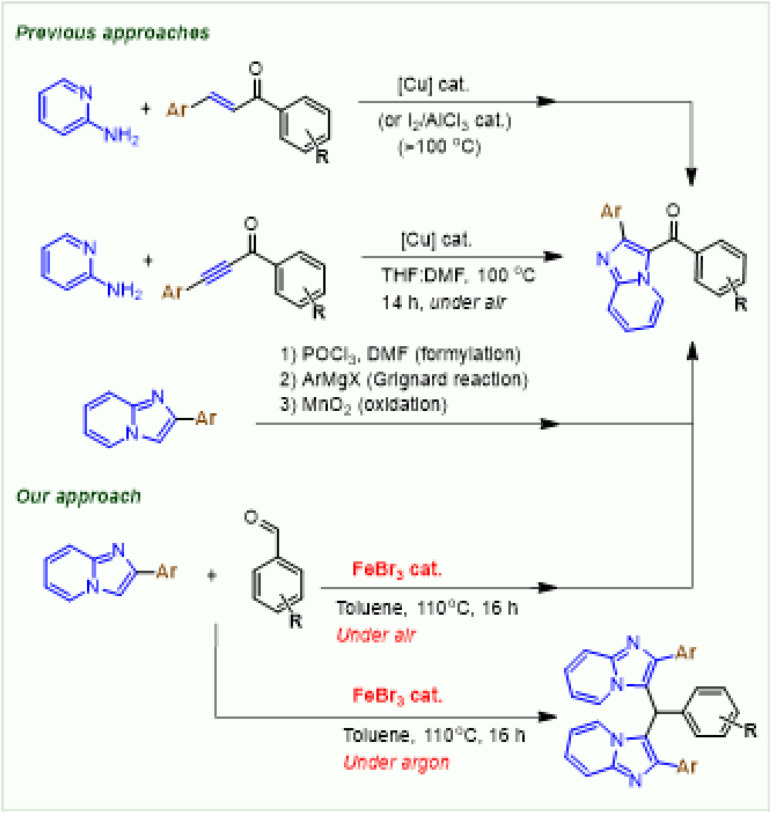 Figure 3
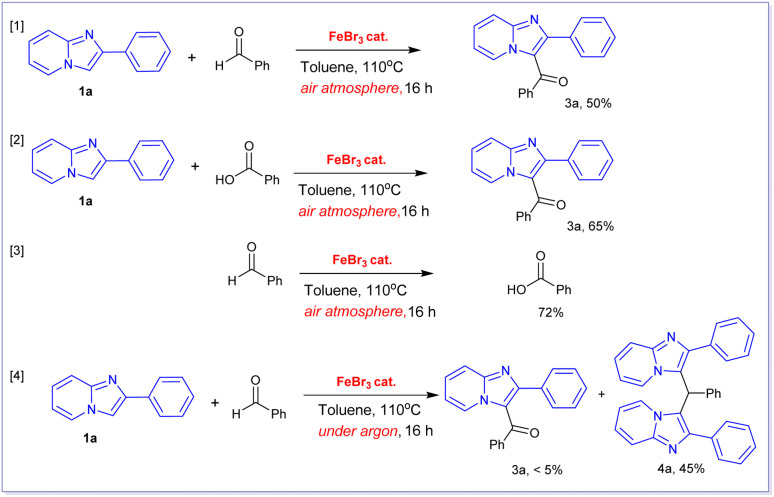 Figure 4
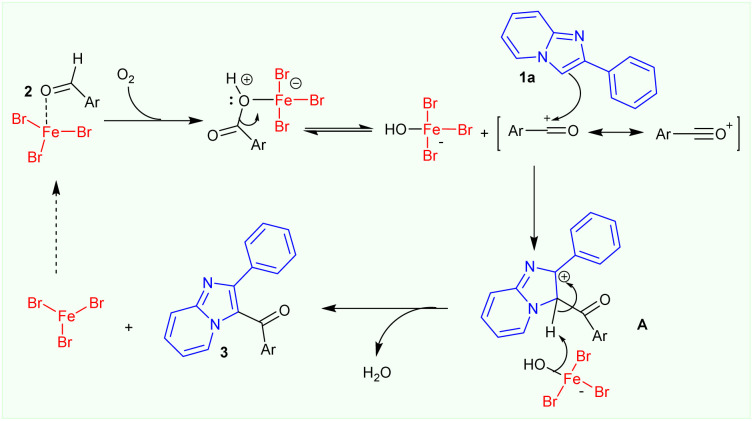 Figure 5
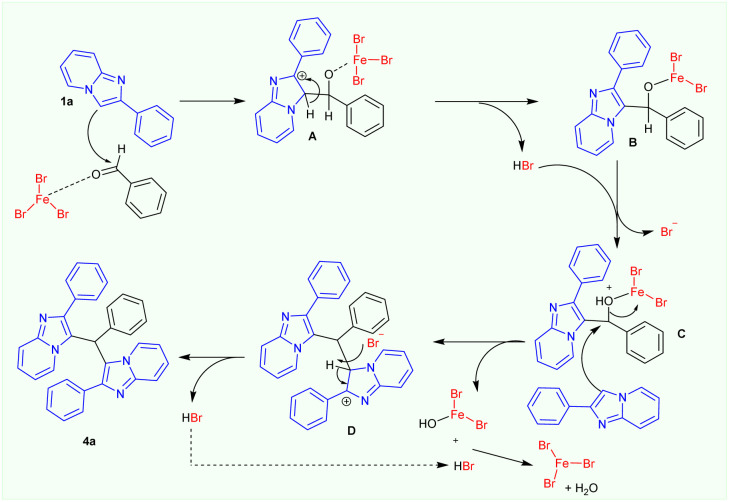 Figure 6
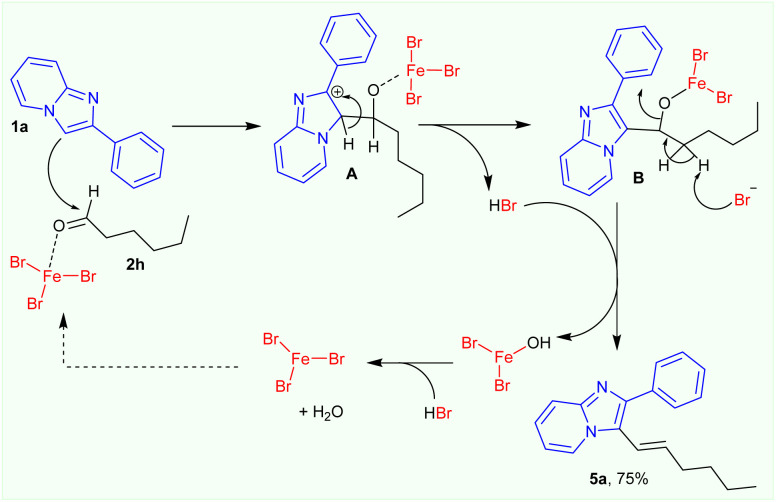 Figure 7
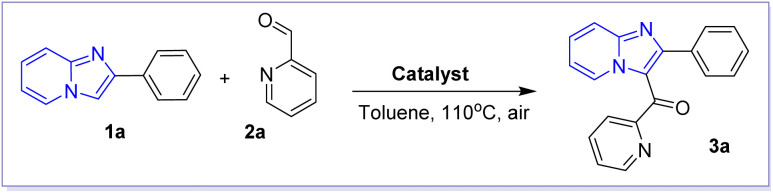 Figure 8
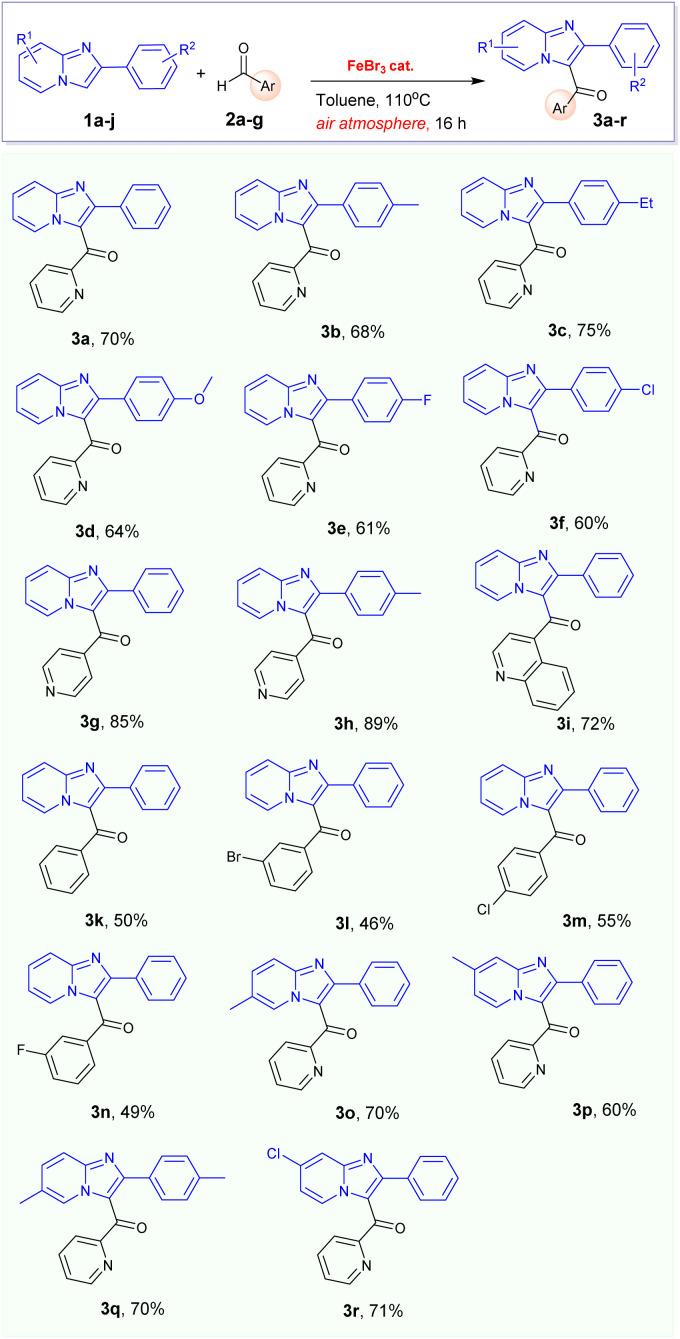 Figure 9
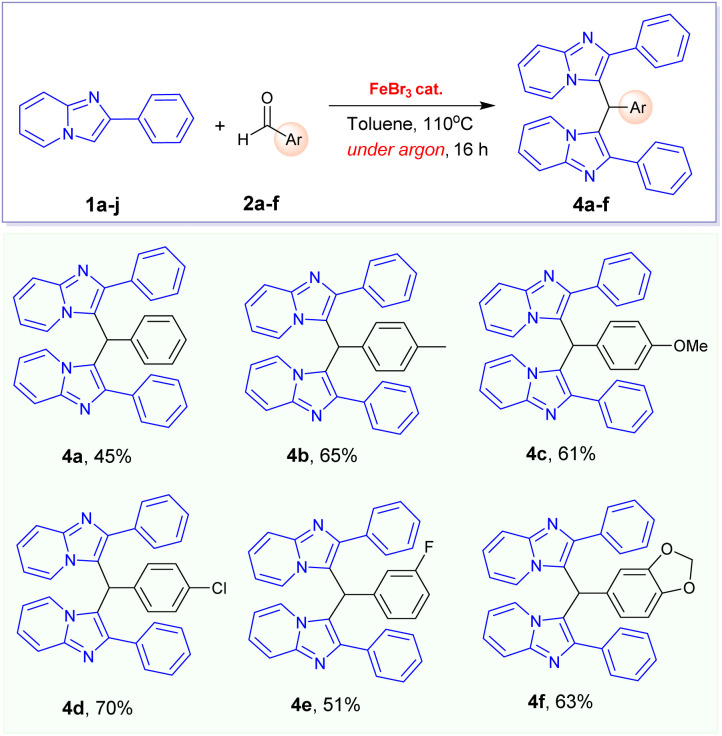 Figure 10
Peer Reviews
No public reviews on file for this paper yet. If you reviewed it on a platform where reviews are public (OpenReview, ICLR, NeurIPS, ICML), you can paste yours below so the community can read it here.
Videos
No videos yet. Explain this paper in a talk, walkthrough, or lecture? Add one.
Taxonomy
TopicsHistorical, Literary, and Cultural Studies