The complete chloroplast genome of Pilea notata C. H. Wright, 1899 (Urticaceae)
Ni Zhao, Linya Liu, Shudong Zhang, Chao Zhao, Xiaojian Gong, Yacheng Huang

TL;DR
This paper presents the complete chloroplast genome of Pilea notata, a medicinal plant used by the Miao people in Guizhou.
Contribution
The study provides the first complete chloroplast genome sequence for Pilea notata and its phylogenetic placement within the genus.
Findings
The chloroplast genome is 150,979 bp with IRs, LSC, and SSC regions.
It contains 131 genes, including 86 protein-coding genes.
Phylogenetic analysis grouped P. notata with P. verrucosa and P. monilifera.
Abstract
Pilea notata (Pilea notata C. H. Wright_C. H. Wright, 1899) is Pilea Lindl. of Urticaceae, which is a commonly used Miao medicine in Guizhou province. The P. notata chloroplast genome is 150,979 bp, contains a pair of inverted repeats (IRs 25,743bp), and is separated by a large single-copy region (81,446bp) and a small single-copy region (18,047bp). A total of 131 genes, including 86 protein-coding genes, 37 tRNA genes, and eight rRNA genes. Phylogenetic analysis showed that P. notata, P. verrucosa and P. monilifera united as a single branch, while Pilea cadierei was defined as a sister group of this branch.
Genes, proteins, chemicals, diseases, species, mutations and cell lines named across the full text — each resolved to its canonical identifier and authoritative record.
Click any figure to enlarge with its caption.
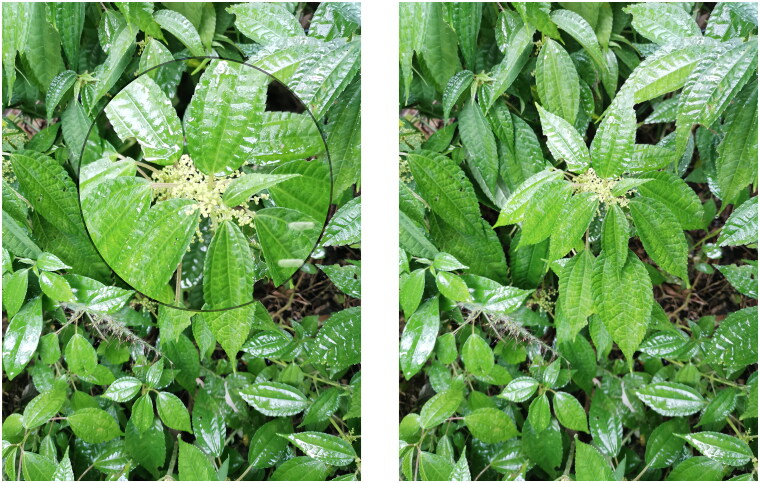 Figure 1
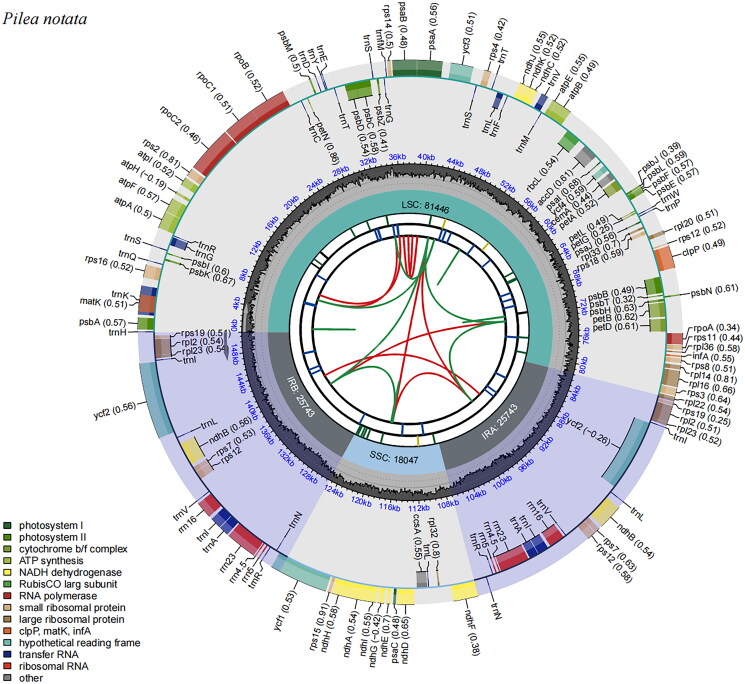 Figure 2
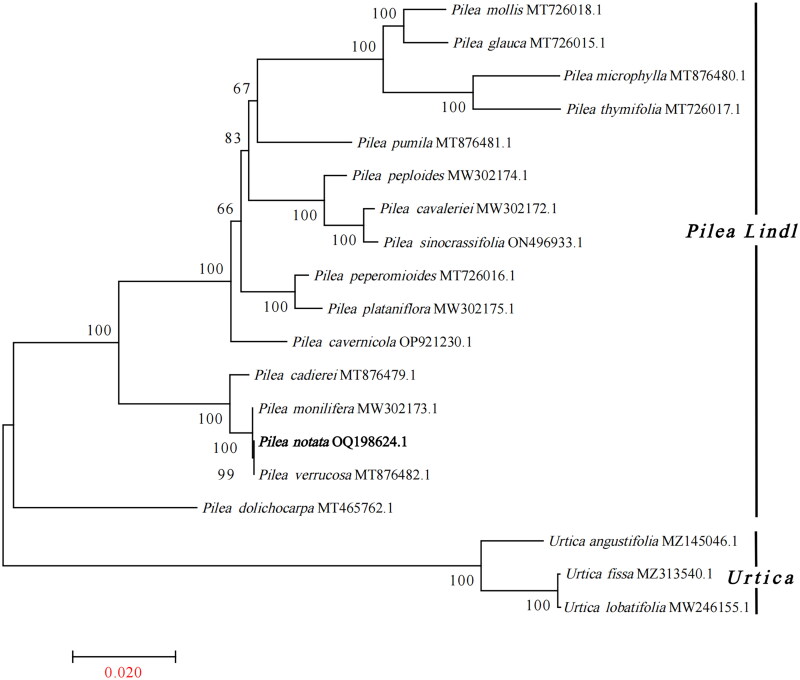 Figure 3
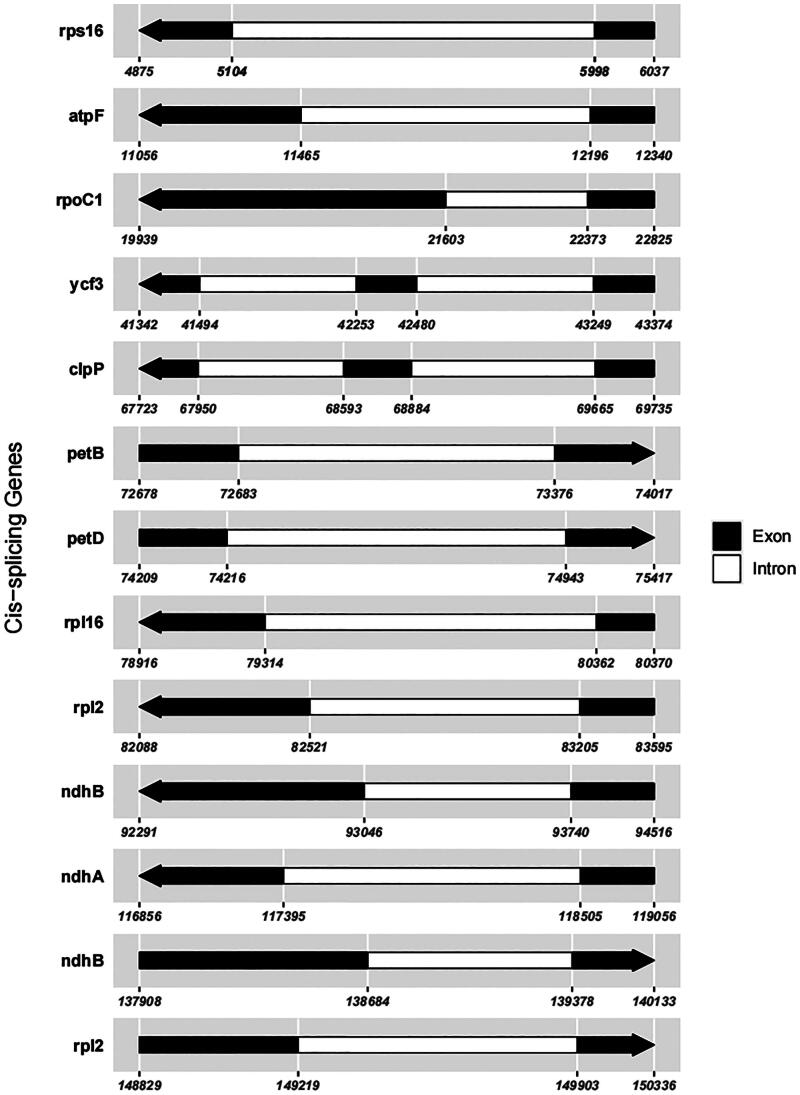 Figure 4
Peer Reviews
No public reviews on file for this paper yet. If you reviewed it on a platform where reviews are public (OpenReview, ICLR, NeurIPS, ICML), you can paste yours below so the community can read it here.
Videos
No videos yet. Explain this paper in a talk, walkthrough, or lecture? Add one.
Taxonomy
TopicsPlant and Fungal Species Descriptions · Plant Parasitism and Resistance · Plant and animal studies