Promoting Collaborative Scholarship During the COVID-19 Pandemic Through an Innovative COVID-19 Data Explorer and Repository at Yale School of Medicine: Development and Usability Study
Angela Maria Victoria-Castro, Tanima Arora, Michael Simonov, Aditya Biswas, Jameel Alausa, Labeebah Subair, Brett Gerber, Andrew Nguyen, Allen Hsiao, Richard Hintz, Yu Yamamoto, Robert Soufer, Gary Desir, Francis Perry Wilson, Merceditas Villanueva

TL;DR
Yale School of Medicine created a user-friendly data platform to streamline access to comprehensive, up-to-date clinical data on over 18,000 hospitalized COVID-19 patients, promoting collaboration and research efficiency.
Contribution
The novel DOM-CovX platform provides a centralized, deidentified, and continuously updated clinical data repository with a user-friendly interface to support interdisciplinary research.
Findings
The DOM-CovX platform has enabled 16 peer-reviewed publications and multiple conference presentations by facilitating access to detailed clinical data.
The repository includes 3997 variables across 7 clinical domains and has supported researchers from 15 different medical specialties.
The platform has enhanced interdepartmental collaboration and is being expanded for use beyond COVID-19.
Abstract
The COVID-19 pandemic sparked a surge of research publications spanning epidemiology, basic science, and clinical science. Thanks to the digital revolution, large data sets are now accessible, which also enables real-time epidemic tracking. However, despite this, academic faculty and their trainees have been struggling to access comprehensive clinical data. To tackle this issue, we have devised a clinical data repository that streamlines research processes and promotes interdisciplinary collaboration. This study aimed to present an easily accessible up-to-date database that promotes access to local COVID-19 clinical data, thereby increasing efficiency, streamlining, and democratizing the research enterprise. By providing a robust database, a broad range of researchers (faculty and trainees) and clinicians from different areas of medicine are encouraged to explore and collaborate on…
Genes, proteins, chemicals, diseases, species, mutations and cell lines named across the full text — each resolved to its canonical identifier and authoritative record.
Click any figure to enlarge with its caption.
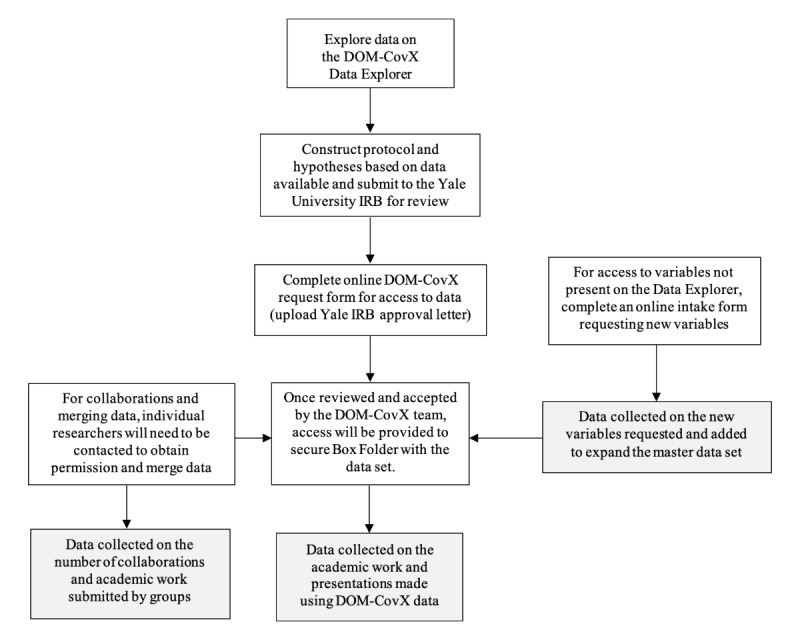 Figure 1
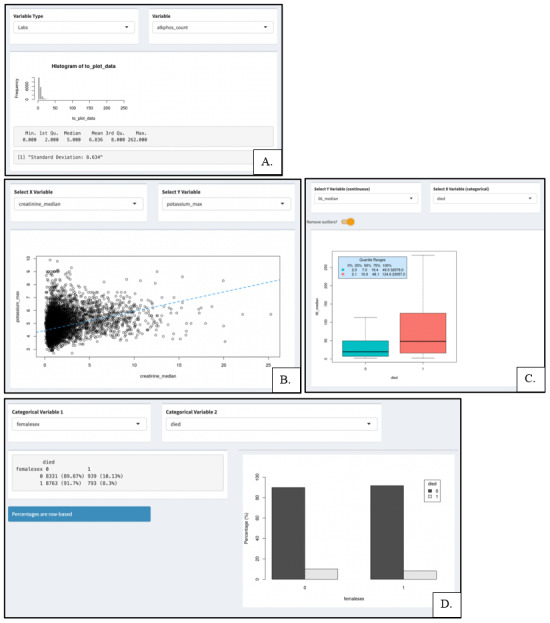 Figure 2
Peer Reviews
No public reviews on file for this paper yet. If you reviewed it on a platform where reviews are public (OpenReview, ICLR, NeurIPS, ICML), you can paste yours below so the community can read it here.
Videos
No videos yet. Explain this paper in a talk, walkthrough, or lecture? Add one.
Taxonomy
TopicsArtificial Intelligence in Healthcare and Education · COVID-19 diagnosis using AI · Scientific Computing and Data Management