Phosphoproteomic analysis of the response to DNA damage in Trypanosoma brucei
Emilia McLaughlin, Monica Gabriela Zavala Martinez, Annick Dujeancourt-Henry, Thibault Chaze, Quentin Giai Gianetto, Mariette Matondo, Michael D. Urbaniak, Lucy Glover

TL;DR
This study explores how the parasite Trypanosoma brucei responds to DNA damage by analyzing changes in protein phosphorylation.
Contribution
The paper presents the first phosphoproteomic analysis of DNA damage response in Trypanosoma brucei.
Findings
Over 6500 phosphorylation sites were detected, including 211 that respond to DNA breaks.
Two novel phosphorylation events were identified on histone H2A.
Different phosphorylation patterns were observed depending on the location of the DNA break.
Abstract
Damage to the genetic material of the cell poses a universal threat to all forms of life. The DNA damage response is a coordinated cellular response to a DNA break, key to which is the phosphorylation signaling cascade. Identifying which proteins are phosphorylated is therefore crucial to understanding the mechanisms that underlie it. We have used stable isotopic labeling of amino acids in cell culture-based quantitative phosphoproteomics to profile changes in phosphorylation site abundance following double stranded DNA breaks, at two distinct loci in the genome of the single cell eukaryote Trypanosoma brucei. Here, we report on the T. brucei phosphoproteome following a single double-strand break at either a chromosome internal or subtelomeric locus, specifically the bloodstream form expression site. We detected >6500 phosphorylation sites, of which 211 form a core set of double-strand…
Genes, proteins, chemicals, diseases, species, mutations and cell lines named across the full text — each resolved to its canonical identifier and authoritative record.
Click any figure to enlarge with its caption.
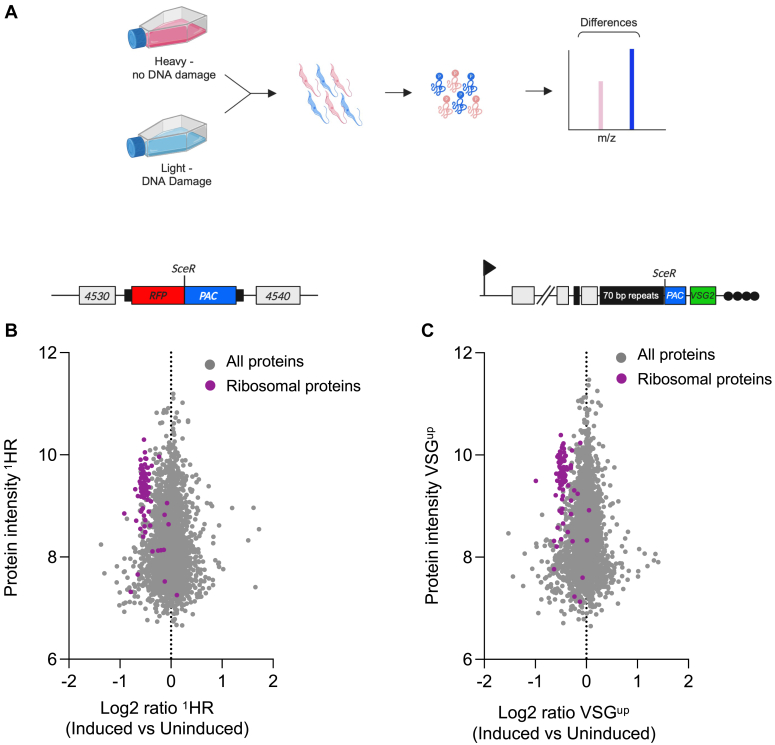 Figure 1
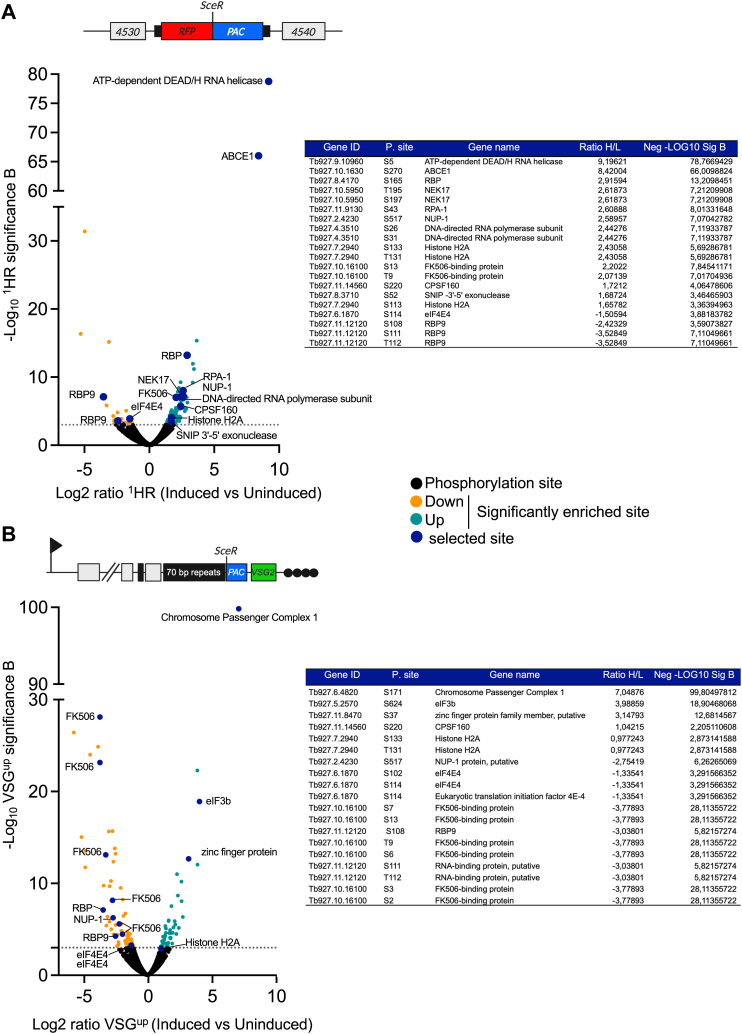 Figure 2
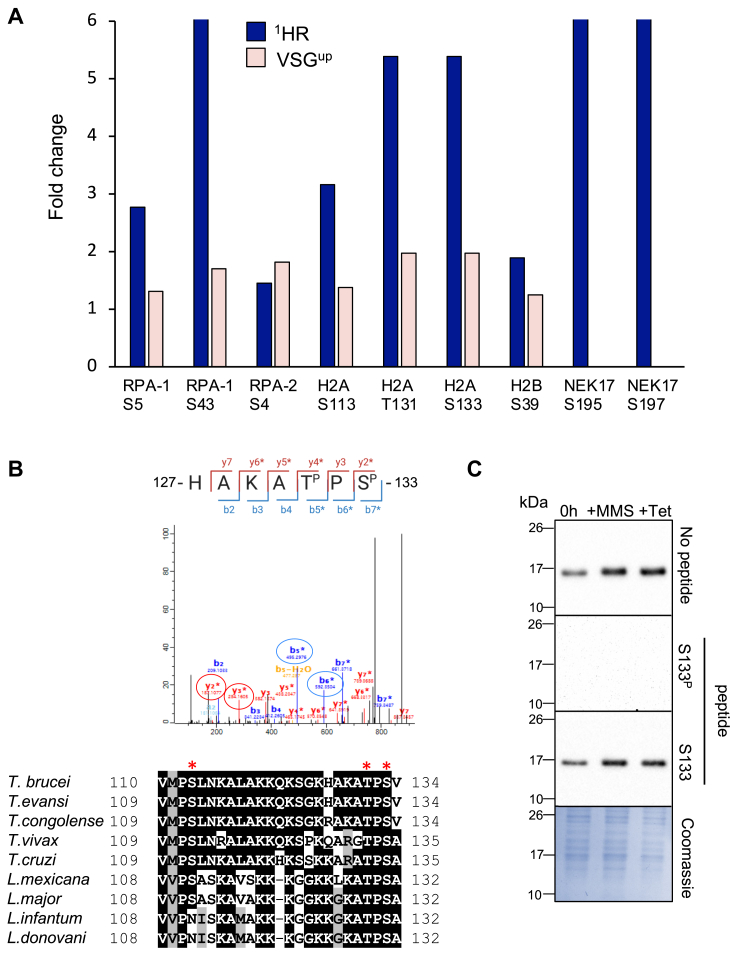 Figure 3
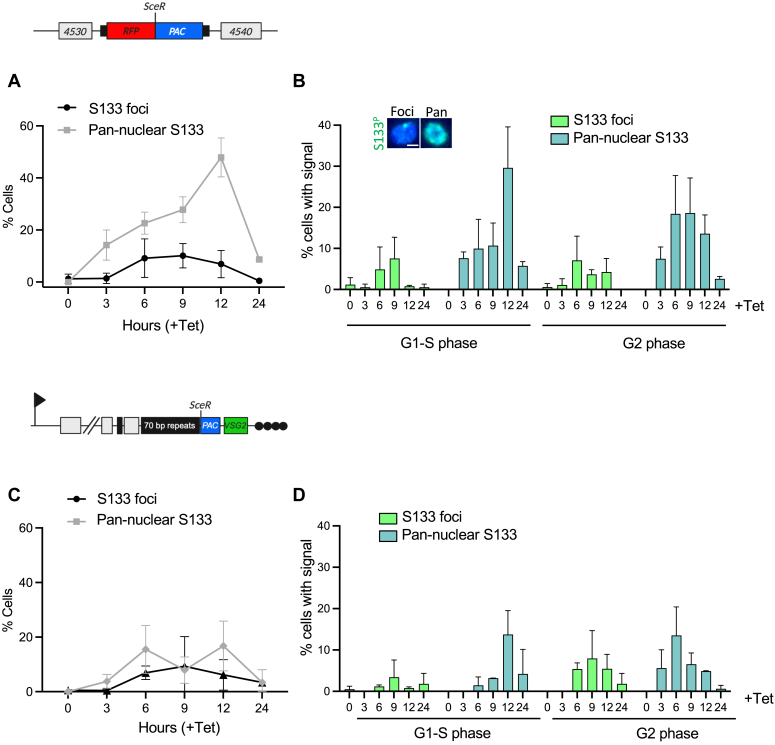 Figure 4
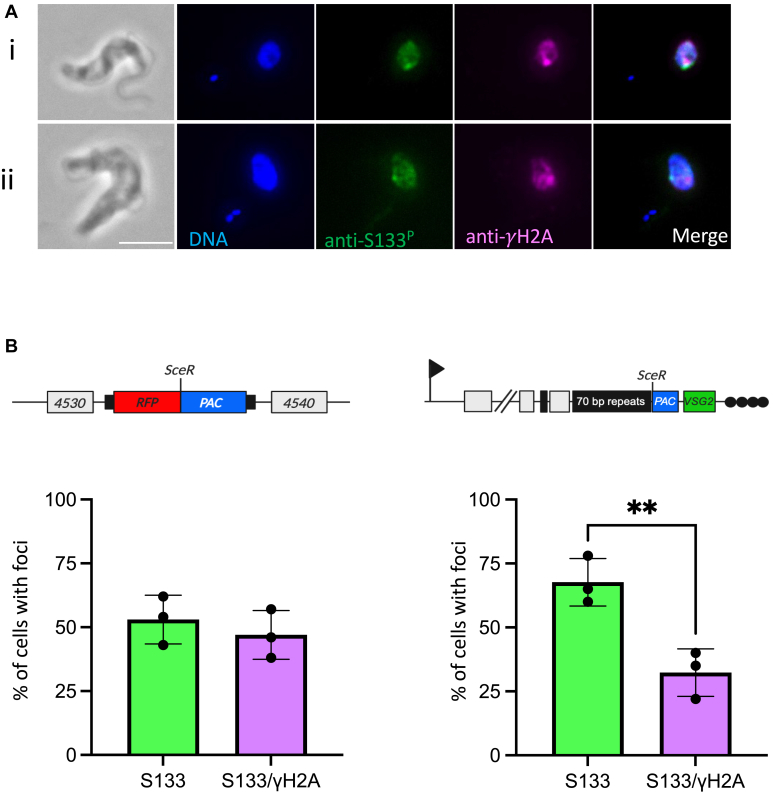 Figure 5
Peer Reviews
No public reviews on file for this paper yet. If you reviewed it on a platform where reviews are public (OpenReview, ICLR, NeurIPS, ICML), you can paste yours below so the community can read it here.
Videos
No videos yet. Explain this paper in a talk, walkthrough, or lecture? Add one.
Taxonomy
TopicsTrypanosoma species research and implications · Research on Leishmaniasis Studies · Biochemical and Molecular Research