The 13th World Congress for Neurorehabilitation, 22 - 25 May, Vancouver, Canada – Advancing Neurorehabilitation across Time(s) and Continents
Alexandra Gherman, Dafin Fior Muresanu

Abstract
Genes, proteins, chemicals, diseases, species, mutations and cell lines named across the full text — each resolved to its canonical identifier and authoritative record.
Click any figure to enlarge with its caption.
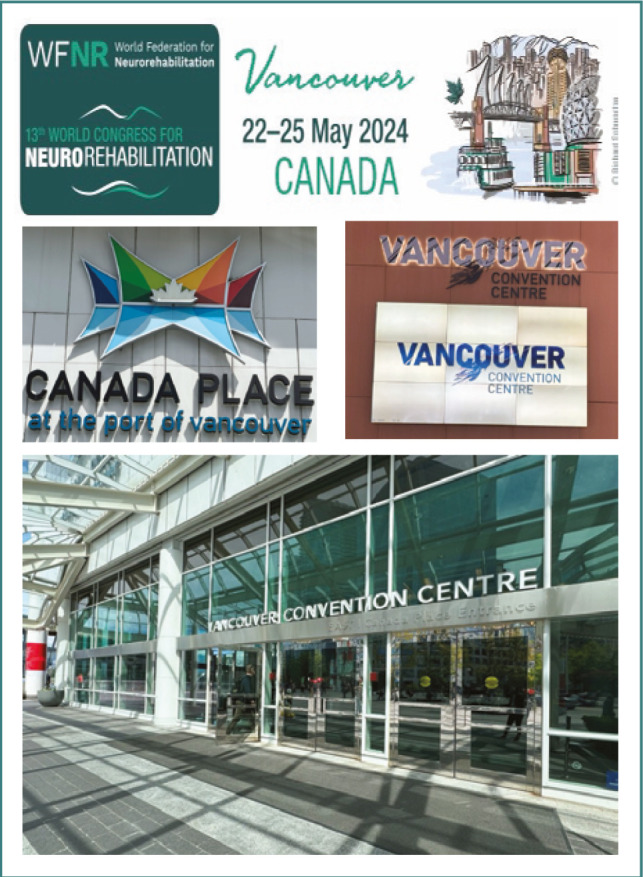 Figure 1
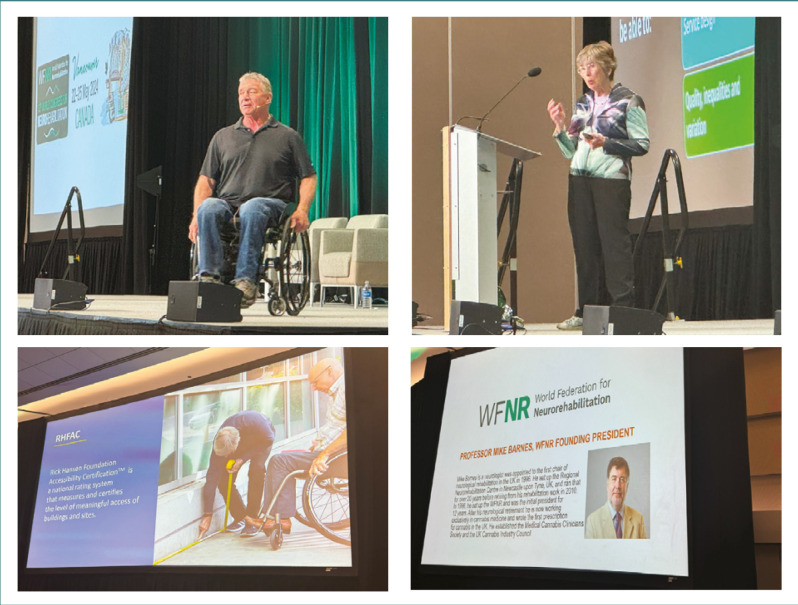 Figure 2
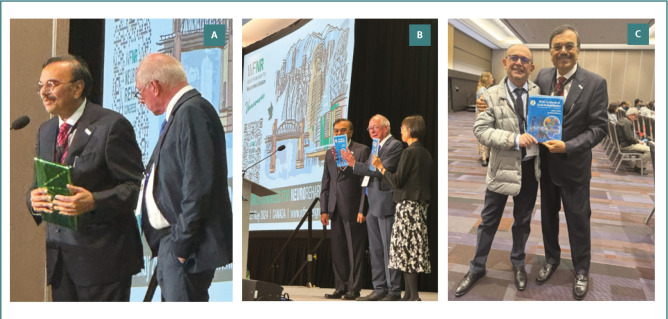 Figure 3
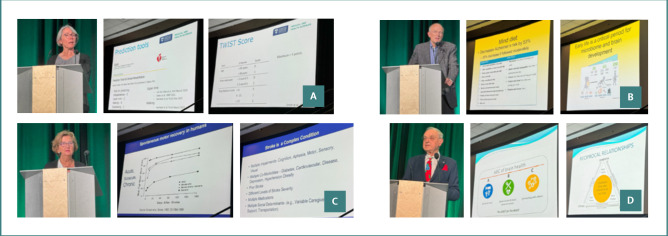 Figure 4
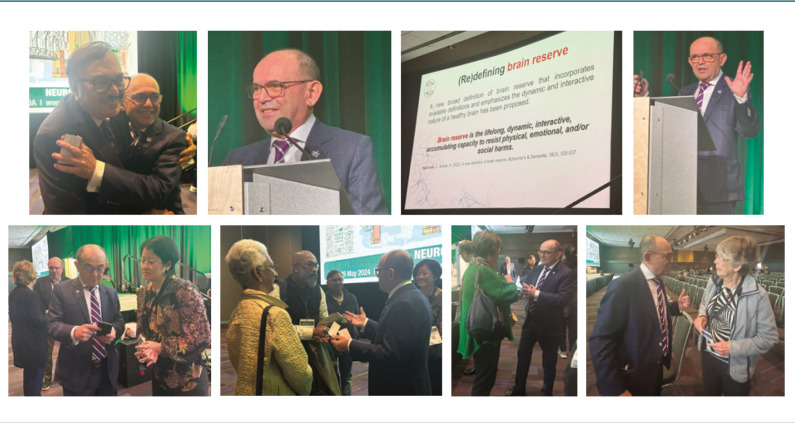 Figure 5
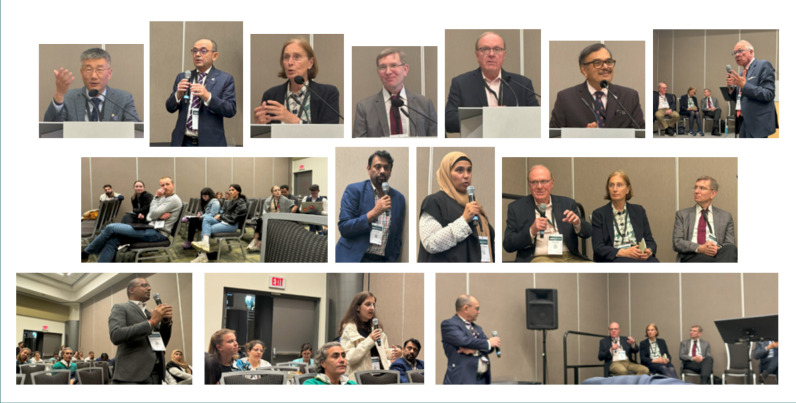 Figure 6
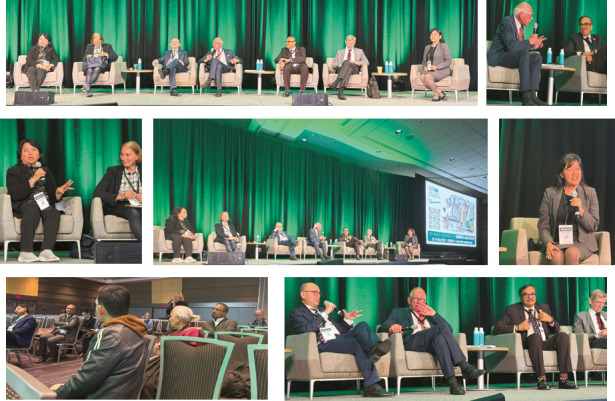 Figure 7
 Figure 8
Peer Reviews
No public reviews on file for this paper yet. If you reviewed it on a platform where reviews are public (OpenReview, ICLR, NeurIPS, ICML), you can paste yours below so the community can read it here.
Videos
No videos yet. Explain this paper in a talk, walkthrough, or lecture? Add one.
Taxonomy
TopicsTraumatic Brain Injury Research · Cerebral Palsy and Movement Disorders
Canada Place, Vancouver Convention Centre, East Building, May 22^nd^. At these iconic landmarks and venues (Figure 1), the World Federation for Neurorehabilitation welcomed more than 1.110 participants from over 50 countries, international world-renowned speakers, industry exhibitors and special guests to the 13^th^ edition of the World Congress for Neurorehabilitation, an event that spanned over four days (until May 25^th^). With a program containing more than 100 scientific sessions, be it plenary talks, symposia, round tables or workshops, the Congress again proved a milestone in the multidisciplinary landscape of neurorehabilitation, also allowing young specialists to bring forward their contributions via oral communications or poster presentations, and industry representatives to present their products to the audience in engaging discussions and debates. (see Annex A for the 13th WCNR in pictures).
The Opening Ceremony of the event started with the welcome of all participants addressed by the President of the World Federation for Neurorehabilitation, Prof. Dr Volker Hömberg, the congress chairs, Prof. Janice J. Eng and Dr Noah D. Silverberg (Vancouver, Canada), and the Chief Accessibility Officer of Canada, Stephanie Cadieux (Surrey, Canada), who all emphasised the role of neurorehabilitation at an international scientific level, the importance of collaboration among its various disciplines, and the future perspectives of neurorehabilitation, especially within the technological advancements frame. Their speeches were supported by two outstanding opening lectures delivered by Rick Hansen (Richmond, Canada) and Prof. Pam Enderby (Sheffield, UK) (Figure 2), with the first to engage the audience in a thrilling journey of the Man in Motion Tour (March 1985 – May 1989) just to outline how much courage, resilience, and strength lies within a person in the pursuit of quality of life, and the latter to deliver an emotional Barnes lecture, dedicated to Prof. Mike Barnes, WFNR Founding President, whose continuous efforts are directed towards raising the profile of neurorehabilitation as a discipline and enhancing the understanding and knowledge of the patient to ensure better outcomes, globally.
As a last point of the introduction, it is worth mentioning the surprise the audience was part of at the Opening Ceremony, i.e., the launching of the IFNR Textbook on Neurorehabilitation (Figure 3), announced by its editor-in-chief, Prof. Dr Nirmal Surya, President of the Indian Federation of Neurorehabilitation. The Textbook is an in-depth guide to all professionals working in the field of neurorehabilitation and it tackles topics such as the assessment of neurological deficits, implementation of evidence-based treatment strategies, and management of rehabilitation across different stages of recovery, with an emphasis on individual treatment plans, integration of emerging technologies and research findings.
Equally successful were the other four plenary sessions (Figure 4) contained in the program, offering the participants insights on:
- Predicting Motor Outcomes: How and Why by Prof. Cathy Stinear (Auckland, New Zealand);
- The gut-brain axis: it’s all about the microbiome by Prof. Brett Finlay (Vancouver, Canada);
- Redesigning rehabilitation research for impactful and transformative outcomes: examples from stroke research by Prof. Pamela W. Duncan (Seven Lakes, NC, USA);
- Individual resilience in acute ischemic stroke: operationalizing brain reserve by Prof. Dr Dafin Muresanu (Cluj-Napoca, Romania);
- A critique on present and future of Robotic in Neurorehabilitation in LMIC by Dr Rakesh Kumar Srivastava (New Delhi, India);
- The Toronto Rehab TBI Recovery Study: from Bench to Bedside by Dr Robin Green (Toronto, Canada)’
- Stroke and dementia prevention: can neurorehabilitation do more? by Prof. Vladimir Hachinski (London, Ontario, Canada).
Highly acclaimed by the audience and congratulated by peers was Professor D. Muresanu’s lecture on brain reserve (Figure 5), discussing the concept, its status quo, definition, theoretical and neurobiological basis, defining the neurocognitive domains and the neural networks, and outlining the dichotomy of the salience network and the central-executive network. Based on the interrelation between the brain’s level of organization, the top-down and bottom-up models of network functionality, and the potential of biomarkers to predict and influence outcomes, Prof. Dr Muresanu presents the development of the Individual Resilience Index (IRI), making an in-depth analysis of the indicators – structural, functional, metabolic and impact factors that were used for the piloting of IRI. A main takeaway from the lecture is that the IRI pilot can be used to inform future large-scale clinical trials to investigate neurobiological reserve in stroke.
This 2024 edition of the World Congress for Neurorehabilitation also constructed its successful substance on the multitude of workshops and seminars topics tackled, such as telerehabilitation, assessment and management of dysautonomia, Neurologic Music Therapy (NMT), GRASP (graded repetitive arm supplementary program), brain-computer interfaces, management of movement disorders, neuropathic pain and spasticity management after spinal cord injury (SCI), optimization of botulinum toxin A (BoNT-A) treatment, ultrasound-guided pain interventions, assessment and rehabilitation of visual perception and inattention difficulties, vestibular rehabilitation, family- and community-based rehabilitation after traumatic brain injury in developing and underdeveloped countries, as well as research methods and writing styles in neurorehabilitation journals, advances in therapeutic strategies for neural regeneration and neuroplasticity, transcranial direct current stimulation (tDCS), clinical applications of virtual reality (VR) to enhance post-rehabilitation outcomes, walking recovery after stroke, and implementation and clinical considerations in aquatic therapy for neurological rehabilitation; prehabilitation before neurosurgery, robotics and technology for rehabilitation, behavioral stroke biomarkers, challenges in pediatric neurorehabilitation, dysphagia, recent advances in the management of SMA (Spinal Muscular Atrophy), cannabis treatment for neurological conditions, wearable technology and robotics in neurorehabilitation, etc.. Noteworthy are also the adherent SIG (Special Interest Groups within the World Federation for Neurorehabilitation) meetings (e.g., on neuropharmacology, botulinum toxin, community-based neurorehabilitation, brain-computer interfaces, organization for psychological research into stroke, spinal cord injury, neuropathic pain, telerehabilitation, dementia) and symposia, each bringing forward the development of their specific area of interest (e.g., botulinum toxin, the management of invisible disability in Multiple Sclerosis (Multiples Sclerosis SIG WFNR & autonomic rehabilitation and cognitive neurorehabilitation SIG WFNR), the evaluation and implementation of PBS+PLUS (positive behaviour support intervention) in people with brain injury (neurorehabilitation SIG WFNR), as well as the joint symposia WFNR organized with, for example, the World Health Organization on the Intersectoral Global Action Plan implementation and brain health, the World Federation of Neurology (WFN), the American Academy of Neurology (AAN), as well as AOCNR (Southeast Asia and Oceania, on latest research on neurological rehabilitation), INDO AFRICAN (on funding and infrastructure challenges and solutions in the two regions), and ISPRM (on the significance of multimodal approach to spasticity and optimization of outcomes to patients).
Finally, a special section of the Congress program addressed the career development topic, bringing to a round table (Figure 6) career professionals like Dr Wayne Feng (Durham, NC, USA) who gave a thorough presentation of the WFNR mentor-mentee program, Prof. Dafin Muresanu (Cluj-Napoca, Romania) – session moderator, Prof. Dr Stephanie Clarke (Lausanne, Switzerland), Prof. Thomas Platz (Greifswald, Germany), Prof. David Good (Professor Emeritus at Penn State College of Medicine and the Past President of WFNR), Prof. Nirmal Surya (Mumbai, India) and Prof. Volker Hömberg (WFNR President), who all responded to questions addressed by the audience on the importance of leadership skills a rehabilitation professional should have to be established as an independent researcher, of mentorship programs and networking in career advancements, and also ways in which research and publication opportunities could be improved in the area of neurorehabilitation.
The presidential symposium Where do we go next? (Figure 7) approached the future trends of neurorehabilitation, targeting professional groups of neurologists, physiatrists, psychiatrists, psychologists and medical students. Prof. Volker Hömberg coordinated the discussions, engaging in dynamic dialogues with Assoc. Prof. Marta Imamura (University of São Paulo School of Medicine, São Paulo, Brazil), Prof. Stephanie Clarke (Lausanne, Switzerland), Prof. Teresita Joy Evangelista (University of the Philippines, the Philippines), Prof. Dafin Muresanu (Cluj-Napoca, Romania), Prof. Nirmal Surya (Mumbai, India), Prof. Thomas Platz (Greifswald, Germany), all of them outlining the utmost need to increase all efforts towards bringing together more effectively all specialists who are active in the field of neurorehabilitation and enhancing multidisciplinary approaches of collaboration and, as Marta Imamura pinpointed, the best way to have accomplishments is to engage in face-to-face interactions.
The 13^th^ Congress of the World Federation for Neurorehabilitation came to an end with the award ceremony of the 9^th^ Franz Gerstenbrand Award, which recognizes and rewards a neurorehabilitation project that has benefitted patients and went this year to Dr Cristian Endisch (Berlin, Germany) for his study PREDICTING RECOVERY AFTER RESUSCITATION FROM CARDIAC ARREST on the importance of the prognostics of SSEP recordings throughout the neurorehabilitation process from admission or at a later stage.
Finally, here are some impressions recorded that best conclude the 2024 WCNR and make us look forward to the 2026 World Congress for Neurorehabilitation (Figure 8)!