Developing a genomic-based strategy to confirm microbial identity in bio-inputs containing multiple strains: an easy, fast, and low-cost multiplex PCR applied to inoculants carrying soybean Bradyrhizobium
Amanda Alves de Paiva Rolla-Santos, Leonardo Araujo Terra, Renan Augusto Ribeiro, Marco Antonio Nogueira, Mariangela Hungria

TL;DR
This paper introduces a fast and low-cost multiplex PCR method to identify multiple Bradyrhizobium strains in soybean inoculants, replacing a slower and more expensive technique.
Contribution
A novel, genome-based multiplex PCR strategy for rapid and cost-effective identification of multiple Bradyrhizobium strains in microbial inoculants.
Findings
The multiplex PCR method successfully identified four Bradyrhizobium strains in a single test.
The new method reduced labor hours and costs by 3.08 and 3.25 times, respectively, compared to rep-PCR.
Results were obtained in one day, versus 15 days for the traditional method.
Abstract
Brazil stands out in research, industrial development, and farmers' use of microbial inoculants, with an emphasis on getting benefits from the biological nitrogen fixation process with the soybean crop. Nowadays, about 140 million doses of inoculants are commercialized annually for the soybean in the country, and strain identification is achieved by rep-PCR, an effective but time-consuming method. Aiming to develop an easy, low-cost, and low-time-consuming method, we used a complete genome-based approach based on the unequivocal identification of unique genes present in the genomes of each of the four Bradyrhizobium strains used in commercial inoculants: Bradyrhizobium elkanii strains SEMIA 587 and SEMIA 5019, Bradyrhizobium japonicum SEMIA 5079, and Bradyrhizobium diazoefficiens SEMIA 5080. The unique pairs of primers able to amplify genomic regions of different sizes allowed the…
Genes, proteins, chemicals, diseases, species, mutations and cell lines named across the full text — each resolved to its canonical identifier and authoritative record.
Click any figure to enlarge with its caption.
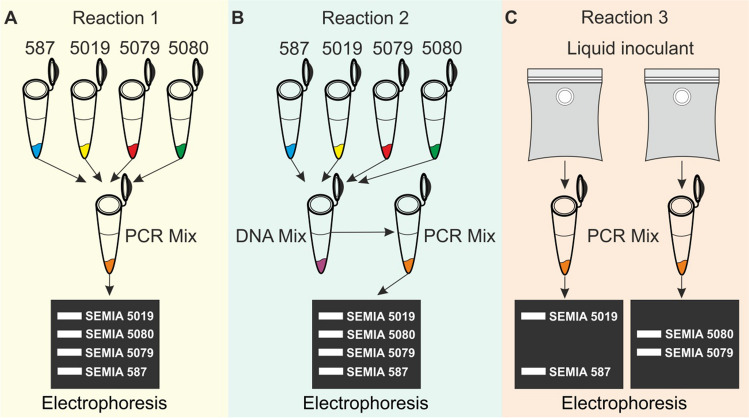 Figure 1
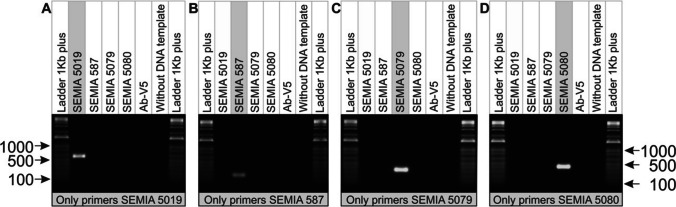 Figure 2
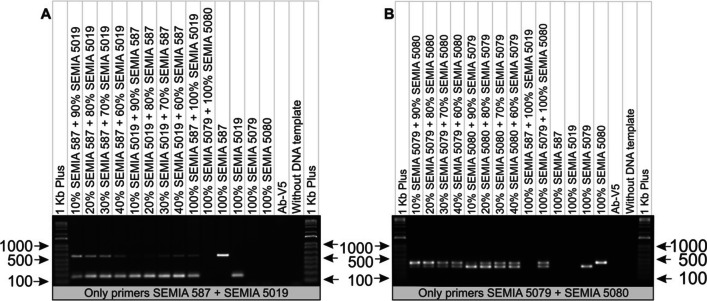 Figure 3
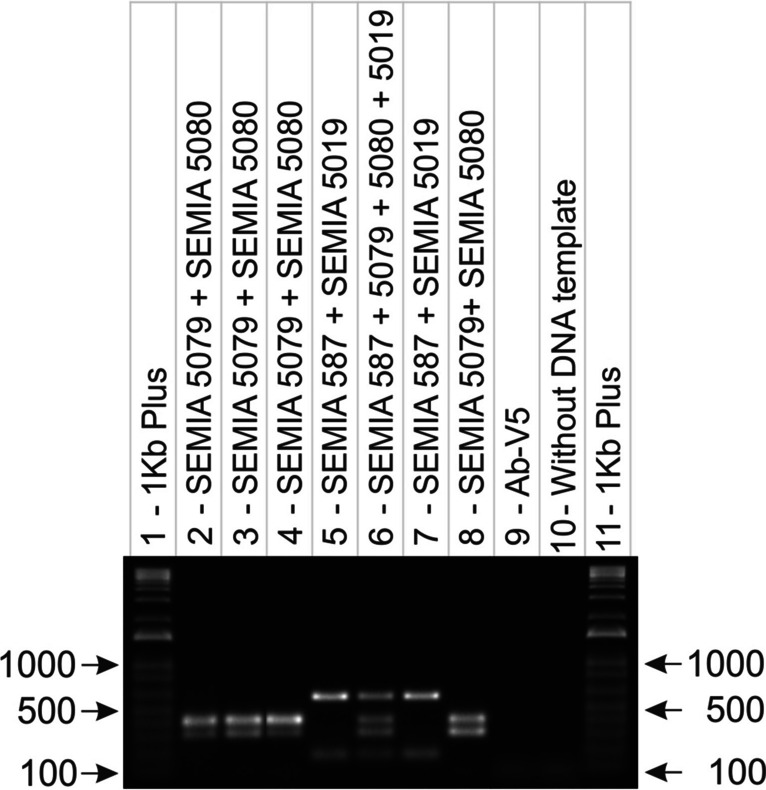 Figure 4
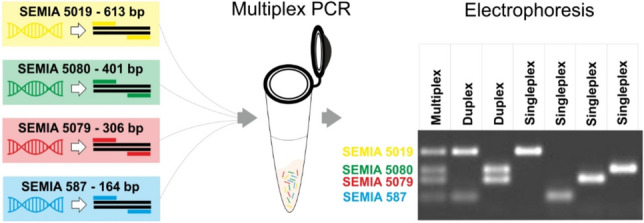 Figure 5
Peer Reviews
No public reviews on file for this paper yet. If you reviewed it on a platform where reviews are public (OpenReview, ICLR, NeurIPS, ICML), you can paste yours below so the community can read it here.
Videos
No videos yet. Explain this paper in a talk, walkthrough, or lecture? Add one.
Taxonomy
TopicsLegume Nitrogen Fixing Symbiosis · Banana Cultivation and Research · Plant Pathogenic Bacteria Studies