A simple method for repeated in vivo sperm collection from laboratory mice
Sophie M. Burgstaller, Kerstin E. Auer, Thomas Rülicke

TL;DR
This paper introduces a non-lethal method to collect mouse sperm repeatedly by interrupting mating just before ejaculation.
Contribution
The novel contribution is a simple, equipment-free in vivo sperm collection method that avoids sacrificing mice.
Findings
80 out of 100 mating attempts successfully yielded sperm samples.
The collected sperm achieved a 76% average fertilization rate after IVF.
The method produces more sperm than previous in vivo techniques, though less than natural ejaculation.
Abstract
Mouse spermatozoa for archiving laboratory mice or for in vitro fertilization (IVF) are routinely obtained from the cauda epididymis of adult males sacrificed for this purpose. To avoid the death of the donor, we tested whether a precisely timed interruption of the mating act could be used for repeated sperm collection from laboratory mice. Sperm donors (B6D2F1) were mated with a receptive female, and mating behavior was observed. The stud was separated from the female 1–2 s after the onset of the ejaculatory shudder. The ejected copulatory plug with the yellowish viscous ejaculate was carefully removed from the penile cup. A total of 80 ejaculates were successfully obtained from 100 ejaculations. The latency to first mount was 1.1 ± 1.1 min (mean ± SD) and to ejaculation 8.1 ± 4.7 min. The average number of mounts to ejaculation was 10.5 ± 5.8, and the mean number of spermatozoa per…
Genes, proteins, chemicals, diseases, species, mutations and cell lines named across the full text — each resolved to its canonical identifier and authoritative record.
Click any figure to enlarge with its caption.
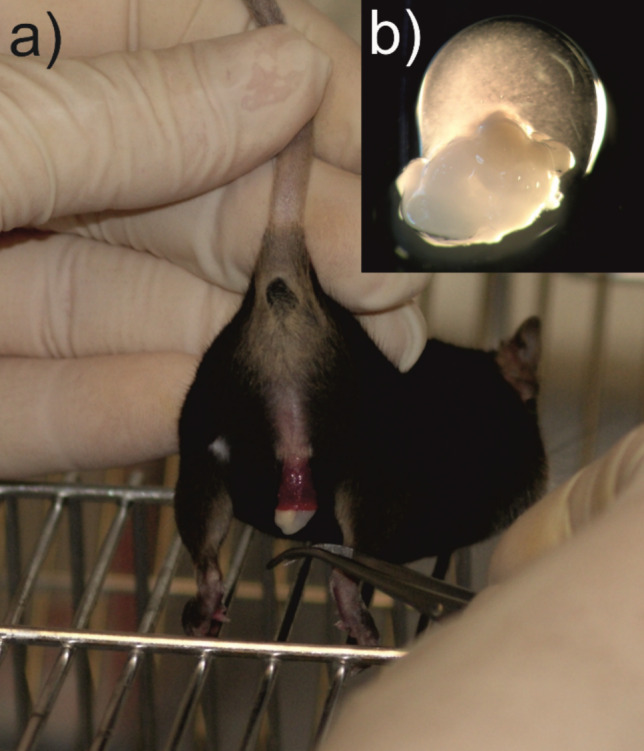 Figure 1
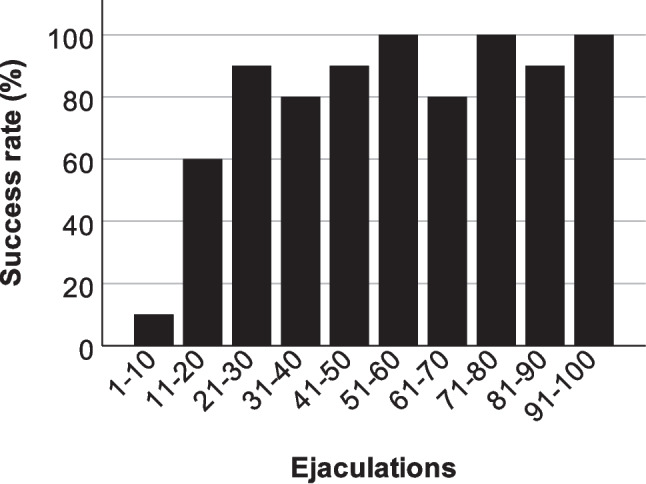 Figure 2
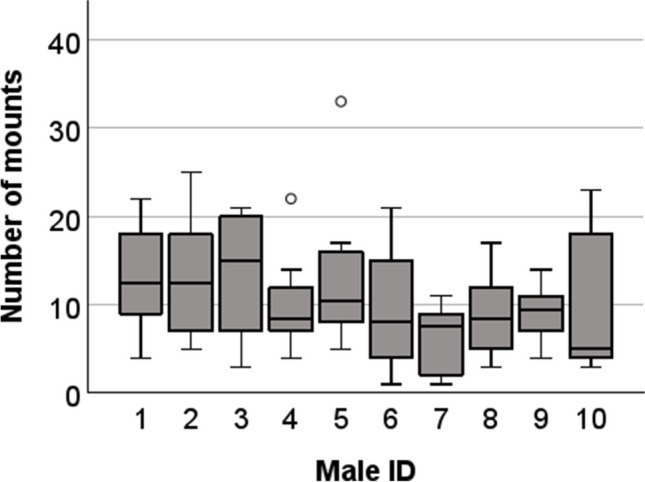 Figure 3
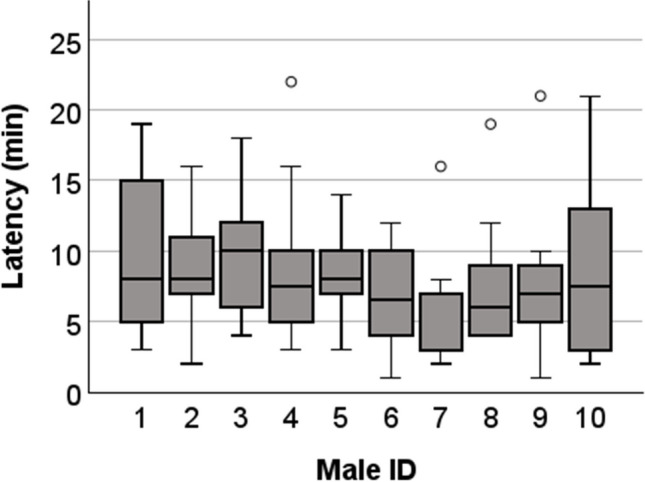 Figure 4
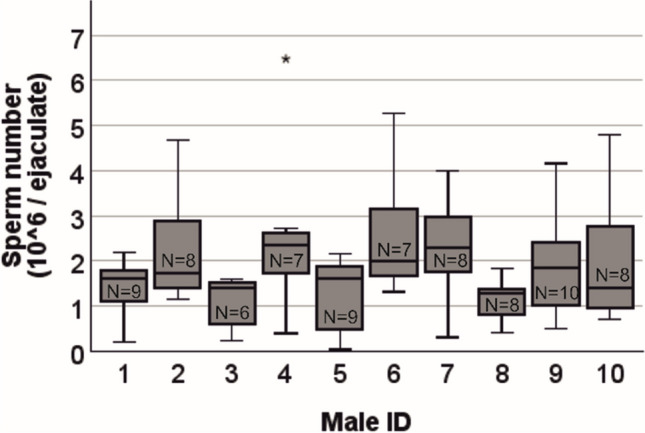 Figure 5
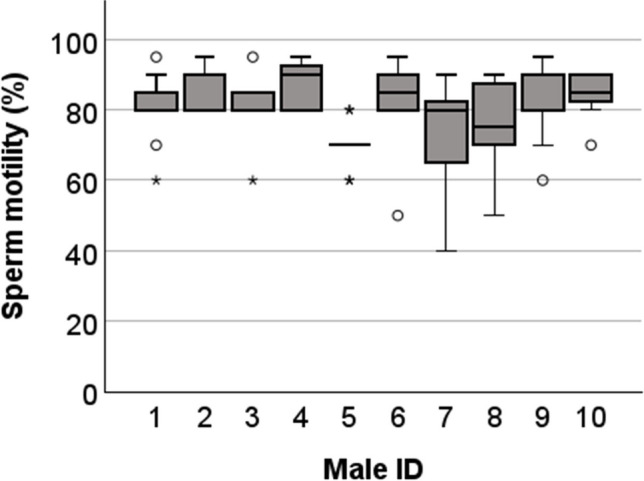 Figure 6
Peer Reviews
No public reviews on file for this paper yet. If you reviewed it on a platform where reviews are public (OpenReview, ICLR, NeurIPS, ICML), you can paste yours below so the community can read it here.
Videos
No videos yet. Explain this paper in a talk, walkthrough, or lecture? Add one.
Taxonomy
TopicsCRISPR and Genetic Engineering · Animal Genetics and Reproduction · Sperm and Testicular Function