A common mechanism for recruiting the Rrm3 and RTEL1 accessory helicases to the eukaryotic replisome
Ottavia Olson, Simone Pelliciari, Emma D Heron, Tom D Deegan

TL;DR
The study reveals how accessory helicases like Rrm3 and RTEL1 are recruited to the eukaryotic replisome to help DNA replication proceed when stalled.
Contribution
The discovery of a conserved docking mechanism via short linear interaction motifs in accessory helicases across yeast and humans.
Findings
Rrm3's N-terminal IDR contains motifs that bind CMG and Polε, positioning it near the lagging strand.
Rrm3 binding to Polε is essential for its function during DNA replication in vitro and in vivo.
RTEL1 in humans interacts with CMG and Polε in a manner similar to Rrm3, indicating a conserved mechanism.
Abstract
The eukaryotic replisome is assembled around the CMG (CDC45-MCM-GINS) replicative helicase, which encircles the leading-strand DNA template at replication forks. When CMG stalls during DNA replication termination, or at barriers such as DNA-protein crosslinks on the leading strand template, a second helicase is deployed on the lagging strand template to support replisome progression. How these ‘accessory’ helicases are targeted to the replisome to mediate barrier bypass and replication termination remains unknown. Here, by combining AlphaFold structural modelling with experimental validation, we show that the budding yeast Rrm3 accessory helicase contains two Short Linear Interaction Motifs (SLIMs) in its disordered N-terminus, which interact with CMG and the leading-strand DNA polymerase Polε on one side of the replisome. This flexible tether positions Rrm3 adjacent to the lagging…
Genes, proteins, chemicals, diseases, species, mutations and cell lines named across the full text — each resolved to its canonical identifier and authoritative record.
Click any figure to enlarge with its caption.
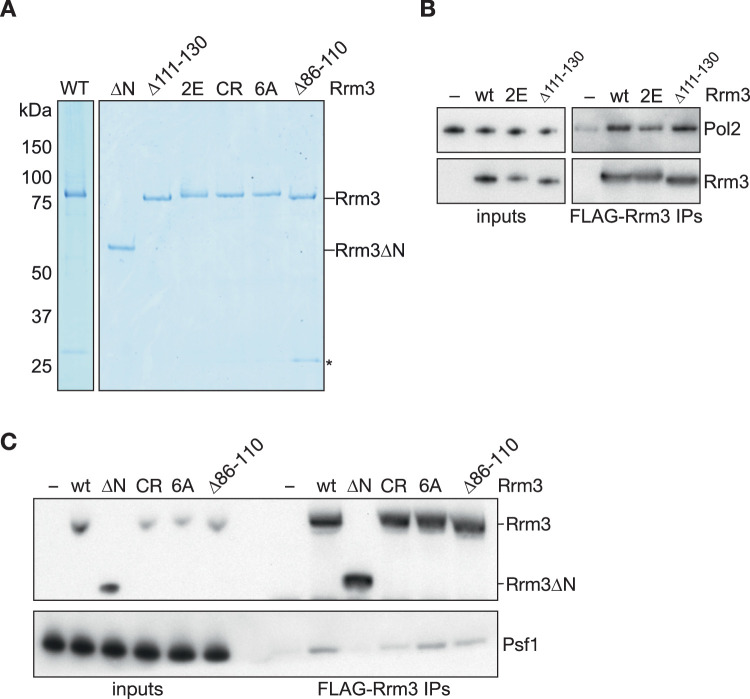 Figure 10
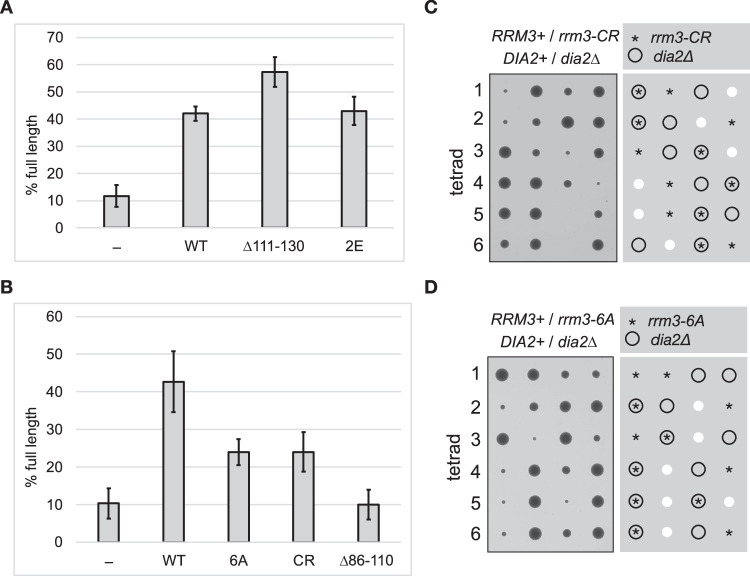 Figure 11
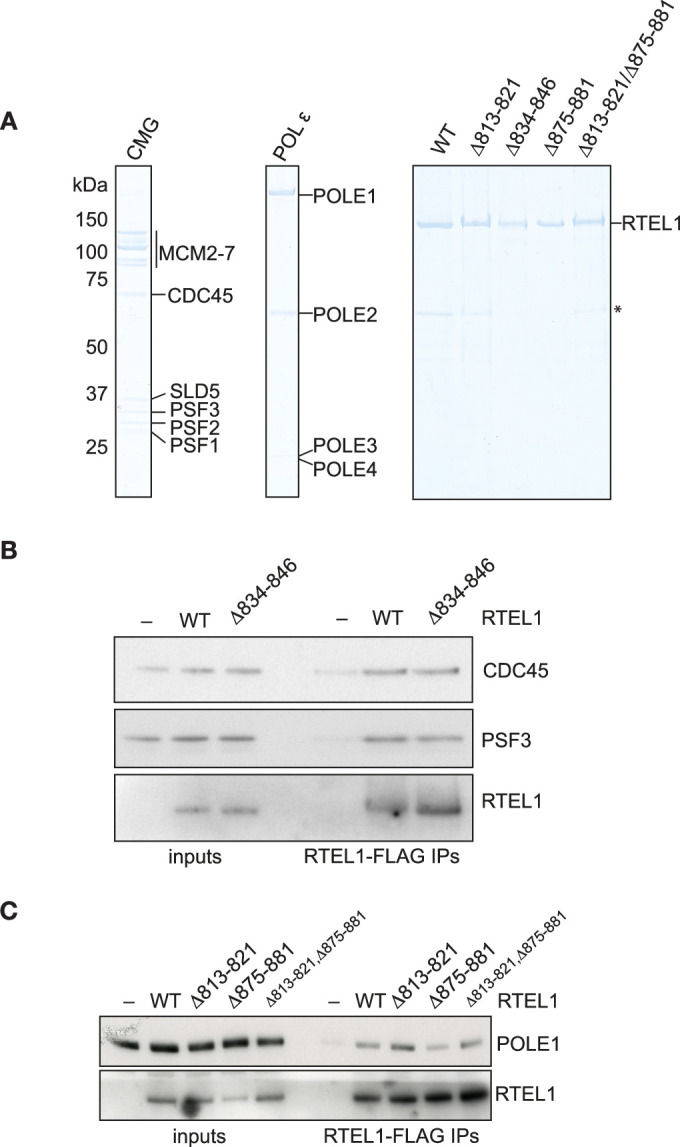 Figure 12
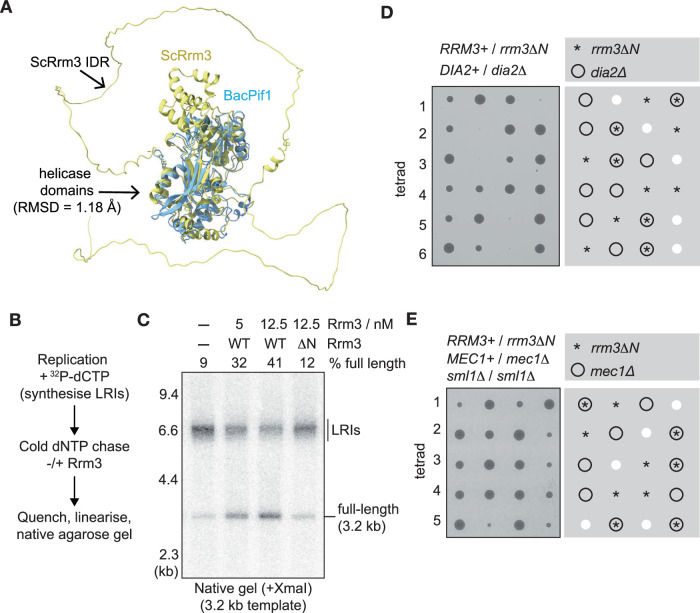 Figure 1
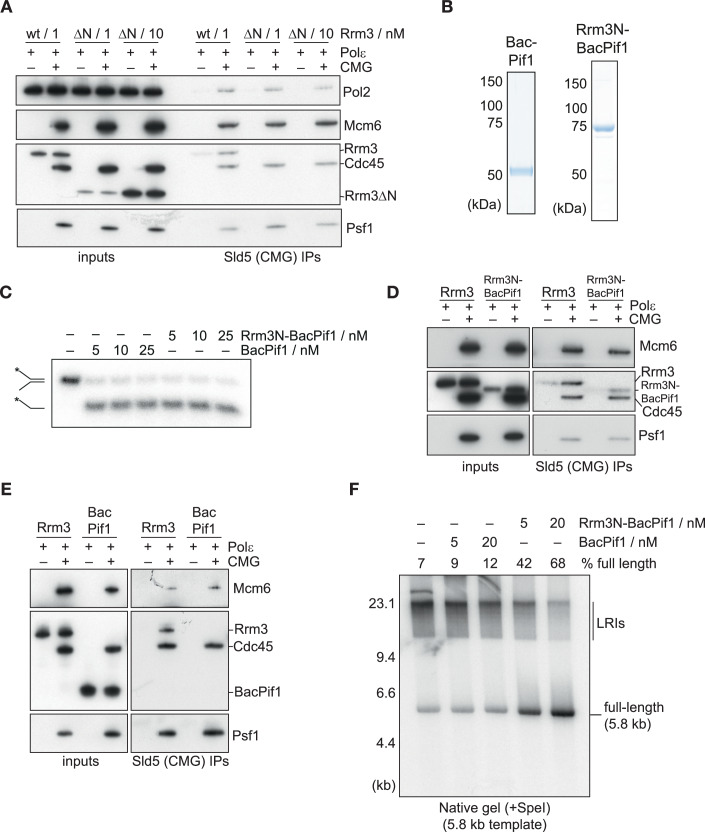 Figure 2
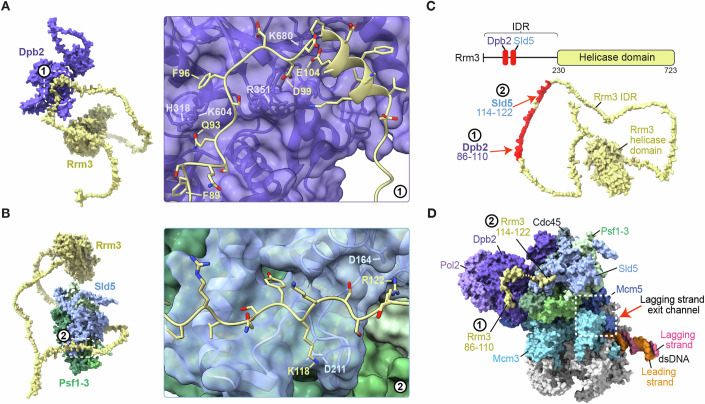 Figure 3
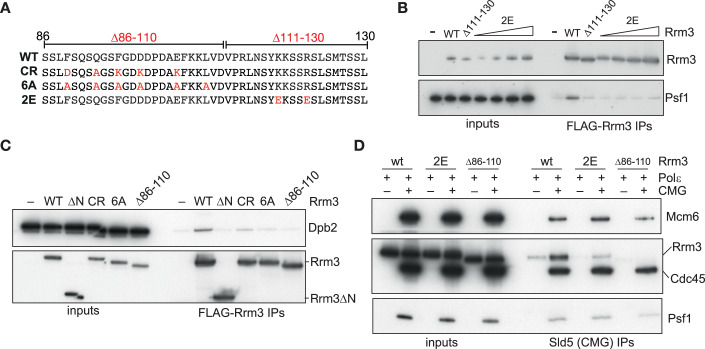 Figure 4
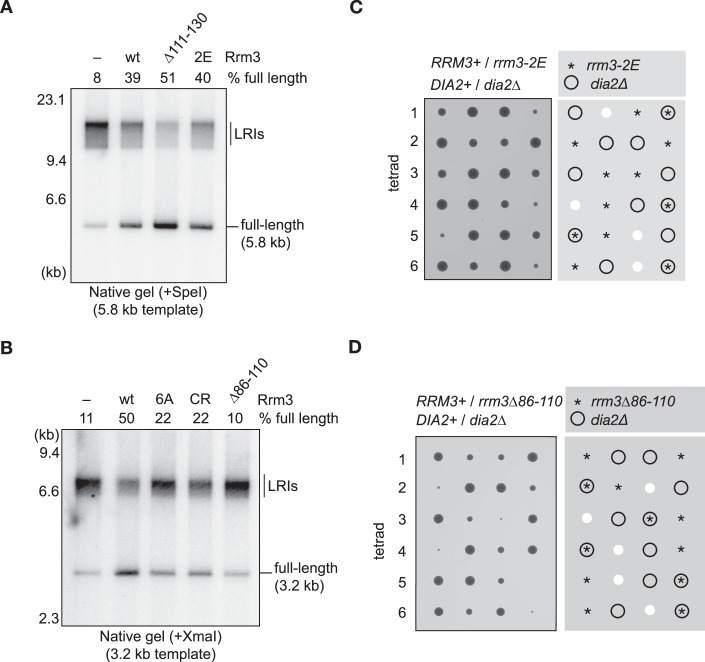 Figure 5
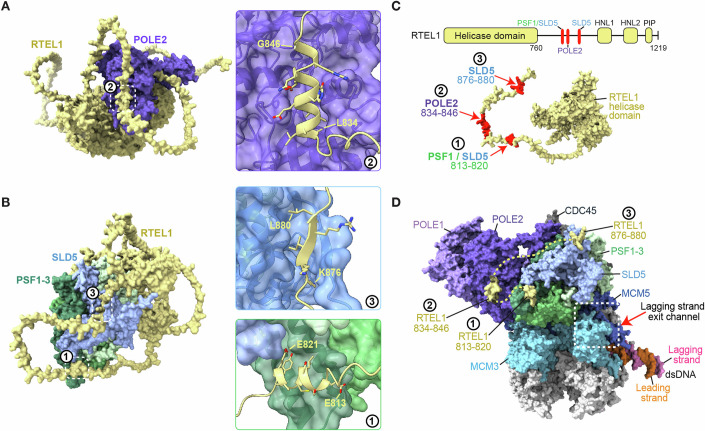 Figure 6
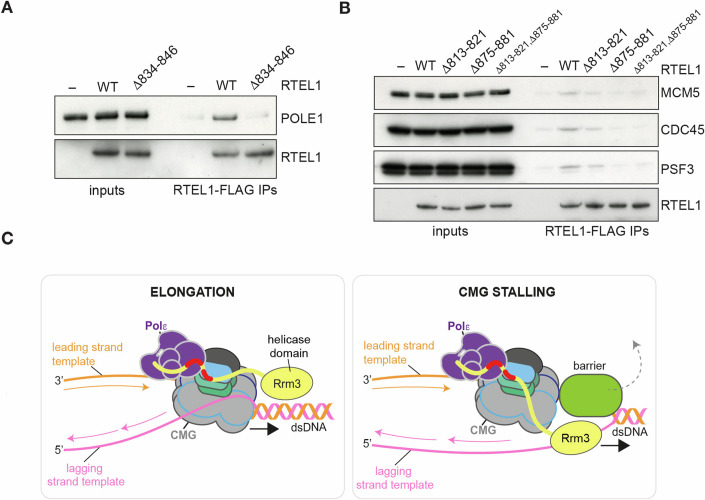 Figure 7
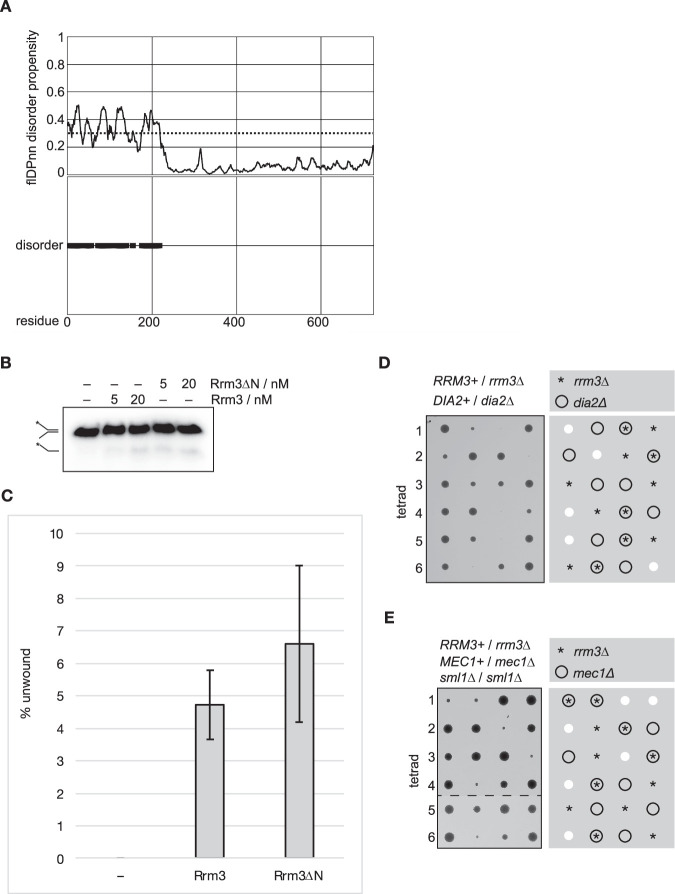 Figure 8
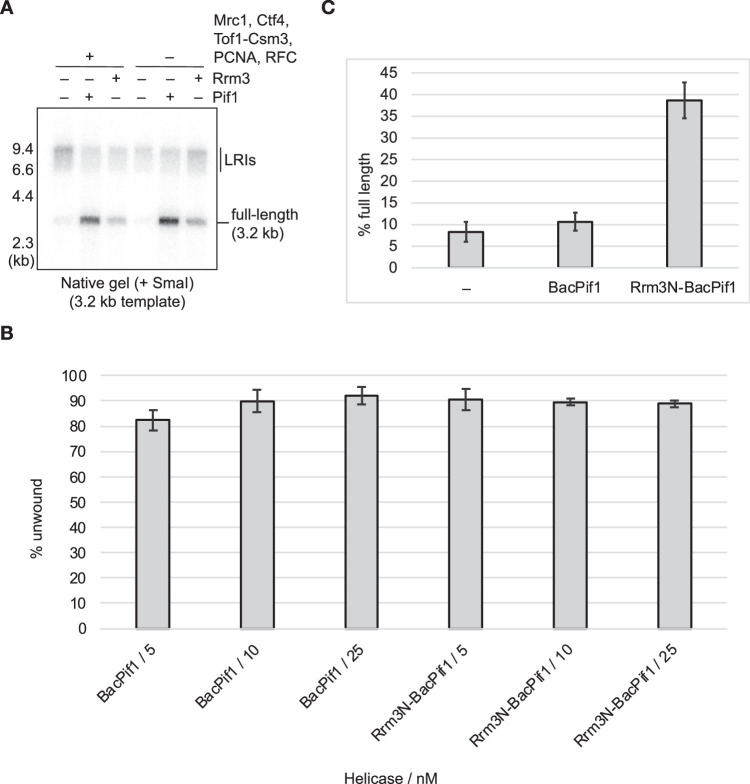 Figure 9
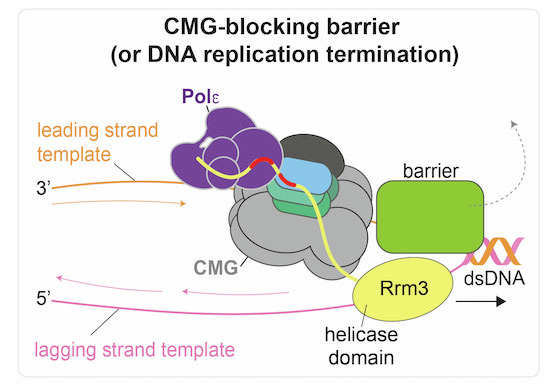 Figure 13
 Figure 14
Peer Reviews
No public reviews on file for this paper yet. If you reviewed it on a platform where reviews are public (OpenReview, ICLR, NeurIPS, ICML), you can paste yours below so the community can read it here.
Videos
No videos yet. Explain this paper in a talk, walkthrough, or lecture? Add one.
Taxonomy
TopicsFluoride Effects and Removal