Enhancing the epidemiological surveillance of SARS-CoV-2 using Sanger sequencing to identify circulating variants and recombinants
Thaís Silva, Eneida Oliveira, Alana Oliveira, André Menezes, Wander de Jesus Jeremias, Rafaella FQ Grenfell, Rubens Lima do Monte-Neto, Marcelo A. Pascoal-Xavier, Marco A. Campos, Gabriel Fernandes, Pedro Alves

TL;DR
This study shows that Sanger sequencing is an effective and accessible method for tracking SARS-CoV-2 variants and recombinants, especially in resource-limited settings.
Contribution
The study validates Sanger sequencing as a cost-effective alternative to NGS for variant surveillance and identifies a recombinant lineage in Brazil.
Findings
Sanger sequencing successfully identified one variant of interest and five variants of concern in Belo Horizonte, Brazil.
The method detected a recombinant SARS-CoV-2 lineage using gene amplification and RT-PCR.
Sanger sequencing proved to be a practical and scalable tool for variant monitoring in low-resource settings.
Abstract
Since the emergence of SARS-CoV-2 in December 2019, more than 12,000 mutations in the virus have been identified. These could cause changes in viral characteristics and directly impact global public health. The emergence of variants is a great concern due to the chance of increased transmissibility and infectivity. Sequencing for surveillance and monitoring circulating strains is extremely necessary as the early identification of new variants allows public health agencies to make faster and more effective decisions to contain the spread of the virus. In the present study, we identified circulating variants in samples collected in Belo Horizonte, Brazil, and detected a recombinant lineage using the Sanger method. The identification of lineages was done through gene amplification of SARS-CoV-2 by Reverse Transcription-Polymerase Chain Reaction (RT-PCR). By using these specific fragments,…
Genes, proteins, chemicals, diseases, species, mutations and cell lines named across the full text — each resolved to its canonical identifier and authoritative record.
Click any figure to enlarge with its caption.
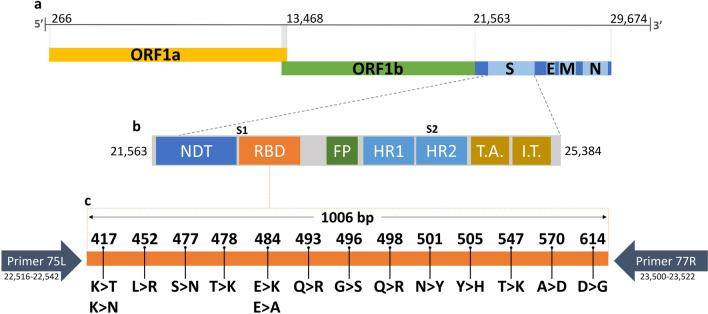 Figure 1
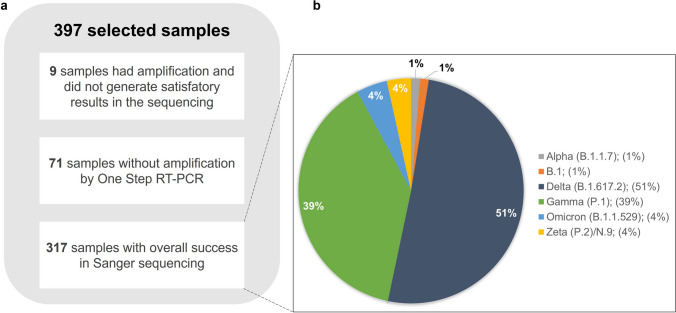 Figure 2
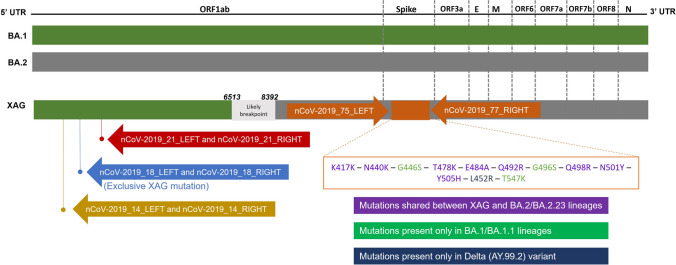 Figure 3
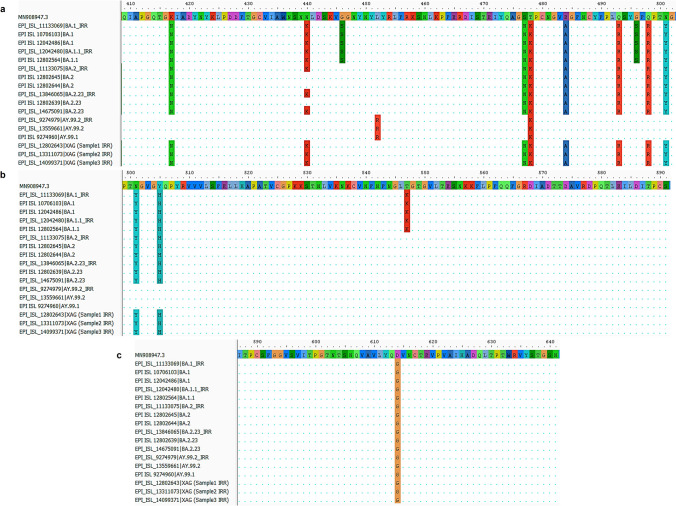 Figure 4
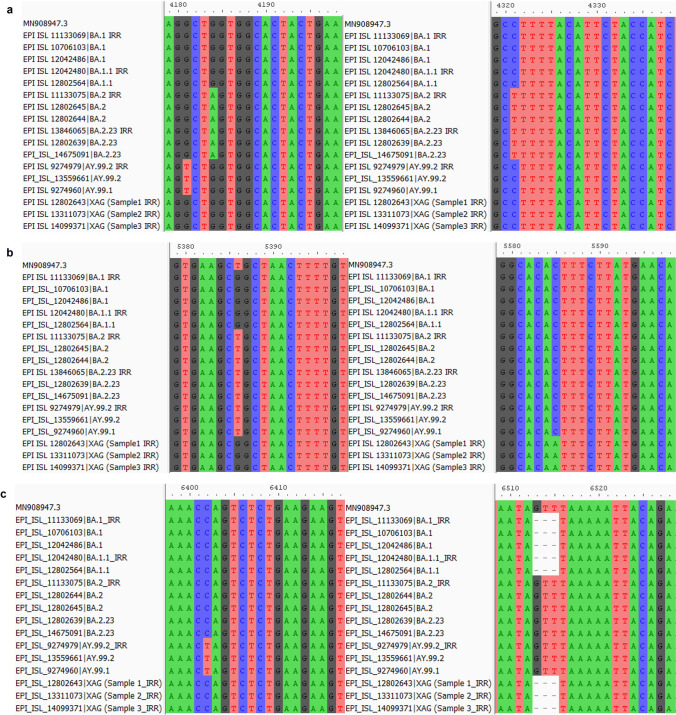 Figure 5
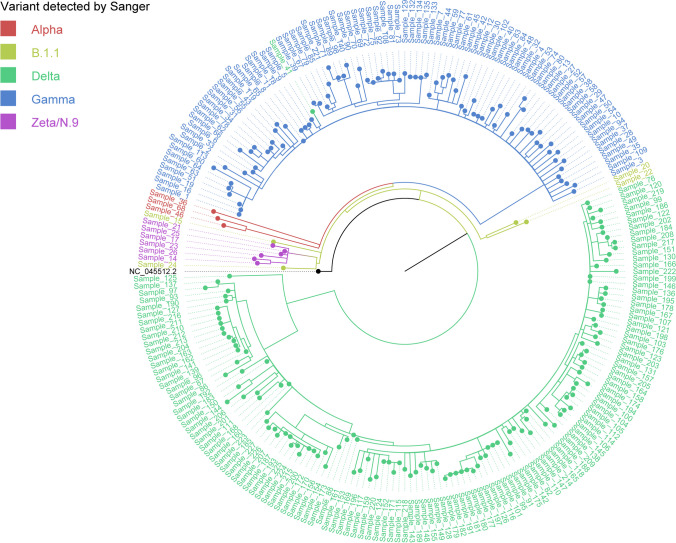 Figure 6
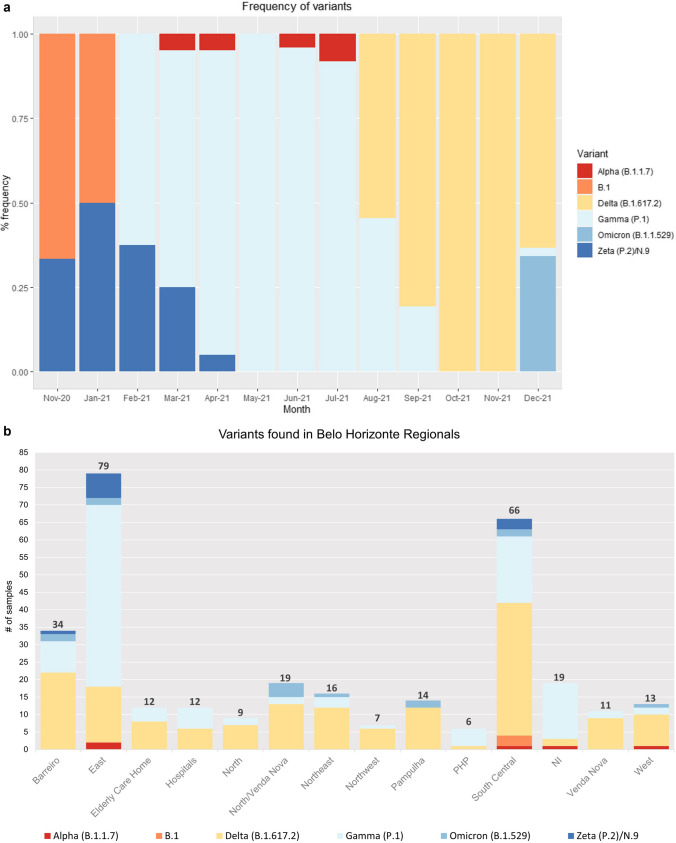 Figure 7
Peer Reviews
No public reviews on file for this paper yet. If you reviewed it on a platform where reviews are public (OpenReview, ICLR, NeurIPS, ICML), you can paste yours below so the community can read it here.
Videos
No videos yet. Explain this paper in a talk, walkthrough, or lecture? Add one.
Taxonomy
TopicsSARS-CoV-2 and COVID-19 Research · SARS-CoV-2 detection and testing · Bacteriophages and microbial interactions