Volition and control in law and in brain science: neurolegal translation of a foundational concept
Julia F. Christensen, Caroline Rödiger, Lisa Claydon, Patrick Haggard

TL;DR
This paper explores how neuroscience can inform legal concepts of responsibility and control, especially when emotions affect behavior.
Contribution
It proposes a framework for translating neuroscientific findings into legal terminology to improve interdisciplinary understanding.
Findings
Emotional states like fear and anger can impair voluntary control over actions, aligning with legal defenses like 'Loss of Control'.
There is a need to reconcile legal traditions with modern neuroscience to better assess responsibility.
A neurolegal translation framework could enhance interdisciplinary research and legal decision-making.
Abstract
The law assumes that healthy adults are generally responsible for their actions and have the ability to control their behavior based on rational and moral principles. This contrasts with some recent neuroscientific accounts of action control. Nevertheless, both law and neuroscience acknowledge that strong emotions including fear and anger may “trigger” loss of normal voluntary control over action. Thus, “Loss of Control” is a partial defense for murder under English law, paralleling similar defenses in other legal systems. Here we consider the neuroscientific evidence for such legal classifications of responsibility, particularly focussing on how emotional states modulate voluntary motor control and sense of agency. First, we investigate whether neuroscience could contribute an evidence-base for law in this area. Second, we consider the societal impact of some areas where legal thinking…
Genes, proteins, chemicals, diseases, species, mutations and cell lines named across the full text — each resolved to its canonical identifier and authoritative record.
Click any figure to enlarge with its caption.
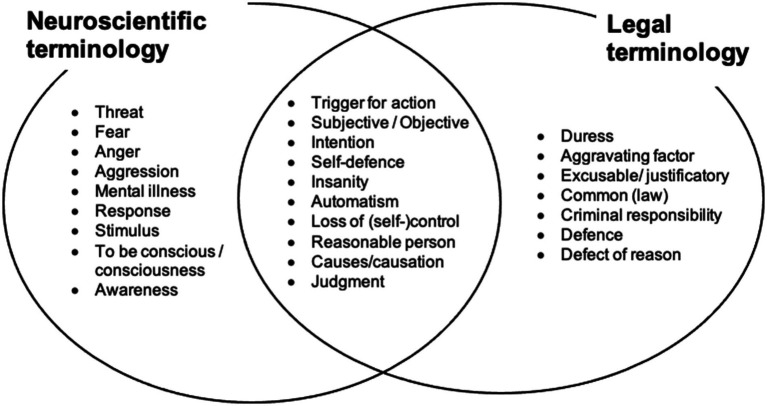 Figure 1
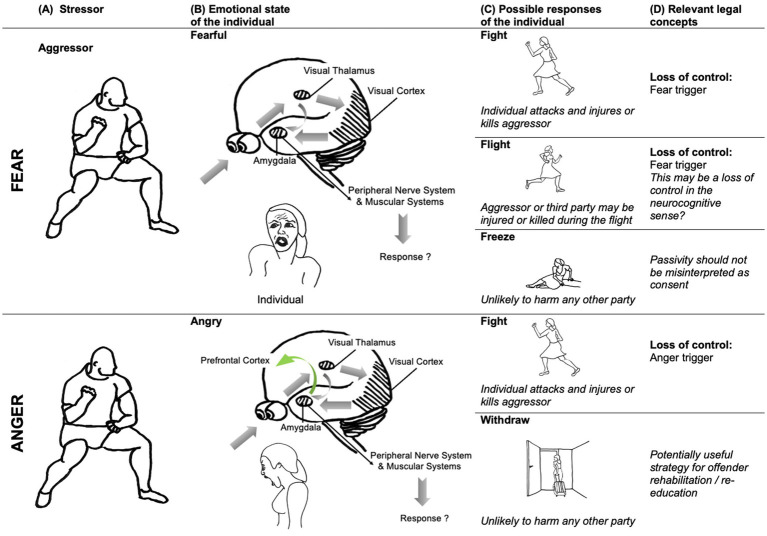 Figure 2
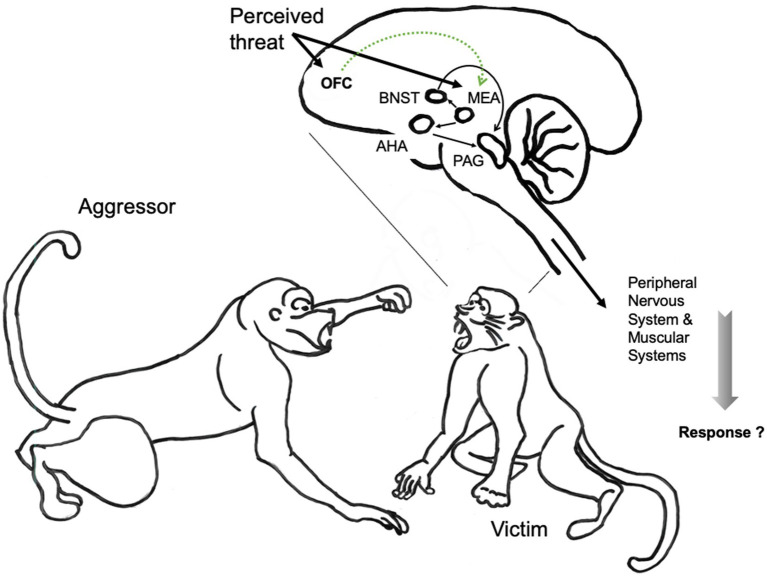 Figure 3
Peer Reviews
No public reviews on file for this paper yet. If you reviewed it on a platform where reviews are public (OpenReview, ICLR, NeurIPS, ICML), you can paste yours below so the community can read it here.
Videos
No videos yet. Explain this paper in a talk, walkthrough, or lecture? Add one.
Taxonomy
TopicsFree Will and Agency · Deception detection and forensic psychology · Neuroethics, Human Enhancement, Biomedical Innovations