Nasal Delivery of Asiatic Acid Ameliorates Scopolamine-Induced Memory Dysfunction in Mice
Su Lwin Lwin Myint, Ratchanee Rodsiri, Hattaya Benya-Aphikul, Tissana Rojanaratha, Garnpimol Ritthidej, Ridho Islamie

TL;DR
Intranasal delivery of Asiatic acid improves memory in mice with scopolamine-induced memory issues, likely by protecting brain cells and reducing oxidative stress.
Contribution
The study demonstrates that intranasal Asiatic acid rapidly improves memory and brain protection more effectively than oral administration.
Findings
Intranasal Asiatic acid significantly reduced escape latency in the Morris water maze on days 2–4.
Intranasal Asiatic acid inhibited acetylcholinesterase activity and increased catalase protein expression in the brain.
Intranasal Asiatic acid decreased malondialdehyde levels, indicating reduced oxidative stress in brain tissue.
Abstract
Asiatic acid (AA) has previously shown its neuroprotective effects, but low oral bioavailability limits its penetration into the brain. This study aimed to investigate the effect of intranasal AA administration in mice with memory dysfunction induced by scopolamine. Mice received either intranasal AA (INAA), oral AA (POAA3 or POAA30), or donepezil, followed by scopolamine for 10 days. Morris water maze (MWM) was performed on days 0–5, 30 min after treatment. Locomotor activity was conducted on day 6 followed by brain collection. In MWM, INAA treatment had significantly reduced escape latency on days 2–4, while POAA3 decreased escape latency on day 3 and POAA30 and donepezil decreased escape latency on day 4. INAA inhibited acetylcholinesterase activity, increased catalase protein expression, and decreased malondialdehyde levels in the brain tissue. Therefore, intranasal administration…
Genes, proteins, chemicals, diseases, species, mutations and cell lines named across the full text — each resolved to its canonical identifier and authoritative record.
Click any figure to enlarge with its caption.
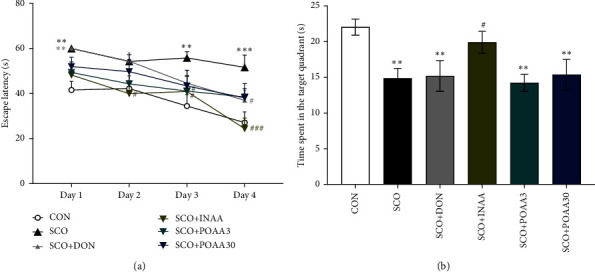 Figure 1
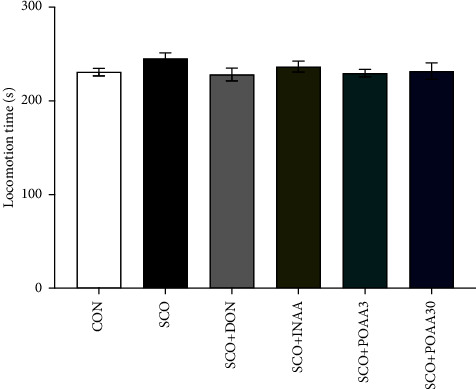 Figure 2
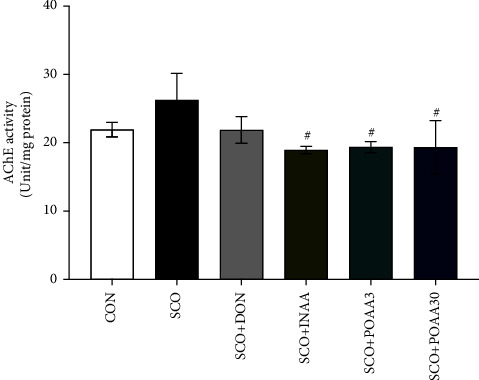 Figure 3
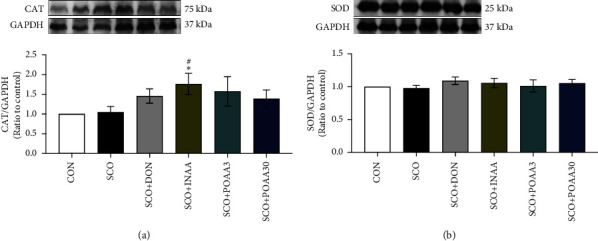 Figure 4
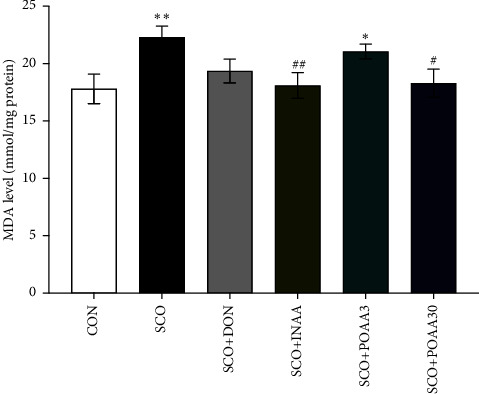 Figure 5
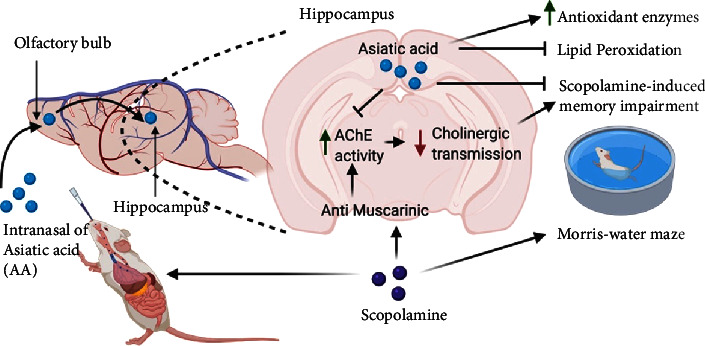 Figure 6
Peer Reviews
No public reviews on file for this paper yet. If you reviewed it on a platform where reviews are public (OpenReview, ICLR, NeurIPS, ICML), you can paste yours below so the community can read it here.
Videos
No videos yet. Explain this paper in a talk, walkthrough, or lecture? Add one.
Taxonomy
TopicsMedicinal Plants and Neuroprotection · Neuroinflammation and Neurodegeneration Mechanisms · Neuroscience and Neuropharmacology Research