Detecting Subtle Osborn Waves in Hypothermia: A Case Report
Ashot Batikyan, Shiny Teja Kolli, Minas Sakellakis, Aleksan Khachatryan, Hakob Harutyunyan, Vahagn Tamazyan

TL;DR
This case report describes subtle Osborn waves in a hypothermic patient and their resolution after rewarming.
Contribution
The report highlights the subtlety of Osborn waves in hypothermia and emphasizes the importance of careful management.
Findings
Subtle J waves were observed in a hypothermic patient with a temperature of 87.9°F.
Osborn waves resolved after rewarming, indicating their association with hypothermia.
Continuous monitoring is essential to prevent arrhythmias and cardiac arrest in hypothermic patients.
Abstract
J waves, or Osborn waves, are a notable EKG finding in hypothermia, often appearing as prominent deflections but sometimes manifesting subtly. We report a 78-year-old female with moderate hypothermia (87.9°F) presenting with sinus bradycardia and subtle J waves on her EKG. After rewarming, these J waves resolved. Hypothermia management should prioritize gentle handling to avoid arrhythmias and ensure rapid rewarming during cardiopulmonary resuscitation. Continuous monitoring is crucial, as J waves can indicate a higher risk of ventricular fibrillation and cardiac arrest.
Genes, proteins, chemicals, diseases, species, mutations and cell lines named across the full text — each resolved to its canonical identifier and authoritative record.
Click any figure to enlarge with its caption.
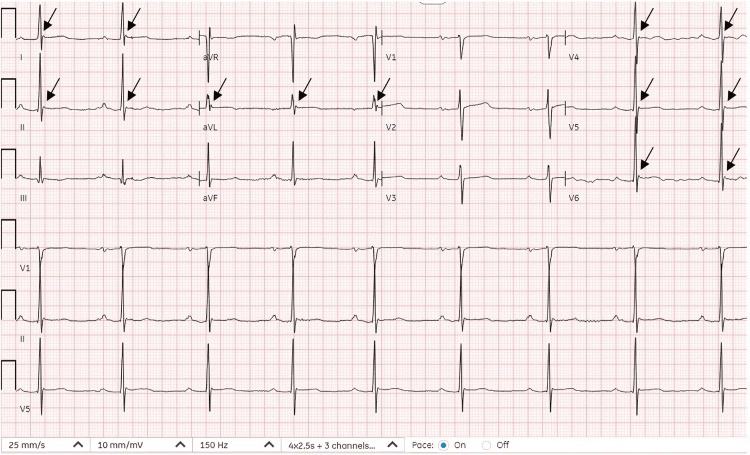 Figure 1
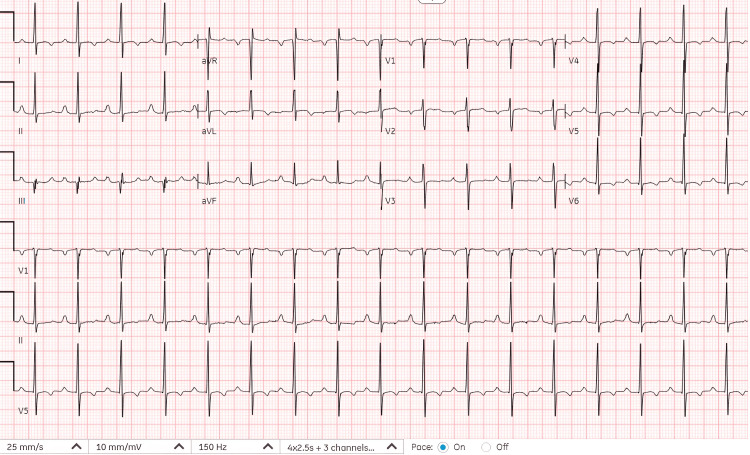 Figure 2
Peer Reviews
No public reviews on file for this paper yet. If you reviewed it on a platform where reviews are public (OpenReview, ICLR, NeurIPS, ICML), you can paste yours below so the community can read it here.
Videos
No videos yet. Explain this paper in a talk, walkthrough, or lecture? Add one.
Taxonomy
TopicsCardiac electrophysiology and arrhythmias · Cardiac Arrest and Resuscitation · ECG Monitoring and Analysis