Thromboprophylaxis in lower limb amputation surgery
Monique Magnavita Borba da Fonseca Cerqueira, Marcos Arêas Marques, Alcides José Araújo Ribeiro, Daniel Mendes-Pinto, Suzanna Maria Viana Sanches, Monique Magnavita Borba da Fonseca Cerqueira, Marcos Arêas Marques, Alcides José Araújo Ribeiro, Daniel Mendes-Pinto

TL;DR
This study examines how Brazilian doctors prescribe blood clot prevention medications before and after lower limb amputation surgeries, finding inconsistent practices.
Contribution
The paper provides a descriptive analysis of thromboprophylaxis practices among Brazilian vascular specialists during lower limb amputation surgery.
Findings
Most participants (58.6%) perform thrombotic risk stratification, primarily using the Caprini score.
Low molecular weight heparin is the most commonly used medication, often at 40 IU per day.
Only a minority (27%) assess bleeding risk, and practices for thromboprophylaxis duration are inconsistent.
Abstract
Lower limb amputation surgery is associated with a high risk of venous thromboembolism. There is evidence that pharmacological thromboprophylaxis is not widely prescribed to patients undergoing this type of procedure. To investigate the profile of the thromboprophylaxis practices of angiologists and vascular surgeons in Brazil during the perioperative period of lower limb amputation surgery and conduct a descriptive analysis of the findings. This is a cross-sectional, descriptive study, with simple probabilistic sampling, carried out with angiologists and vascular surgeons working in Brazil. Data were collected through electronic questionnaires, from February to June 2023. There were 237 respondents, 58.6% of whom conduct thrombotic risk stratification. Of these, 86.3% use the Caprini score. Only 27% of participants stratify patients’ bleeding risk. Low molecular weight heparin is…
Genes, proteins, chemicals, diseases, species, mutations and cell lines named across the full text — each resolved to its canonical identifier and authoritative record.
Click any figure to enlarge with its caption.
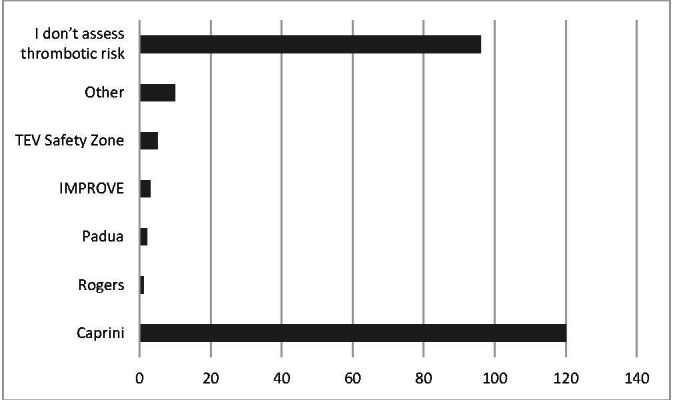 Figure 1
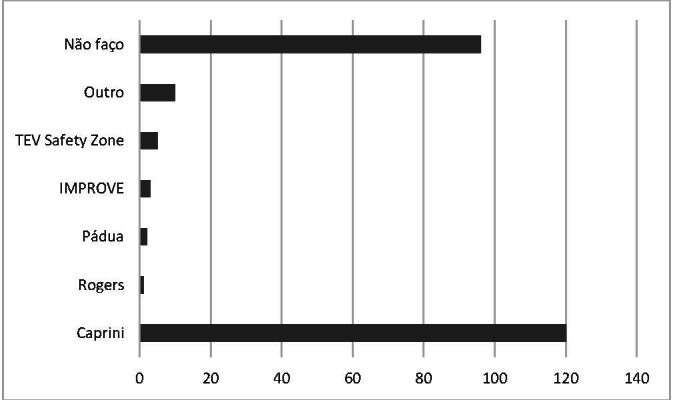 Figure 2
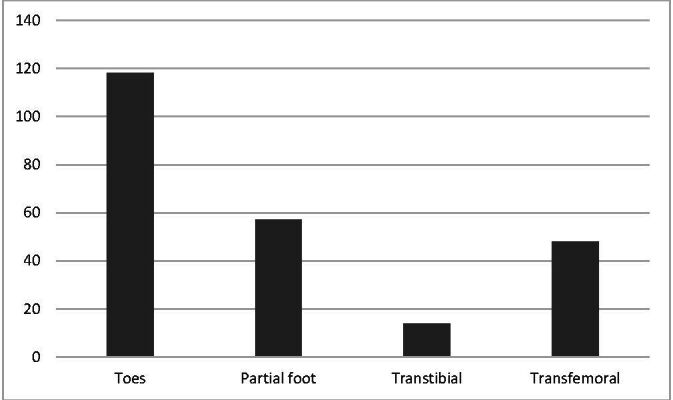 Figure 3
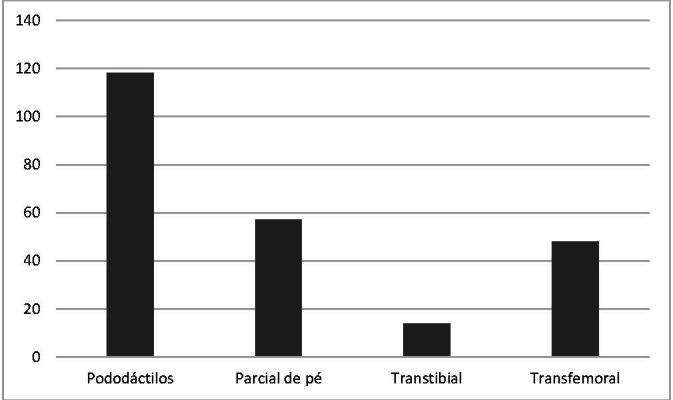 Figure 4
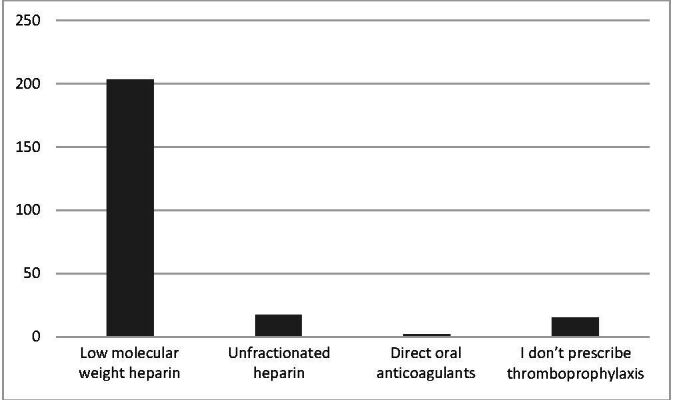 Figure 5
 Figure 6
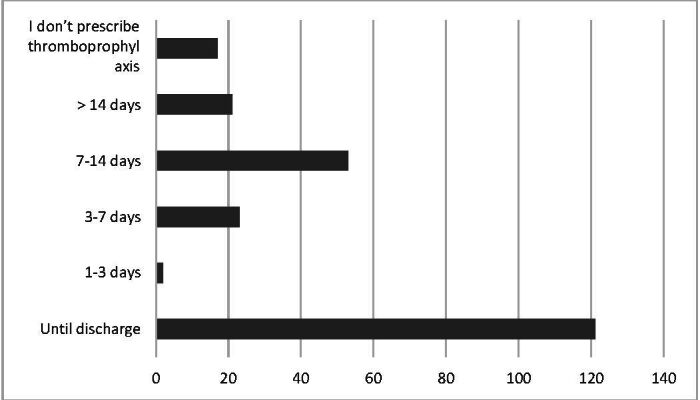 Figure 7
 Figure 8
Peer Reviews
No public reviews on file for this paper yet. If you reviewed it on a platform where reviews are public (OpenReview, ICLR, NeurIPS, ICML), you can paste yours below so the community can read it here.
Videos
No videos yet. Explain this paper in a talk, walkthrough, or lecture? Add one.
Taxonomy
TopicsVenous Thromboembolism Diagnosis and Management · Diagnosis and Treatment of Venous Diseases · Peripheral Artery Disease Management