Risky Business: Predator Chemical Cues Mediate Morphological Changes in Freshwater Snails
M J Wagner, P A Moore

TL;DR
Freshwater snails change their shell shape and strength when they detect predator chemicals, which may help protect them from being eaten.
Contribution
This study demonstrates that predator chemical cues induce morphological defenses in Campeloma decisum snails.
Findings
Snails exposed to predator cues had shells requiring more force to crush.
Exposed snails had longer shells and greater weight compared to controls.
Predator-exposed snails showed less change in aperture width than controls.
Abstract
Many prey organisms respond to the nonconsumptive effects of predators by altering their physiology, morphology, and behavior. These inducible defenses can create refuges for prey by decreasing the likelihood of consumption by predators. Some prey, as in marine mollusks, have been shown to alter their morphology in response to the presence of size-limited predation. To extend this work, we exposed pointed campeloma snails (Campeloma decisum) to chemical cues from a natural predator, the rusty crayfish (Faxonius rusticus), to better understand how snail morphology changes under the threat of predation. The total force needed to crush shells, total shell length, aperture width, and total weight, along with changes to these 3 body measurements, were recorded for each individual and used to quantify morphological changes as a function of risk. Snails exposed to crayfish chemical cues had…
Genes, proteins, chemicals, diseases, species, mutations and cell lines named across the full text — each resolved to its canonical identifier and authoritative record.
Click any figure to enlarge with its caption.
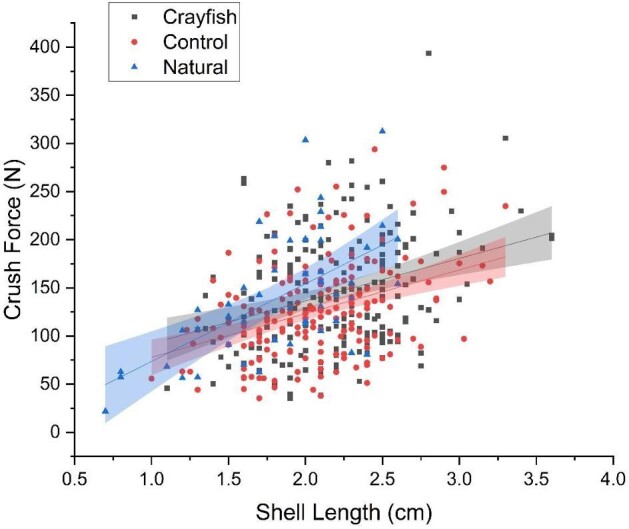 Figure 1
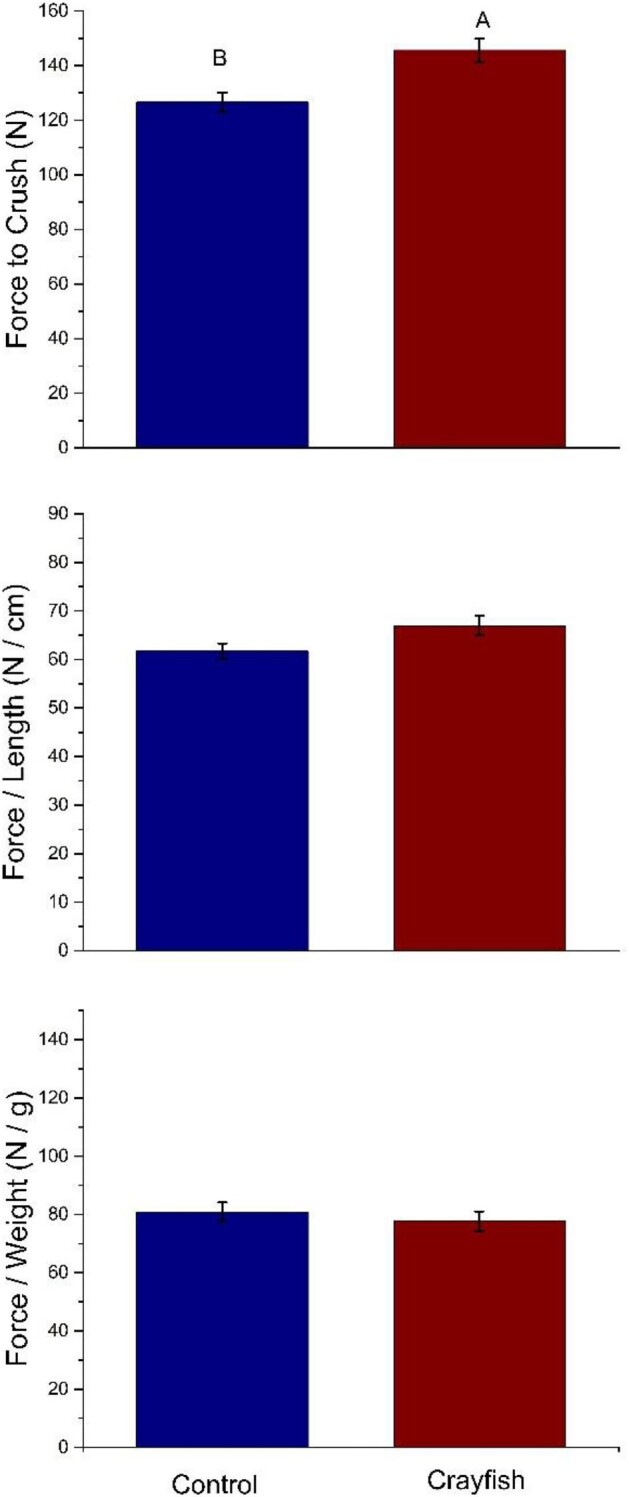 Figure 2
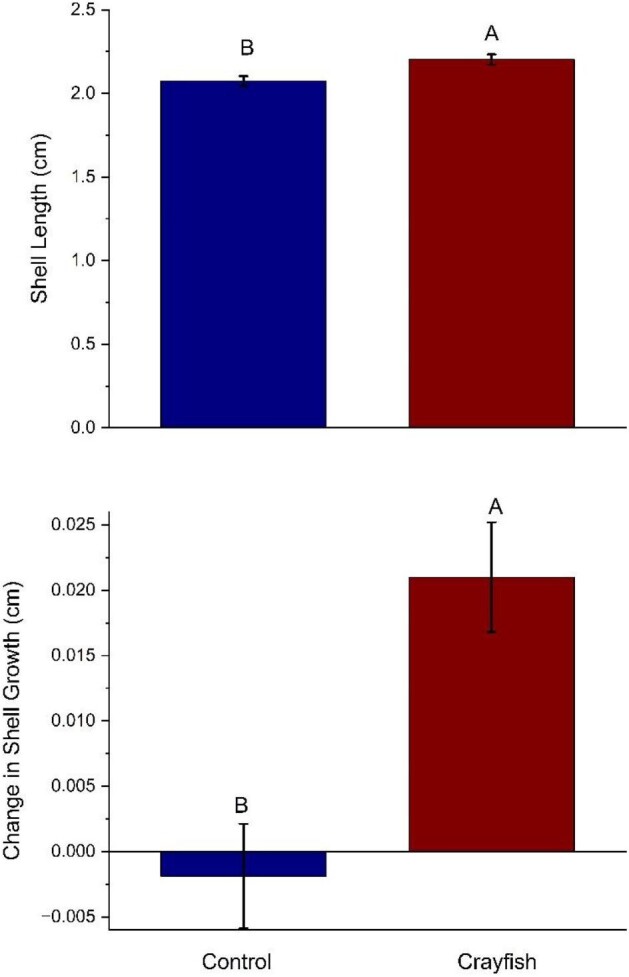 Figure 3
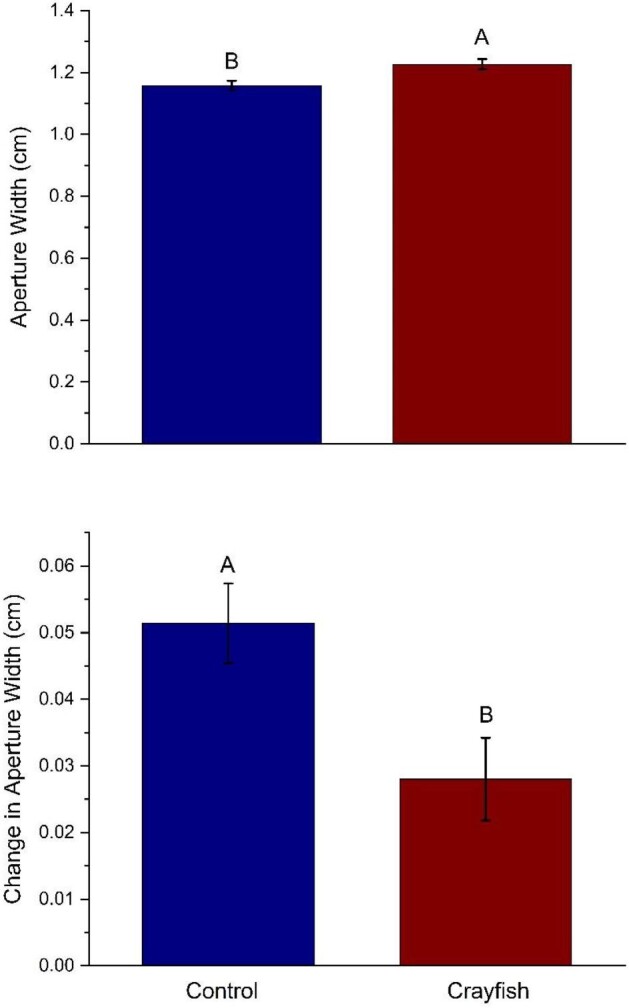 Figure 4
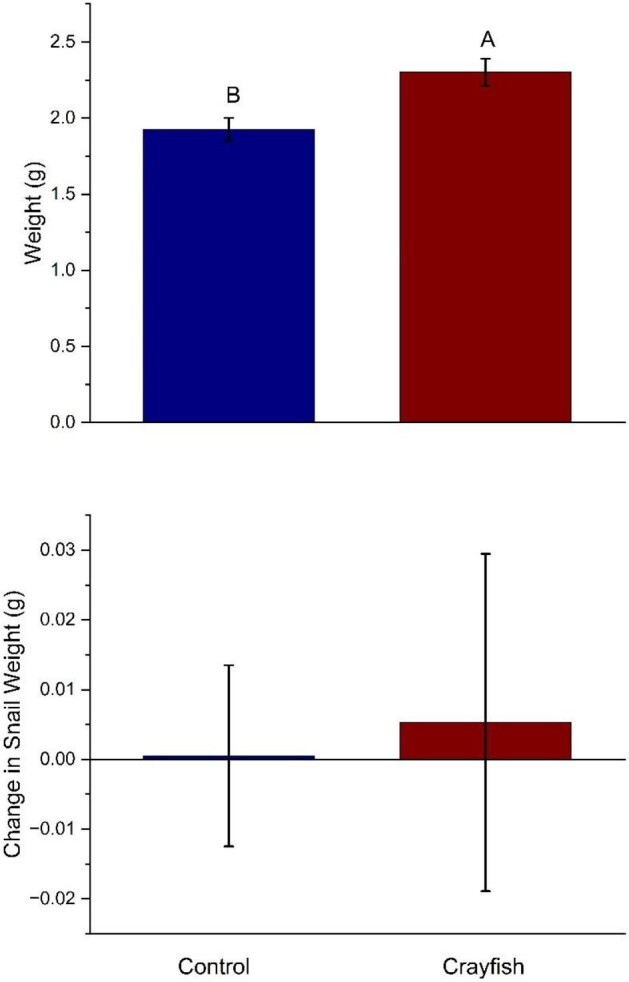 Figure 5
Peer Reviews
No public reviews on file for this paper yet. If you reviewed it on a platform where reviews are public (OpenReview, ICLR, NeurIPS, ICML), you can paste yours below so the community can read it here.
Videos
No videos yet. Explain this paper in a talk, walkthrough, or lecture? Add one.
Taxonomy
TopicsAquatic Invertebrate Ecology and Behavior · Animal Ecology and Behavior Studies · Parasite Biology and Host Interactions