Advancing Our Understanding of the Excited States of the Tantalum Anion
Maria Barysz

TL;DR
This paper calculates the energy levels and electron affinity of tantalum and its ions using advanced theoretical methods, revealing new insights into the tantalum anion's excited states.
Contribution
The study provides the most accurate theoretical electron affinity for tantalum and identifies discrepancies in the symmetry of its anion's excited states.
Findings
The electron affinity of tantalum was calculated as 0.321 eV, closely matching the experimental value of 0.329 eV.
Four potential bound or quasi-bound states were identified in the tantalum anion.
Discrepancies were found between the predicted symmetry of excited states and experimental observations.
Abstract
Our study provides a comprehensive theoretical examination of the energy levels associated with the neutral tantalum atom and its ions in various charge states (Ta, Ta+, and Ta–), employing the multiconfiguration Dirac–Hartree–Fock (MCDHF) method, and relativistic infinite order two-component (IOTC) method with multiconfiguration complete active space self-consistent field (CASSCF) followed by the second-order single-state multireference perturbation (CASPT2) methods. The effect of spin–orbit (SO) coupling is introduced via the restricted active space state interaction (RASSI) method, utilizing atomic mean field SO integrals (AMFI). Through IOTC CASSCF/CASPT2 RASSI calculations, we determined the electron affinity (EA) of the tantalum atom to be 0.321 eV, which stands among the most accurate theoretical values achieved to date. This result closely aligns with the experimental…
Click any figure to enlarge with its caption.
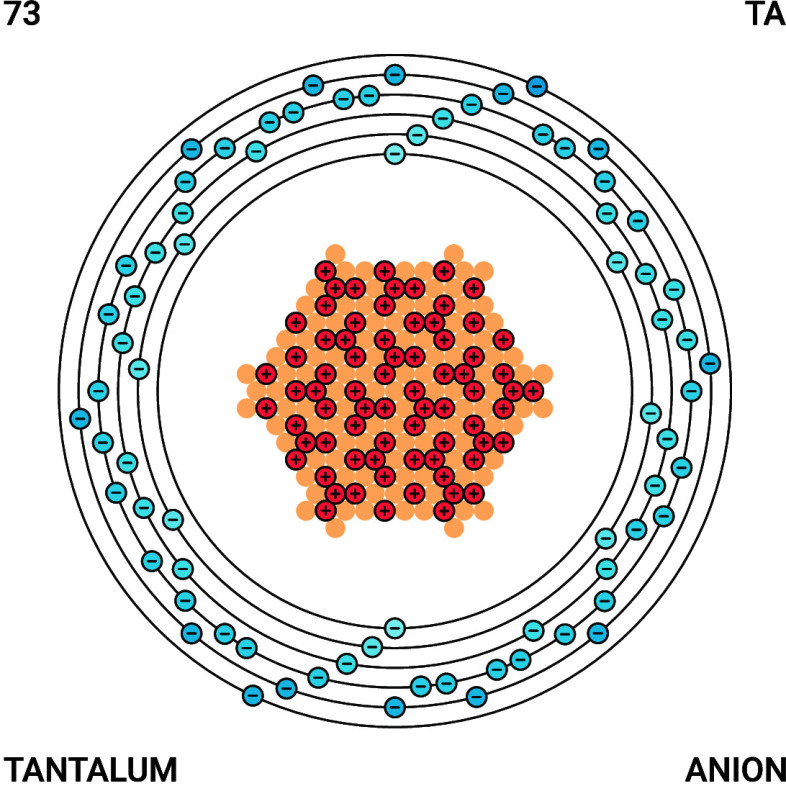 Figure 1
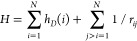 Figure 2
 Figure 3
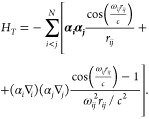 Figure 4
 Figure 5
 Figure 6
 Figure 7
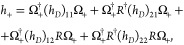 Figure 8
 Figure 9
Peer Reviews
No public reviews on file for this paper yet. If you reviewed it on a platform where reviews are public (OpenReview, ICLR, NeurIPS, ICML), you can paste yours below so the community can read it here.
Videos
No videos yet. Explain this paper in a talk, walkthrough, or lecture? Add one.
Taxonomy
TopicsAdvanced Chemical Physics Studies · Atomic and Molecular Physics · Molecular Junctions and Nanostructures