Tiny infarction of rostral cerebellum manifested by contralesional body lateropulsion
Obay Alalousi, Mickael Bonnan

TL;DR
A small stroke in the rostral cerebellum caused unexpected contralesional body lateropulsion, suggesting involvement of vestibular pathways.
Contribution
Reports a novel case of contralesional body lateropulsion caused by a rostral cerebellar infarction, challenging typical localization patterns.
Findings
A left anterior paravermal infarction caused contralesional body lateropulsion.
Damage to vestibular pathways via the superior cerebellar peduncle may explain the symptoms.
Complete recovery of body lateropulsion occurred after the infarction.
Abstract
Body lateropulsion (BLP) has been reported several times after cerebellar infarction. It is usually ipsilateral to the cerebellar infarction, particularly when limited to the rostral cerebellum. In contrast, contralesional BLP after cerebellar infarction has been reported in more caudal regions of the cerebellum (such as the nodulus or the tonsil). We report the case of a small infarction of the left anterior paravermis of the rostral cerebellum which resulted in bilateral symptoms: ipsilesional limb ataxia and, unexpectedly, contralesional BLP. Several neurological pathways were potentially involved. Both right and left dorsal spinocerebellar tracts may have been damaged by the infarction of the left anterior paravermis. On the other hand, the proximity of the infarct to the superior cerebellar peduncle may have caused damage to the vestibular pathways (fastigio-vestibular or…
Genes, proteins, chemicals, diseases, species, mutations and cell lines named across the full text — each resolved to its canonical identifier and authoritative record.
Click any figure to enlarge with its caption.
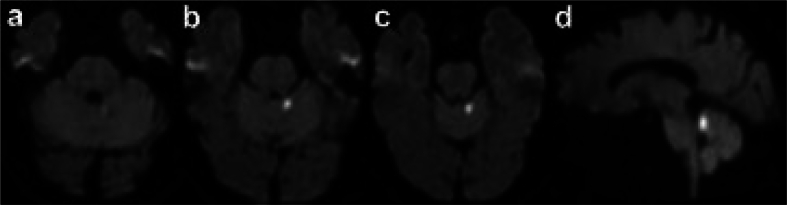 Figure 1
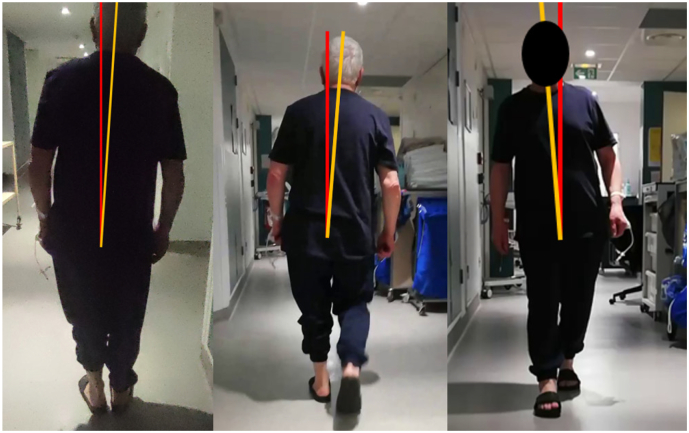 Figure 2
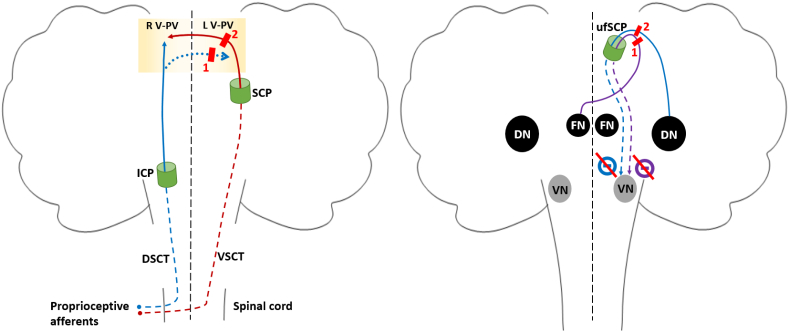 Figure 3
Peer Reviews
No public reviews on file for this paper yet. If you reviewed it on a platform where reviews are public (OpenReview, ICLR, NeurIPS, ICML), you can paste yours below so the community can read it here.
Videos
No videos yet. Explain this paper in a talk, walkthrough, or lecture? Add one.
Taxonomy
TopicsVestibular and auditory disorders · Advanced Neuroimaging Techniques and Applications · Ophthalmology and Eye Disorders