Colony life history of the tropical arboreal ant, Cephalotes goniodontus De Andrade, 1999
I. A. E. Butler, T. Butterfield, M. Janda, D. M. Gordon

TL;DR
This study uses DNA markers to explore the colony structure and life history of the tropical arboreal ant Cephalotes goniodontus.
Contribution
The study introduces a cost-efficient genotyping method to analyze colony structure in a hard-to-study arboreal ant species.
Findings
Colonies of Cephalotes goniodontus persisted at the same nest site for 2–6 years.
Different colonies may share foraging trails, with nests as close as 16.2 meters apart.
Abstract
Arboreal ants are ecologically important in tropical forests, but there are few studies using DNA markers to examine their population and colony structure. Colonies of the arboreal turtle ant Cephalotes goniodontus create trail networks through the canopy of the tropical forest, in dense vegetation where it is difficult to determine how long a nest is used and how neighboring colonies partition space. We monitored 53 nest sites for up to six years and, using seven microsatellite markers, genotyped samples of workers collected at or near 41 nests over 1–4 years. We calculated average relatedness within samples collected at a given location, and between samples collected at the same location in successive years, and performed pedigree analysis to predict the number of queens that produced each sample of workers. Fifteen samples were highly related (r ≥ 0.6) from single colonies, of which…
Genes, proteins, chemicals, diseases, species, mutations and cell lines named across the full text — each resolved to its canonical identifier and authoritative record.
Click any figure to enlarge with its caption.
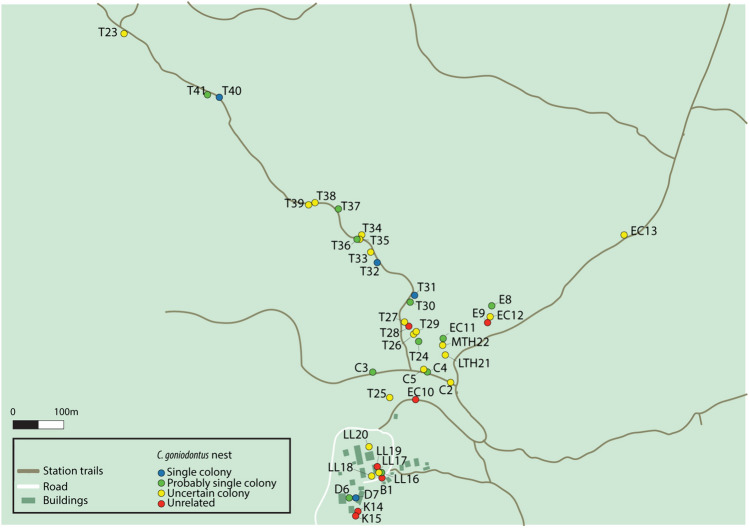 Figure 1
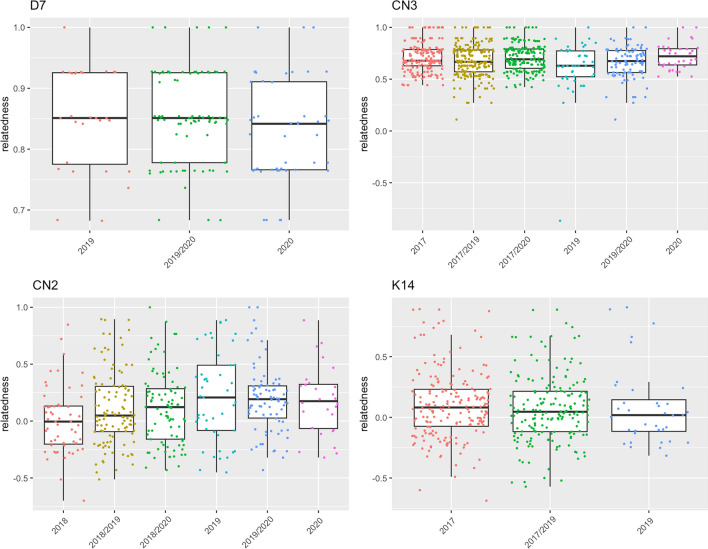 Figure 2
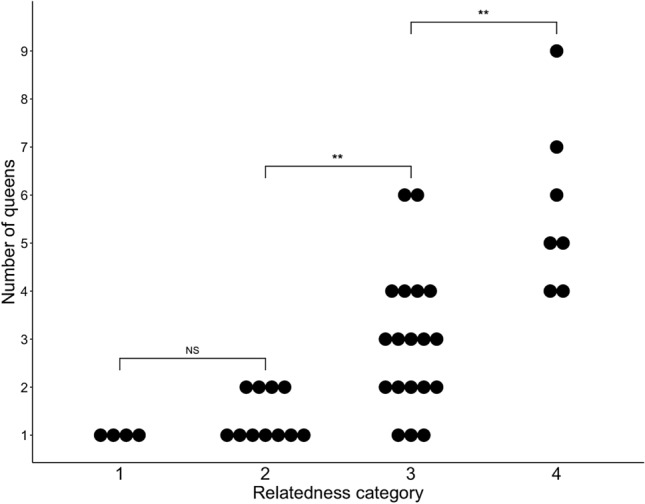 Figure 3
Peer Reviews
No public reviews on file for this paper yet. If you reviewed it on a platform where reviews are public (OpenReview, ICLR, NeurIPS, ICML), you can paste yours below so the community can read it here.
Videos
No videos yet. Explain this paper in a talk, walkthrough, or lecture? Add one.
Taxonomy
TopicsInsect and Arachnid Ecology and Behavior · Plant and animal studies · Insect and Pesticide Research