In Vitro Antischistosomal Activity of Bridelia ferruginea, Clausena anisata, Khaya senegalensis, and Vernonia amygdalina
Deryl Nii Okantey Kuevi, Jennifer Keiser, Cécile Häberli, Abena Konadu Owusu-Senyah, Mawutor Kwame Ahiabu

TL;DR
This study tests Ghanaian plant extracts for their ability to kill parasitic worms causing schistosomiasis, showing promising results against current drug alternatives.
Contribution
The study identifies new plant-based compounds with strong antischistosomal activity, potentially offering alternatives to praziquantel.
Findings
Khaya senegalensis, Vernonia amygdalina, and Bridelia ferruginea showed strong activity against both schistosomula and adult Schistosoma mansoni.
Clausena anisata exhibited weak activity against adult worms but strong activity against schistosomula.
Some plant extracts performed as well as praziquantel in in vitro tests.
Abstract
Schistosomiasis is caused by parasitic flatworms and the disease is endemic to most countries in sub-Saharan Africa including Ghana. The current therapeutic agent for managing this disease solely relies on praziquantel. The continual dependence on this single available drug could lead to possible drug resistance. This study seeks to evaluate the antischistosomal activity of the following Ghanaian medicinal plants: Khaya senegalensis, Vernonia amygdalina, Clausena anisata, and Bridelia ferruginea. Methodology. Two concentrations (100 μg/mL and 50 μg/mL) of each extract were tested in a 96-well plate containing 30 newly transformed schistosomula (NTS). Moreover, six worms of both sexes of adult Schistosoma mansoni were exposed to the extracts diluted in the RPMI medium. The assay was performed in a 24-well plate. The parasitic worms were examined using an inverted optical microscope. At…
Genes, proteins, chemicals, diseases, species, mutations and cell lines named across the full text — each resolved to its canonical identifier and authoritative record.
Click any figure to enlarge with its caption.
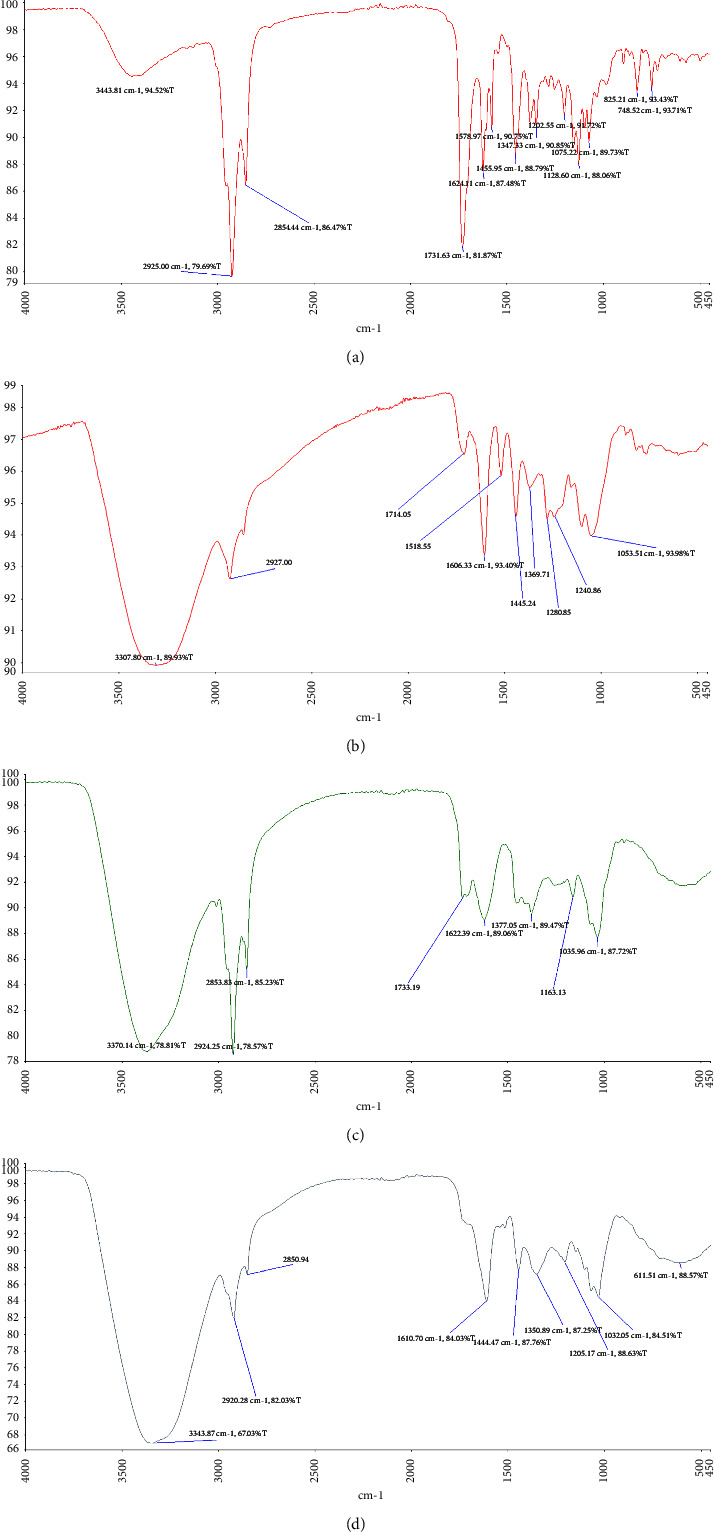 Figure 1
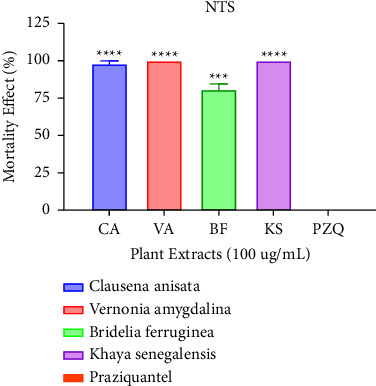 Figure 2
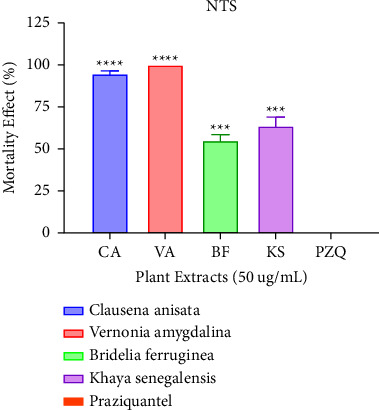 Figure 3
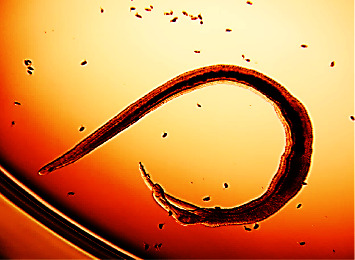 Figure 4
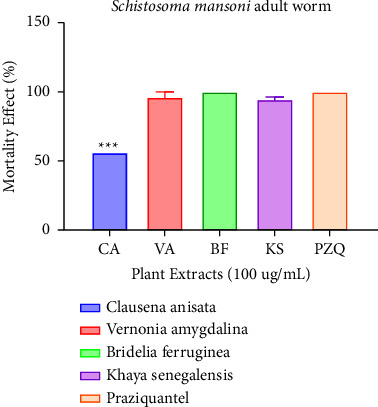 Figure 5
 Figure 6
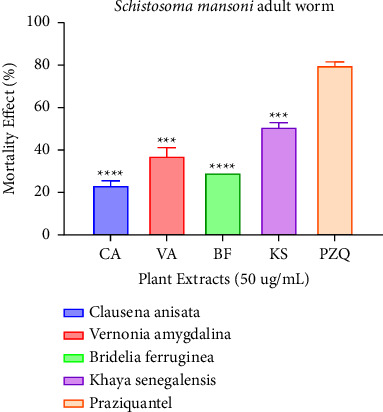 Figure 7
Peer Reviews
No public reviews on file for this paper yet. If you reviewed it on a platform where reviews are public (OpenReview, ICLR, NeurIPS, ICML), you can paste yours below so the community can read it here.
Videos
No videos yet. Explain this paper in a talk, walkthrough, or lecture? Add one.
Taxonomy
TopicsMoringa oleifera research and applications · Drug-Induced Hepatotoxicity and Protection · Ethnobotanical and Medicinal Plants Studies