Bacteremia Due to Lactococcus lactis cremoris Following Food Poisoning: A Case Report
Srujana Prabhala, Varun Khullar, Rajendra Gudisa, Arun K Sharma

TL;DR
A woman developed a rare infection from Lactococcus lactis cremoris after consuming unpasteurized dairy and recovered with antibiotic treatment.
Contribution
This case report documents a rare instance of L. lactis cremoris causing bacteremia following food poisoning.
Findings
L. lactis cremoris was isolated from the patient's blood culture.
The patient recovered after seven days of intravenous doxycycline treatment.
Consumption of unpasteurized dairy was identified as a likely source of infection.
Abstract
Lactococcus lactis (L. lactis) cremoris is a catalase-negative, gram-positive cocci, rarely reported as a cause of human infections. We report a case of probable food poisoning caused by L. lactis cremoris in an adult female. A 58-year-old female was brought to the Emergency Department with a history of sudden onset of high-grade fever, vomiting, and febrile seizures. On investigation, all parameters were within normal range. However, L. lactis cremoris was isolated from her blood culture. The patient gave a history of travel to a local pilgrimage and consumption of unpasteurized dairy products for a week leading up to the incident. The patient was treated with intravenous doxycycline and recovered after seven days of treatment with sterile blood cultures on follow-up.
Genes, proteins, chemicals, diseases, species, mutations and cell lines named across the full text — each resolved to its canonical identifier and authoritative record.
Click any figure to enlarge with its caption.
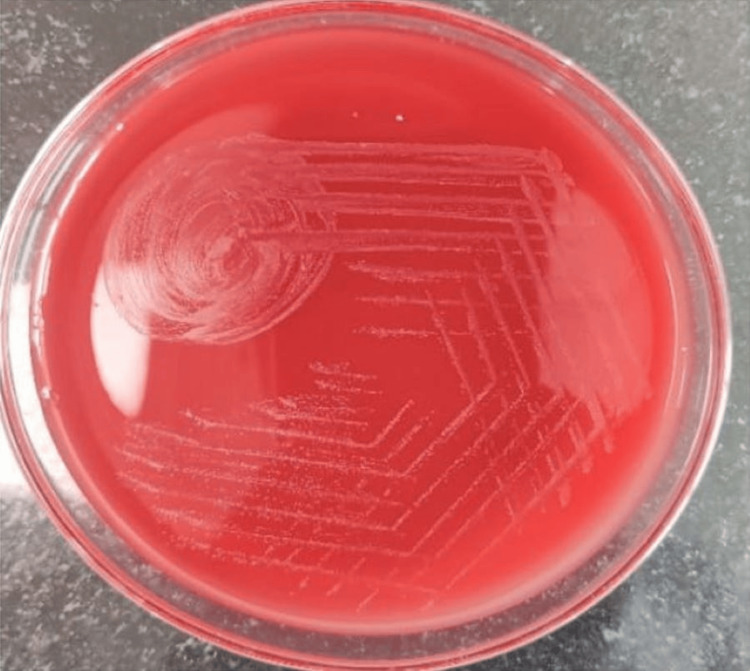 Figure 1
| Investigations | Results |
| CBC | Hb: 10.2 g/dL; WBC: 14.7 x 10^3/cumm; platelet: 30 x 10^3/cumm |
| Urine routine microscopy and culture | In routine, all parameters were normal and culture showed no growth after overnight incubation |
| Stool culture | No pathogen isolated |
| Pro calcitonin (normal range: 0.05-0.10 ng/mL) | 19.2 ng/mL |
| Anti-hepatitis A virus (HAV) IgM and anti-hepatitis E virus (HEV) IgM | Negative |
| Malaria, typhoid dot IgM, IgG dengue NS1, IgM | Negative |
Peer Reviews
No public reviews on file for this paper yet. If you reviewed it on a platform where reviews are public (OpenReview, ICLR, NeurIPS, ICML), you can paste yours below so the community can read it here.
Videos
No videos yet. Explain this paper in a talk, walkthrough, or lecture? Add one.
Taxonomy
TopicsDiphtheria, Corynebacterium, and Tetanus · Infective Endocarditis Diagnosis and Management · Clostridium difficile and Clostridium perfringens research
Introduction
Lactococcus lactis (L. lactis) is a gram-positive cocci, previously known as Streptococcus lactis [1]. The two main subspecies of L. lactis are lactis and cremoris [2]. It is widely used for the production of fermented products in the dairy industry [3]. It is generally considered to be non-pathogenic to humans. However, in some rare cases, it has been reported to cause infections such as liver abscesses, endocarditis, peritonitis, and intra-abdominal infections [4]. Since it is a skin commensal in cattle, it is thought to contaminate milk. Therefore, consumption of unpasteurized dairy products or raw milk has been reported as a common source of infection [5]. We report herein a case of food poisoning caused by L. lactis cremoris in an immunocompetent 58-year-old female.
Case presentation
A 58-year-old female patient presented to the Emergency Department in an ambulatory state with complaints of fever (38.1°C), vomiting, seizures, and loss of consciousness. Routine investigations were done at the hospital, as shown in Table 1.
Based on the clinical presentation, an array of investigations was sent for typhoid, malaria, dengue, scrub typhus, and Leptospira. Two sets of blood cultures were also sent, which were incubated in the BD BACTEC FX40 blood culture system (Becton Dickinson, Franklin Lakes, NJ, USA). Intravenous (IV) ceftriaxone (2 g BD) was started as empirical treatment in view of high-grade fever. With no improvement in the clinical condition, antibiotics were escalated to IV meropenem (1 g BD) and IV linezolid (1 g BD) after two days. Following a positive signal from the automated BACTEC system indicating growth in both culture bottles on day 2, a sub-culture was done on MacConkey and 5% sheep blood agar and incubated at 37°C overnight. After 24 hours of incubation, small, circular, and smooth white colonies were observed on blood agar without any evidence of hemolysis (Figure 1). Gram stain showed gram-positive cocci and was identified as L. lactis cremoris by the Vitek2 compact system (bioMérieux, Marcy-l'Étoile, France).
Growth of Lactococcus cremoris on blood agar
The antibiotic susceptibility testing performed by Kirby-Bauer disk diffusion on Mueller-Hinton Agar demonstrated sensitivity to ceftriaxone (30 µg), doxycycline (30 µg), and ampicillin (10 µg), and resistance to levofloxacin (5 µg), erythromycin (15 µg), and clindamycin (2 µg), as per Clinical and Laboratory Standards Institute (CLSI) M45 [6].
Since the isolation of Lactococcus spp. in blood culture was unusual, a detailed history was taken from a family member to understand the source of the infection. It was reported that the patient had gone on a local pilgrimage, during which she was consuming outside food, dairy products, and water. Though unclear, the consumption of unpasteurized milk or dairy products could be the probable source of infection in this case. IV doxycycline (100 mg BD) was given for a period of seven days. On follow-up, repeat blood cultures were sent, which showed no growth after five days of incubation.
Discussion
L. lactis species are gram-positive, lactic acid-producing bacteria, often used for the production of fermented dairy products and cheese [7]. Bacteria used in food preparation are commonly killed during digestion. However, Lactococcus remains viable even after transit through the gastrointestinal tract. This is thought to be the source of infection in humans [8]. Though commonly regarded as a non-pathogenic organism or contaminant, human infections have been reported. Hadjisymeou et al. [9] have observed 15 cases, including endocarditis, liver abscess, septicemia, pneumonitis, peritonitis, and brain abscess caused by L. cremoris. Of these, six cases have been associated with a history of exposure to unpasteurized dairy products. It has also been associated with the use of over-the-counter probiotic supplements [10].
The role of immune status as a risk factor for infection is debatable. Kaboré et al. report that immunocompromised patients were more susceptible to this infection [11]. However, in this case, the patient was immunocompetent. Similarly, Slaoui et al. reported that only 26% of the cases had a compromised immune status [4]. Slaoui et al. have observed that the incidence of L. cremoris infection was equal in men and women. It also affects all age groups, with the youngest patient being 19 months of age and the oldest being 79 years [4].
Although there are no standard guidelines for the treatment of L. lactis infection, multiple regimens have been considered based on antibiotic susceptibility test results, with penicillin or a third-generation cephalosporin being chosen most commonly. Gurley et al. treated L. lactis bacteremia patients with ertapenem and amoxicillin [10]. The patient recovered with this antibiotic regimen. In this case, since the patient did not show improvement with IV ceftriaxone, IV doxycycline was started based on the sensitivity report, to which the patient responded well. However, Kaboré et al. observed in their study that isolated strains of L. lactis subspecies lactis were multi-drug resistant. Owing to the irrational usage of antibiotics in animal husbandry, the sensitivity patterns for beta-lactams, particularly third-generation cephalosporins, have shown varied results [11]. The source of infection, risk factors, clinical presentation, and antibiotic sensitivity of this emerging pathogen are relatively sparse. Hence, documentation of such case scenarios is essential to gather more relevant information.
Conclusions
Though L. lactis was formerly known to be nonpathogenic, it has been the etiological agent for several human infections. Although endocarditis, liver abscess, and endodontic infection by this organism have been observed in the past, an acute presentation of symptoms of food poisoning followed by bacteremia has rarely been reported. In a patient with a history of consumption of unpasteurized dairy products, it is essential for the clinician to rule out an L. lactis infection.
The reference list from the paper itself. Each links out to its DOI / PubMed record.
- 1Lactococcus lactis endocarditis in an immunocompromised patient Case Rep Infect Dis Mitchell A Gorn S Cheung A Khan S Anneski C 3845679202220223639794910.1155/2022/3845679 PMC 9666037 · doi ↗ · pubmed ↗
- 2Bacterial endocarditis due to Lactococcus lactis subsp. cremoris: case report Clin Microbiol Infect Pellizzer G Benedetti P Biavasco F 23023221996 https://www.tandfonline.com/doi/full/10.1517/14712598.2011.5421381186684910.1016/s 1198-743x(14)65148-x · doi ↗ · pubmed ↗
- 3Lactococcus lactis cholangitis and bacteremia identified by MALDI-TOF mass spectrometry: a case report and review of the literature on Lactococcus lactis infection J Infect Chemother Shimizu A Hase R Suzuki D 141146252019 https://doi.org/10.1016/J.JIAC.2018.07.010.3010039910.1016/j.jiac.2018.07.010 · doi ↗ · pubmed ↗
- 4Lactococcus lactis cremoris intra-uterine infection: about an uncommon case report Int J Surg Case Rep Slaoui A Benmouna I Zeraidi N Lakhdar A Kharbach A Baydada A 1070779420223546118210.1016/j.ijscr.2022.107077 PMC 9048150 · doi ↗ · pubmed ↗
- 5Infective endocarditis in a young adult due to Lactococcus lactis: a case report and review of the literature Case Rep Med Georgountzos G Michopoulos C Grivokostopoulos C Kolosaka M Vlassopoulou N Lekkou A 5091456201820182968671110.1155/2018/5091456 PMC 5857332 · doi ↗ · pubmed ↗
- 6Methods for antimicrobial dilution and disk susceptibility testing of infrequently isolated or fastidious bacteria 10 2015 2018 https://clsi.org/standards/products/microbiology/documents/m 45
- 7Technological properties of Lactococcus lactis subsp. lactis bv. diacetylactis obtained from dairy and non-dairy niches Braz J Microbiol Fusieger A Martins MCF de Freitas R Nero LA de Carvalho AF 3133215120203173490210.1007/s 42770-019-00182-3PMC 7058814 · doi ↗ · pubmed ↗
- 8Survival, physiology, and lysis of Lactococcus lactis in the digestive tract Appl Environ Microbiol Drouault S Corthier G Ehrlich SD Renault P 48814886651999 https://doi.org/10.1128/AEM.65.11.4881-4886.1999.1054379910.1128/aem.65.11.4881-4886.1999 PMC 91657 · doi ↗ · pubmed ↗